Chàm Islands
Southeast Asia · Vietnam
Did you know?
- Wild monkeys roam the interior of Hon Lao, where natural forest covers a quarter of the land.
- Hon Lao's two fishing villages are Bai Lang and Bai Huong.
- This eight-island group became a UNESCO Biosphere Reserve in 2009.
See also
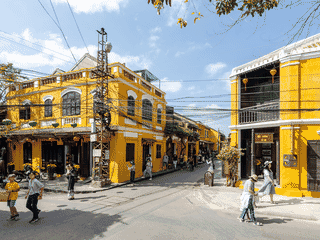

Hoi An
Vietnam15.88°N 108.33°E · 13 m
Da Nang
Vietnam16.07°N 108.13°E · 19 m
Lăng Cô
Vietnam16.25°N 108.07°E · 98 m
Bach Ma National Park
Vietnam16.20°N 107.87°E
Quảng Ngãi
Vietnam15.12°N 108.80°E · 13 m
Hue
Vietnam16.47°N 107.58°E · 85 m
Overview
The Chàm Islands combine fishing villages, forest and coral reefs off Hoi An. Overnight homestays provide a quieter view of island life after excursion boats leave.
Languages: Vietnamese
Why go?
The Cham Islands (Cù lao Chàm) are a cluster of eight islands 9 nautical miles off Hoi An's Cua Dai Beach, designated a UNESCO Biosphere Reserve in 2009. The largest island Hon Lao (1,317 hectares) hosts two fishing villages—Bai Lang and Bai Huong—while natural forest covers 25% of the land and wild monkeys roam the interior. For backpackers, the draw is snorkeling the coral reefs at Bai Chong, diving with PADI operators from Hoi An, and staying overnight in family homestays to experience island life beyond the day-tripper rush.
Adapted from Wikivoyage contributors · CC BY-SA 4.0
Getting there
Access is seasonal: June–August are almost always accessible; January–May only sometimes; September–December the NE monsoon creates breaking swells that make the islands nearly unreachable due to shallow water (average depth 900mm) at the river inlet. Weather changes daily—mornings are calmer, with stronger winds and waves after 13:00. The old wooden ferry departs Hoi An public pier around 07:30 (not during Sep–Dec), takes 2 hours, costs locals 20,000 dong but foreigners pay at least 100,000 dong one-way. Speedboats take 30 minutes; wooden boats 1.25 hours. You may be asked to show passport at the Bien Phong (Border Patrol) checkpoint at the river inlet. Tours operate May–August only.
Adapted from Wikivoyage contributors · CC BY-SA 4.0
Fees and permits
Day trippers traveling with a dive operator receive a snorkeling permit issued by the Cu Lao Cham MPA for 30,000 dong per tourist—this is the easiest way to pay the fee. The islands charge entry; diving and snorkeling activities require this permit.
Adapted from Wikivoyage contributors · CC BY-SA 4.0
Getting around
Most tourists travel on boats operated by dive companies or ferry services. On land, the road between the two villages (Bai Lang and Bai Huong) is the only permitted hiking route. Travel between villages and beaches is best done on foot.
Adapted from Wikivoyage contributors · CC BY-SA 4.0
Sights
Island forests are beautiful and host a large wild monkey population; natural forest covers about 25% of Hon Lao. Hiking is permitted only on the road between the two villages. The Hai Tang Pagoda, boat shelter, and local Bai Lang market are stops on organized tours. Bai Chong beach offers swimming and coral reef snorkeling.
Adapted from Wikivoyage contributors · CC BY-SA 4.0
Food and drink
Bai Lang, the larger village, has a few restaurants catering to visitors. Bai Huong, the smaller village, has only one or two small coffee shops. Lunch is typically included in organized tour packages at local island restaurants.
Adapted from Wikivoyage contributors · CC BY-SA 4.0
Where to stay
Homestay Bai Huong in the fishing village offers 2-day sustainable tours including snorkeling, trekking, and cultural exchange with local families for 440,000 dong. Karma Waters provides homestays in private village homes at Bai Huong for USD120/person including all vegetarian meals and return boat. Note: Chinese, Hong Kong, and Macau passport holders are not permitted to stay overnight on the islands.
Adapted from Wikivoyage contributors · CC BY-SA 4.0
Safety
NE monsoon season (September–December) makes the islands almost inaccessible due to shallow water and breaking swells. Summertime squalls are frequent in late afternoons—watch for dark clouds forming over Laos and avoid being caught on unsafe boats. Few Vietnamese boats operate to international safety standards or are designed for rough waters. Check weather daily; mornings are calmer.
Adapted from Wikivoyage contributors · CC BY-SA 4.0
Go next
Return to Hoi An (2 hours by ferry, 30 min by speedboat) for the UNESCO-protected Old Town, tailors, and Vietnamese cooking classes. My Son, 40 km west of Hoi An, offers Champa temple ruins for more adventure. Da Nang, the nearest major city with an airport, is a gateway for onward travel.
Adapted from Wikivoyage contributors · CC BY-SA 4.0
Field guide adapted from Wikivoyage contributors · CC BY-SA 4.0. Text has been adapted and organized for this guide. About our sources.
Places to know
A few starting points from the guide. Check current hours and prices before you go.
- sleep
Homestay Bai Huong
Homestay Bai Huong offers sustainable tours to the fisher village in Bai Huong. Offer a 2 day tour, with snorkelling trip, trekking, and cultural exchange with the home stay families and the local people.
Recorded price: 440,000 dong
Adapted from Wikivoyage contributors
- eat
Bai Huong Coffee Shops
One or two small coffee shops in the smaller village
Adapted from Wikivoyage contributors
- eat
Local Restaurants Bai Lang
Simple restaurants in the larger fishing village serving fresh seafood
Adapted from Wikivoyage contributors
- see
Bai Chong Beach and Coral Reef
Beach for swimming and snorkeling to view coral reefs
Adapted from Wikivoyage contributors
- see
Hai Tang Pagoda
Buddhist pagoda visited on organized island tours
Adapted from Wikivoyage contributors
- see
Island Forests and Monkey Population
Natural forest covers 25% of Hon Lao island with large wild monkey population
Recorded price: Free
Adapted from Wikivoyage contributors
- buy
Cham Island Diving
PADI dive centre offering full range of services on the island from Hoi An: PADI courses, scuba diving and snorkelling, simple excursions and private cruise by wooden boat and speedboat, camping under the stars and home stay in authentic fisher village.
Recorded price: USD28-75
Adapted from Wikivoyage contributors
- do
Cham Island Tour
Pick up at hotel at 07:00, transfer to Cua Dai beach harbour by an air-con bus. Cruises to the Cham Islands board at 08:00, travelling by wooden boat for 1¼ hours or by speed boat for 30 minutes. On arrival, there are visits to Hai Tang Pagoda, the boat shelter, a local market at Bai Lang, then cruise to Bai Chong for swimming and snorkelling to see the coral reef before having lunch at a local restaurant on the island. Relax for a while after lunch and get ready for cruising back to Cua Dai Beach harbour. Departure is at 15:00 and transfer back to your hotels.
Recorded price: Wooden boat USD27, speedboat USD89
Adapted from Wikivoyage contributors
Before you go
Accessibility
No direct airport access—must travel via Hoi An or Da Nang. Ferry crossing takes 2 hours; speedboat 30 minutes. Islands have minimal infrastructure.
Culture
The islands are inhabited by traditional fishing communities. Overnight homestays offer cultural exchange. The islands are part of a UNESCO Biosphere Reserve focused on environmental preservation.
Money
Bring Vietnamese dong for local expenses. Day tours from Hoi An charge in USD. Ferry foreigners pay 100,000 dong vs. locals 20,000 dong. Snorkeling permit costs 30,000 dong.
Safety
Few Vietnamese boats meet international safety standards. Afternoon squalls are common June–August. Check boat condition before boarding. Travel insurance with evacuation coverage recommended.
Weather
Visit June–August when the sea is calmest. Avoid September–December due to dangerous NE monsoon swells. Check weather daily; mornings are calmer than afternoons.