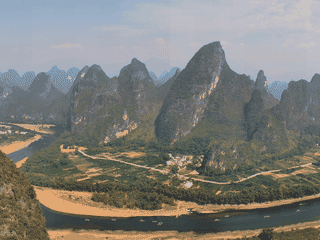

Yangshuo
East Asia · China
Did you know?
- Beer fish is priced per 500g, and larger fish can cost over ¥100.
- The Yangdi-Xingping trail runs 18-24 km along the Li River.
- Bike hire starts around ¥15-20 per day; tandems cost slightly more.
See also
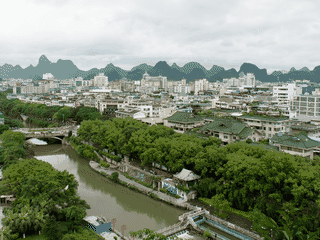

Guilin
China25.27°N 110.28°E · 153 m
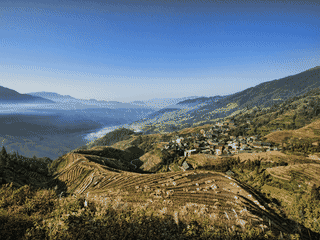

Longsheng
China25.80°N 110.00°E
Overview
Yangshuo is a karst-and-river base for cycling, climbing, bamboo rafting, and countryside walks. Stay alert to touts and inflated tourist pricing while using Guilin as the main rail and flight gateway.
Languages: Chinese
Why Go?
Yangshuo is a small town surrounded by stunning karst mountains, rivers, caves, and temples near Guilin. It has been a popular backpacker destination since the 1980s and sits on the Banana Pancake Trail through Southeast Asia. The area offers excellent rock climbing, peaceful countryside cycling, and river rafting, all in a cleaner, quieter environment than typical Chinese cities. As of 2023, most foreign-owned businesses have closed and Yangshuo now primarily serves domestic Chinese tourists, making it less crowded for independent travelers seeking authentic experiences.
Adapted from Wikivoyage contributors · CC BY-SA 4.0
Getting In
Yangshuo has neither an airport nor a railway station. The nearest options are in Guilin, which has both an airport and railway station, including high-speed train stops at nearby stations. Buses connect from Guilin and other cities; the North Bus Station handles routes to Guilin, Guilin Airport, Nanning, and Yangdi, with Nanning buses (¥120) departing at 08:00, 10:00, and 12:30. The South Bus Station serves southern destinations including Xingping, Gongcheng, Jinbao, and Gaotian for sites like Moon Hill and the Banyan Tree.
Adapted from Wikivoyage contributors · CC BY-SA 4.0
Getting Around
The best way to explore Yangshuo and its surroundings is by bicycle. Bike hire starts at around ¥15-20 per day, with tandems costing slightly more. Well-maintained mountain bikes from operators like Bike Asia (22 Guihua Rd) cost ¥70 per day including map, lock, helmet, and route advice. Minibuses depart from the bus terminal to destinations like Gaotian (for Moon Hill) and Jinbao (for Yulong River valley). Bamboo rafts are available at various wharves along the Yulong River, with durations ranging from 35 minutes to 90 minutes depending on starting point.
Adapted from Wikivoyage contributors · CC BY-SA 4.0
When to Go
Yangshuo has a subtropical climate with hot, humid summers (June-August, 28-33°C) and mild winters (December-February, 6-16°C). Summer is peak season for swimming and water activities but also most crowded. The Li River is best seen during the dry season (October-March) when water levels are lower and hiking trails are more accessible. Local specialties like grapefruit and pomelos (sha tian you) are cheapest in autumn when harvested. The Impression Liu Sanjie evening show runs year-round except January-February for maintenance.
Adapted from Wikivoyage contributors · CC BY-SA 4.0
Where to Stay
Yangshuo offers accommodation from ¥20-40 per night for dorm beds to over ¥480 for boutique resorts. Budget hostels cluster near West Street and the bus station, with many touts at the main bus station best avoided. Prices are highly negotiable in off-season and often start much lower than advertised lobby signs. Any place within a block of West Street will be loud until 02:00 due to bar noise. Popular budget options include Flowers Youth Hostel (90 Pantao Rd, dorms ¥40), Climbers Inn (8 Fuqian Lane, from ¥40), and Yangshuo Senior Leader Youth Hostel (36 FuQianXiang, from ¥35). For quiet countryside stays, consider The Stone Bridge (22 Shi Ban Qiao, from ¥40) or The Giggling Tree (Aishanmen village, ¥120-250).
Adapted from Wikivoyage contributors · CC BY-SA 4.0
Food and Drink
Yangshuo has many restaurants but tourist areas are more expensive. Eat cheaply at local markets or enjoy comfort food at Western cafes. Local specialties include beer fish (pi jiu yu), priced per 500g (jin) on menus, with larger fish costing over ¥100; grapefruits and pomelos (sha tian you) cost ¥1-2 everywhere. Western food options include Indian, French, Mexican, and South Indian cuisine. Budget eats: Gan noodles (¥8 spicy beef bowl), Dynasty Dumplings (¥12-15 for 12 dumplings), Minority Cafe (Western food around ¥25). West Street and Xianqian Jie have numerous bars; Monkey Jane's Rooftop Bar offers happy hour 18:00-21:00 with 2 cocktails for ¥30.
Adapted from Wikivoyage contributors · CC BY-SA 4.0
Things to Do
Yangshuo offers diverse activities: rock climbing at multiple schools (Blackrock, Rock Abond Inn, Insight Adventures, Karst Climber), cycling through countryside (¥15-70/day), bamboo rafting on Yulong River (35-90 min depending on wharf), and hiking the Yangdi-Xingping trail (18-24 km along Li River with ferry crossings ¥10-30 each). Must-see sights include Moon Hill (¥15 entry, temporarily closed May 2025) with its moon-shaped hole, Big Banyan Tree scenic area (¥20), Assembling Dragon Cave (6 km south), and the evening Impression Liu Sanjie show (¥188 face value, ¥150 via agents). Swimming spots exist on the Li River upstream from town docks.
Adapted from Wikivoyage contributors · CC BY-SA 4.0
Safety
Yangshuo is known for aggressive touts, overcharging (prices can be inflated 100-500%), and a two-tier pricing system for locals versus foreigners. Longtan Village on the biking route to Yulonghe has unofficial checkpoints charging ¥20. Rock climbers report similar extorton some hills. Pickpocketing is rare due to security cameras, but bag-snatching by motorbike is common—keep bags locked to bikes and in front of you. The Secret Beach swimming area has frequent petty theft; bring only essentials. Bamboo raft touts on buses operate a territorial system—do not talk to them on buses if booking independently. After 01:00 streets are dark; carry a flashlight. Traffic regulations are poorly enforced.
Adapted from Wikivoyage contributors · CC BY-SA 4.0
Connectivity
Most hotels, bars, and restaurants offer free WiFi for customers—ask for the password. The post office on Pantao Lu is open 08:00-21:00. International SIM cards work in China but registration may be required. Power plugs use Type I (Australia/China style, two or three angled prongs) or Type A/B (American two-pin) in some older establishments; voltage is 220V/50Hz. For longer stays, language schools like Omeida Chinese Academy (No.49 Longyue Road) offer immersion programs.
Adapted from Wikivoyage contributors · CC BY-SA 4.0
Budget
A backpacker can survive on ¥150-250/day in Yangshuo: dorm beds ¥25-40, street food meals ¥8-20, bike rental ¥15-70/day, attractions ¥15-90. Beer fish restaurant meals are pricier (¥100+ for larger fish). Nightlife is cheap—local beer ¥6-10, cocktails during happy hour ¥15-30. Budget hostels include breakfast; otherwise ¥20-30/day for food. Agencies at hostels often get locals' prices for attractions, saving significant money.
Adapted from Wikivoyage contributors · CC BY-SA 4.0
Day Trips
Huangyao Ancient Town is just over an hour by coach from Yangshuo—a lovely rustic old town where the film 'The Painted Veil' was shot. The Yulong River valley rivals the famous Li River scenery and is best explored by cycling or bamboo raft. The Yangdi-Xingping scenic area features the landscape from the ¥20 banknote; reach it by minibus from the bus terminal (Yangdi ¥8, 90 min; Xingping ¥5.50, 45 min). Moon Hill and Big Banyan Tree are both about 8 km south on the Gaotian road.
Adapted from Wikivoyage contributors · CC BY-SA 4.0
Go Next
From Yangshuo, the most common onward route is back to Guilin (1.5-2 hours by bus) for flights or high-speed trains to other Chinese cities. The South Bus Station serves Xingping (for the famous Li River scenery), Gongcheng, Jinbao, and Gaotian. Buses to Nanning (¥120, 3 daily) connect to southern destinations. Yangshuo lies on the Hong Kong to Kunming overland route, making it a stop for travelers moving through southern China and Southeast Asia.
Adapted from Wikivoyage contributors · CC BY-SA 4.0
Field guide adapted from Wikivoyage contributors · CC BY-SA 4.0. Text has been adapted and organized for this guide. About our sources.
Places to know
A few starting points from the guide. Check current hours and prices before you go.
- eat
Balcony Bar
Fairly decent French food and crepe, movie every night at 21:00 and free internet.
Adapted from Wikivoyage contributors
- eat
Cafe China
Great coffee, great cheesecake, packed most nights, wireless internet, and good chocolate milkshake (though small).
Recorded price: Brandy: ¥7
Adapted from Wikivoyage contributors
- eat
Cafe Too
Has English books to read, buy or trade.
Adapted from Wikivoyage contributors
- eat
Cafe del Moon
Breakfast here is excellent value if you are hungry or want a lot of coffee. Ghastly croissants but the rest is good.
Recorded price: all-you-can-eat breakfast buffet: ¥32
Adapted from Wikivoyage contributors
- eat
Carpe Diem restaurant
This charming restaurant with a great outside deck offers a fine selection of the local cuisine as well as a variety of international dishes in a quiet and relaxing setting with great views. Breakfasts, brunches, lunch and dining with generous portions. Weekly barbecue and Chinese buffet nights. Cozy bar with a nice selection of Belgian Beers and South-African wines. Belgian-Chinese management.
Adapted from Wikivoyage contributors
- eat
Dosa U.K.
Excellent, authentic home made South Indian food in brand new spot. Attentive service and very good prices. Kind of a hole in the wall and the decor is a bit over the top. Menu is limited but has the South Indian basics and a very good crispy dosa.
Recorded price: cheap
Adapted from Wikivoyage contributors
- eat
Dynasty Dumplings
Small restaurant offering authentic Northern Chinese food, run by a couple from Liaoning. Very popular with Western tourists, they have the usual Chinese-English bilingual menu with pictures, so ordering is not a problem. Try their dumplings (¥12-15 for a serving of twelve).
Recorded price: ¥12-100
Adapted from Wikivoyage contributors
- eat
Gan's Noodles
Specializing in handmade noodles, this tiny shop is an out of the way treasure most tourists will never visit. For ¥8 you get a great spicy beef noodle bowl. With a beer to wash it all down, this little 4 table shop had excellent service, while the servers don't know English, the menu has pictures and English names, and whatever you end up with will be amazing.
Adapted from Wikivoyage contributors
Before you go
Connectivity
Free WiFi is common at hotels, bars, and restaurants. The post office on Pantao Lu is open 08:00-21:00. Power uses Type I or A/B plugs at 220V.
Etiquette
Negotiate prices at markets and for services. Touts are persistent—ignore them or firmly decline. Remove shoes when entering homes and some traditional restaurants. Dress modestly at temples and religious sites.
Money
ATMs are available on West Street and Pantao Lu at Bank of China, Agricultural Bank, ICBC, and China Postal Bank, but not all accept foreign cards. Prices in tourist areas are often inflated 100-500% for non-locals. Currency is Chinese Yuan (CNY).
Safety
Beware of aggressive touts, overcharging, and unofficial checkpoint fees. Bag-snatching by motorbike is common. After 01:00 streets are dark. Swimming theft occurs at Secret Beach. Book bamboo rafts through hostels rather than on buses.
Transport
Buses to Guilin (North Bus Station) and southern destinations (South Bus Station) are the main public transport. Bicycles are the best way to explore the surrounding countryside. Minibuses to tourist sites depart from the bus terminal.
Weather
Summers (June-August) are hot and humid (28-33°C) with afternoon rain. Winters are mild (6-16°C). Best time for hiking is October-March when trails are drier. Bring rain gear in summer.