Tunja
South America · Colombia
Did you know?
- Santo Domingo's nave is lined with wood and plaster bas-relief.
- The cathedral blends Isabelline, Renaissance and neoclassical styles.
- Hunzahúa Well preserves a link to the pre-Columbian past.
See also
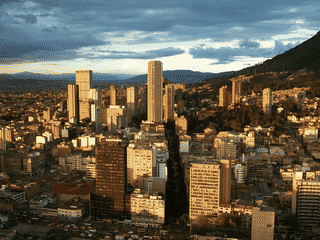

Bogotá
Colombia4.65°N 74.08°W · 2,582 m
Villa de Leyva
Colombia5.63°N 73.53°W · 2,000 m
Sogamoso
Colombia5.72°N 72.93°W · 2,490 m
San Gil
Colombia6.56°N 73.14°W · 1,247 m
Overview
Tunja is a highland university city with churches and pre-Columbian archaeological sites. Nearby Puente de Boyacá connects a visit with Colombia's independence history.
Languages: Spanish
Why go?
Tunja is a chilly highland city (2,820 m / 9,250 ft) that served as the Muisca indigenous capital of Hunza before Spanish conquistadors established their settlement in 1537. Today it functions as a college town with several universities despite its modest size, offering religious tourism centered on its many churches, pre-Colombian archaeological sites like the Hunzahúa Well, and Colombian revolutionary history at the nearby Puente de Boyacá. The city hosts major events including Holy Week, the International Festival of Culture, and the Aguinaldo Boyacense festival.
Adapted from Wikivoyage contributors · CC BY-SA 4.0
Getting there and away
Tunja is served by bus from Bogotá (2 to 3 hours, COP$17,000 from the capital). The Bus Terminal handles regional connections. The old train station on Avenida Norte has fallen into disrepair, though restoration efforts may be underway.
Adapted from Wikivoyage contributors · CC BY-SA 4.0
Getting around
Local transport includes busetas (small buses) serving routes across the city. A buseta labeled "Muiscas" or "UTPC" will take you toward the old train station area. Tunja is walkable in the compact historic center around Plaza Bolívar.
Adapted from Wikivoyage contributors · CC BY-SA 4.0
When to go
Tunja's highland climate means cool temperatures year-round. Major events include Holy Week (Semana Santa), the International Festival of Culture (held at Iglesia de San Ignacio), and the Aguinaldo Boyacense. Sundays tend to be quiet with limited nightlife activity.
Adapted from Wikivoyage contributors · CC BY-SA 4.0
Where to stay
Accommodation options cluster between the bus terminal and Plaza Bolívar, with dozens of choices across budgets. Hosteria San Carlos (Carrera 11 #20-12, one block NW of Plaza Bolívar) offers singles from COP$35,000 in an old colonial house. Hotel Posada de San Agustín (Cl. 23 #8-63) charges COP$119,830 per night with free breakfast included. Hotel Hunza y Centro de Convenciones (Cl. 21a #10-66) is a larger establishment with spa and restaurant facilities.
Adapted from Wikivoyage contributors · CC BY-SA 4.0
Food and drink
Budget eating centers on traditional Colombian fare: El Maizal (just off the plaza's NE corner) serves possibly the cheapest breakfast in town—hot chocolate and roll with cheese for COP$1,500. Piqueteadeoro La Novena (Carrera 9 - Calle 22) offers cheap traditional food and fruit salad. La Buona Vita (Carrera 9 #23-45) is an Italian restaurant with handmade pastas at COP$20,000 per plate, open M-Sa 12:00-21:30, Su 12:00-16:00. For nightlife, nightlife closes at 1:30AM. Bruder Pub (Kra 9 #21-89) is a microbrewery with beer at COP$12,000 per liter. Berlin (Carrera 10 - Calle 21A, 5th floor) is a rooftop cocktail bar with city views. Hops & Barley (Avenida Norte) brews IPA, stout, and craft favorites.
Adapted from Wikivoyage contributors · CC BY-SA 4.0
Things to do
Tunja's 40-plus churches make religious and architectural tourism the primary draw. The Catedral Básica Metropolitana Santiago de Tunja (on Bolívar plaza, built 1567-1598) fuses Isabelline, Renaissance, and neoclassical styles. The Casa del Fundador Gonzalo Suárez Rendón (Carrera 9 No.19-56 Centro, Tu-F 09:00-11:00, 14:00-16:00; Sa Su 09:00-12:00, 14:00-16:00; closed M) dates to 1540 and is the only remaining house of a city founder in Latin America—free entrance, art and history museum. Iglesia de San Ignacio (1620, Jesuit style) houses a notable polychrome statue of Jesus. Iglesia de Santo Domingo (1560) features remarkable Isabelline-style wood and plaster bas-relief throughout its nave. Pinzón Park sits on the site of the Muisca city of Hunza. The Hunzahúa Well (Av. Central del norte, on UPTC campus, 07:00-22:30 daily) is a pre-Colombian archaeological site with steles.
Adapted from Wikivoyage contributors · CC BY-SA 4.0
Go next
Day trips and onward connections from Tunja's terminal: Villa de Leyva (45 minutes to 1 hour, minibus COP$6,000) is one of Colombia's nicest colonial towns. Paipa (45 minutes, COP$4,000) has natural hot springs with waterpark and spa. Sogamoso (about 1 hour, COP$8,000-10,000) is a quaint city surrounded by colonial towns. Bogotá is 2 to 3 hours away at COP$17,000. San Gil (4 hours) is the capital of extreme sports in Colombia. Suesca is a major rock climbing site. Puente de Boyacá, the famous revolutionary battle site, lies about 20 km southwest on Route 55.
Adapted from Wikivoyage contributors · CC BY-SA 4.0
Budget
Backpacker daily budget in Tunja ranges from COP$50,000-80,000 covering accommodation in dorms or budget hotels (COP$35,000-60,000), meals (COP$15,000-40,000 per day), and local transport. El Maizal offers the cheapest breakfast at COP$1,500. Evening drinks at Bruder Pub cost around COP$12,000 per liter of craft beer.
Adapted from Wikivoyage contributors · CC BY-SA 4.0
Field guide adapted from Wikivoyage contributors · CC BY-SA 4.0. Text has been adapted and organized for this guide. About our sources.
Places to know
A few starting points from the guide. Check current hours and prices before you go.
- sleep
Hosteria San Carlos
Old colonial house, a bit run down. No breakfast.
Recorded price: Single 35000
Adapted from Wikivoyage contributors
- sleep
Hotel Hunza y Centro de Convenciones
Big establishment in Tunja. Has spa and restaurant.
Adapted from Wikivoyage contributors
- sleep
Hotel Posada de San Agustin
Cozy place with free breakfast.
Recorded price: COP 119830
Adapted from Wikivoyage contributors
- eat
Cowfish / Fiamma Napoletana
Burgers, sushi, pizza and homemade pasta with various vegetarian options in each category. Very popular among Tunja inhabitants.
Adapted from Wikivoyage contributors
- eat
El Maizal
Possibly the cheapest breakfast in town: Hot chocolate and roll with cheese, COP$1500. Also set lunch and dinner.
Adapted from Wikivoyage contributors
- eat
La Buona Vita
Italian restaurant with great handmade pastas.
Recorded price: COP$20,000 per plate
Adapted from Wikivoyage contributors
- eat
Piqueteadeoro La Novena
Cheap traditional Colombian food and fruit salad.
Adapted from Wikivoyage contributors
- see
Bolivar Plaza
Kind of self-explanatory, but it is from here that you can absorb the colonial feeling of the city quite well.
Adapted from Wikivoyage contributors
Before you go
Language
Spanish is the local language. English is limited outside university areas.
Money
Local currency is Colombian pesos (COP). ATMs are available throughout the city. Some smaller establishments may be cash-only.
Nightlife
Nightlife closes at 1:30AM. Sundays tend to be quiet with limited activity.
Weather
Chilly highland climate at 2,820 m elevation. Pack layers year-round—temperatures are cool even during daytime.