Taipei
East Asia · Taiwan
Did you know?
- Yangmingshan pairs hot springs, sulphur blow holes, and marked trails.
- Fall offers the most comfortable weather, especially in October and November.
- The MRT forms the backbone of a citywide public transport network.
See also
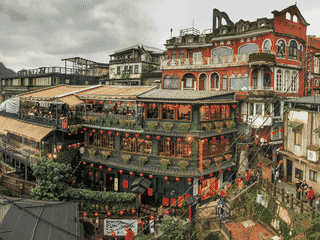

Jiufen
Taiwan25.11°N 121.84°E
Overview
A slower, cheaper counterweight to major Asian capitals, Taipei blends tea houses, night markets, galleries, and historic landmarks with modern districts. Its MRT and rail links make city neighborhoods and mountain escapes easy to combine.
Languages: Chinese
Why Go?
Taipei is a slower, cheaper counterweight to other major Asian capitals—clean streets, friendly locals, and remarkable safety even at night. The city offers traditional tea houses, art galleries, bustling night markets, and historical landmarks alongside modern shopping districts. Its dining scene caters to all budgets, from 50-80 NT$ street food to international restaurants, making it ideal for food-focused travelers seeking authentic Taiwanese cuisine without capital-city chaos.
Adapted from Wikivoyage contributors · CC BY-SA 4.0
Understand
Taipei became Taiwan's capital in 1884 when Qing official Liu Mingchuan moved the prefectural capital there. Japanese colonial rule (1895-1945) left a lasting architectural mark, including the Presidential Palace and National Taiwan University buildings. After 1945, the Kuomintang government influx created rapid development of temporary housing, later replaced with concrete apartment blocks. Since the 1980s economic boom, the city has transformed with tree-lined boulevards, stylish cafes, and modern neighborhoods, earning ranking among the world's wealthiest and most innovative cities.
Adapted from Wikivoyage contributors · CC BY-SA 4.0
When to Go
Fall (October-November) offers the most comfortable weather with lowest rainfall and pleasant mid-20s°C temperatures. February to April are particularly damp with little sunlight. Summers are very hot and humid—daytime averages around 34°C, feeling like 40°C with humidity, sometimes reaching 48°C on extreme days. Winters can be chilly, occasionally falling below 10°C at night. Taipei is prone to typhoons from May to October, with highest concentrations in August and September.
Adapted from Wikivoyage contributors · CC BY-SA 4.0
Getting In
Taiwan Taoyuan International Airport is the primary international airport, about 30 km from the city. Freeway buses serve most five-star hotels, Taipei Main Station, and Songshan Airport, with connections to Taichung and nearby cities. Songshan Airport serves domestic destinations, outlying islands, east coast cities, and select international routes to Tokyo-Haneda, Seoul-Gimpo, and Shanghai-Hongqiao, accessible via Taipei Metro Wenhu Line in about 15 minutes from Taipei Main Station.
Adapted from Wikivoyage contributors · CC BY-SA 4.0
Getting Around
Taipei boasts an excellent public transportation system connecting diverse neighborhoods and tranquil escapes like Maokong. The Taipei Metro (MRT) is the backbone of public transit, with stations throughout the city. Convenience stores are open 24/7 and serve as useful resources for travelers—selling cheap meals, providing cash withdrawals, and offering toiletries.
Adapted from Wikivoyage contributors · CC BY-SA 4.0
Talk
Mandarin is the lingua franca, spoken and understood by most people under 60. Taiwanese (Minnan) and Hakka are also commonly heard. English is compulsory in schools, and most people under 40 have at least basic English. Japanese is widely spoken in hotels and main tourist areas due to large numbers of Japanese tourists. Korean, Thai, Vietnamese, and Indonesian are spoken by some service staff in tourist areas.
Adapted from Wikivoyage contributors · CC BY-SA 4.0
Where to Stay
Budget travelers should stay in Zhongzheng near Taipei Main Station, where many budget accommodations cluster. The old Taipei area near the station offers hostels. Ximending is convenient for those wanting to eat, shop, and party in one area. Business travelers prefer Xinyi, the financial district with luxury hotels. The Grand Hotel in Zhongshan appeals to those interested in classical Chinese architecture. For longer stays, cheaper rooms can be found outside city boundaries in Xindian and Yonghe, accessible via Taipei MRT.
Adapted from Wikivoyage contributors · CC BY-SA 4.0
Food & Drink
Taipei is a foodie's paradise where almost every street offers eateries. Taiwanese cuisine is primarily based on southern Fujian cuisine, but the 1940s-50s refugee influx from mainland China means you can sample regional Chinese cuisines with unique Taiwanese twists. East Taipei around Dunhua and Anhe Roads caters to the affluent, while Tianmu is an expat enclave. West Taipei offers smaller, homey restaurants. Thai, Vietnamese, Japanese, Korean, and Italian cuisines are also popular. Convenience stores open 24/7 are extremely useful for travelers.
Adapted from Wikivoyage contributors · CC BY-SA 4.0
Things to Do
Yangmingshan National Park is a favorite destination, particularly during spring when calla lilies, peonies, and cherry blossoms bloom. The park features public hot springs, sulphur blow holes, and dozens of marked hiking trails, with Qixingshan being the highest peak overlooking the Taipei Basin and north coast. Film enthusiasts can attend the Golden Horse Chinese Language Film Festival (the Oscars of the Chinese film world) or the Taipei Film Festival with international award sections.
Adapted from Wikivoyage contributors · CC BY-SA 4.0
Buy
Taipei is described as 'the emporium without end.' The main shopping divides into East and West districts. West Taipei is the old city with narrow streets packed with small shops. East Taipei boasts wide tree-lined boulevards and the biggest shopping malls. Book lovers can visit Eslite (Taiwan's largest bookstore chain), Lai Lai (English materials at 4F, 271 Roosevelt Road Sec 3), Crane Publishing Company (English textbooks at 200 Section 2 Jinshan S Rd), Bookman Books (English literature at 88 Xinsheng South Road Sec 3), or Mollie Used Books (English titles at 12 Alley 10, Lane 244 Roosevelt Road Sec 3).
Adapted from Wikivoyage contributors · CC BY-SA 4.0
Stay Safe
Taipei is one of the safest cities you will ever visit—violent crime is extremely rare, and most people including female travelers will not encounter problems roaming streets alone at night. Watch for pickpockets in crowded areas, particularly night markets. Homeless people tend to congregate near Taipei Main Station; avoid the area late at night if uncomfortable. Smoking is only allowed in designated areas; walking while smoking can result in a penalty fee. Local police are a resource and many officers speak at least basic English.
Adapted from Wikivoyage contributors · CC BY-SA 4.0
Connectivity
Taipei offers excellent connectivity infrastructure. Convenience stores and cafes typically offer free WiFi. Major telecommunications providers include Chunghwa Telecom, Taiwan Mobile, and Far EasTone with extensive 4G coverage. SIM cards are readily available at convenience stores and airports. Power plugs use Type A/B (same as US) with 110V voltage.
Adapted from Wikivoyage contributors · CC BY-SA 4.0
Budget
Taipei is very affordable for backpackers. Street food meals cost 50-150 NT$, convenience store meals 30-80 NT$, and restaurant meals 150-300 NT$. MRT rides cost 20-60 NT$ depending on distance. Hostel dorms start around 500 NT$ per night, with budget hotels 800-1500 NT$. Daily budget for budget travelers can be as low as 1000-1500 NT$ excluding accommodation.
Adapted from Wikivoyage contributors · CC BY-SA 4.0
Day Trips
Taiwan's excellent rail system makes day trips easy. Tamsui (old port town northwest) was the main scene of the movie 'Secret.' Jiufen is a former gold mining town now a popular tourist destination. Yingge is famous for its high concentration of potters and ceramic makers. Fulong on the eastern coast offers an excellent beach and hosts the Ho-hai-yan Rock Festival every July. It's even possible to travel to Kaohsiung and back within a day via high-speed rail.
Adapted from Wikivoyage contributors · CC BY-SA 4.0
Go Next
Beyond day trips, Taroko Gorge (where the Liwu River cuts through 3,000-foot marble cliffs) warrants more than a night's stay. Hsinchu offers old heritage and modern science park. Sun Moon Lake in Nantou County is a crystal clear lake in lush mountains. Tainan provides a laidback atmosphere and in-depth look into Taiwan's history. The eastern parts of Taiwan are harder to reach but offer stunning natural landscapes.
Adapted from Wikivoyage contributors · CC BY-SA 4.0
Field guide adapted from Wikivoyage contributors · CC BY-SA 4.0. Text has been adapted and organized for this guide. About our sources.
Places to know
A few starting points from the guide. Check current hours and prices before you go.
- sleep
Grand Hotel
Classical Chinese architecture and history, built when Chiang Kai-shek needed a suitable hotel for foreign dignitaries
Recorded price: NT$5,000+
Adapted from Wikivoyage contributors
- sleep
Ximending Budget Hotels
Convenient area for eating, shopping, and partying all in one neighborhood
Recorded price: Dorms from NT$500
Adapted from Wikivoyage contributors
- sleep
Xinyi Luxury Hotels
Financial district with many luxury hotels for business travelers
Recorded price: NT$5,000+
Adapted from Wikivoyage contributors
- sleep
Zhongzheng Budget Accommodations
Many budget options near Taipei Main Station for one-night stays
Recorded price: From NT$800
Adapted from Wikivoyage contributors
- eat
Convenience Stores
Open 24/7, useful for cheap meals, cash withdrawals, and toiletries
Recorded price: NT$30-80
Adapted from Wikivoyage contributors
- eat
East Taipei Restaurants
Upscale dining around Dunhua and Anhe Roads for the affluent and expat community
Recorded price: NT$300-800
Adapted from Wikivoyage contributors
- eat
West Taipei Local Restaurants
Smaller, homey restaurants serving authentic Taiwanese cuisine
Recorded price: NT$150-300
Adapted from Wikivoyage contributors
- see
Elephant Mountain
Evening views over Taipei Basin and city skyline
Adapted from Wikivoyage contributors
Before you go
Accommodation
Wide range from NT$500 dorms to luxury hotels. Budget areas: Zhongzheng (near train station), Ximending (nightlife). Xinyi for business/luxury. 10% service fee and 5% VAT often not included in quoted rates.
Connectivity
4G/5G coverage excellent. SIM cards available at airports and convenience stores. Free WiFi common in cafes and hotels. Type A/B power plugs, 110V.
Culture
Mix of Chinese, Japanese, and Western influences. Mandarin primary language, but English common among younger residents. Temple etiquette: remove shoes, modest dress, no pointing feet at statues.
Emergency
Police: 110. Ambulance/Fire: 119. English-speaking police available at Taipei City Police Department Foreign Affairs Division.
Entry
Passport must be valid for 6 months beyond arrival. No customs issues for typical tourist items. Taiwan Taoyuan Airport main international gateway; Songshan Airport serves regional flights.
Etiquette
Remove shoes when entering homes and some traditional temples. Modest dress required at religious sites. Bargaining uncommon in stores but possible at markets. Public transit seats reserved for elderly/pregnant.
Food
Taiwanese cuisine dominates with Chinese regional specialties. Night markets (Shilin, Raohe) offer diverse cheap eats. Convenience stores open 24/7. East Taipei for upscale dining, West Taipei for local eateries.
Health
No major health risks. Heat exhaustion possible in summer (June-August) due to high humidity. Tap water technically safe but most locals boil or filter first. Hospitals with English-speaking staff available.
Language
Mandarin primary, Taiwanese (Minnan) and Hakka also spoken. English common among under-40s. Japanese spoken in tourist areas and hotels.
Money
New Taiwan Dollar (NT$) is the local currency. Credit cards widely accepted in hotels, restaurants, and shops. ATMs plentiful, especially at convenience stores (7-Eleven, FamilyMart). Cash preferred at night markets and smaller vendors.
Packing
Light clothing May-October, layers for AC and winter months. Rain gear for typhoon season. Comfortable walking shoes. Adapter if coming from non-US plug countries.
Safety
Taipei is extremely safe—violent crime rare, streets safe even at night for solo travelers. Watch for pickpockets in crowded night markets. Smoking restricted to designated areas only.
Tipping
Tipping not customary or expected in Taiwan. Service charges may be added to restaurant bills (10%).
Transport
Taipei MRT is efficient and covers most attractions. YouBike shared cycling system available. Taxis affordable; Uber operates. Taiwan Taoyuan Airport 30km from city with bus connections.
Visa
Many nationalities receive 90-day visa-free entry. Check with Taiwan's representative office for your country's requirements. Work permits difficult to obtain for foreigners.
Weather
Subtropical climate. Best visited October-November (pleasant temps, low rain). Summers hot/humid (30-35°C). Typhoon season May-October. Winters cool (10-20°C), rarely below freezing.