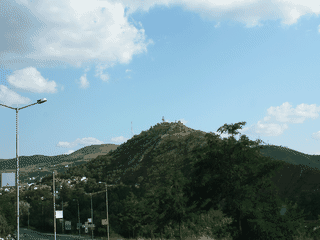

Štip
Eastern Europe and the Balkans · North Macedonia
Did you know?
- An Ottoman covered market, the Bezisten, now serves as an art gallery.
- The Holy Forty Martyrs feast pairs a March celebration with a hike up Isar Hill.
- Pastrmajlija is a canoe-shaped crust topped with chicken or pork and hot pepper.
See also
Overview
Štip's Isar Fortress ruins overlook the meeting of the Bregalnica and Otinja rivers. The surviving walls and a cross form an illuminated landmark after dark.
Languages: Macedonian
Why go?
Štip is the largest city in Eastern North Macedonia with about 44,000 residents, serving as the region's main educational, cultural, and economic hub for centuries. The city opened Goce Delčev University in 2007, bringing student energy to the city. It sees far fewer tourists than western Macedonia, which locals say makes people friendlier and more genuinely helpful to visitors. The city is renowned for Pastrmajlija—a canoe-shaped pizza-like dish topped with chicken or pork—considered a local specialty found at nearly every restaurant.
Adapted from Wikivoyage contributors · CC BY-SA 4.0
Getting in
Štip is accessible by bus via the inter-city services operated by "Balkan Ekspres" (Балкан Експрес), with connections from all cities in North Macedonia and some neighboring countries. The Bus Station (Автобуска станица Штип) is on Partizanska (Партизанска) Street near the City Stadium. No airport exists in Štip; the nearest major airport is in Skopje, about 50 km northwest. Road connections to Veles (30 km west) and Skopje (50 km northwest) are straightforward.
Adapted from Wikivoyage contributors · CC BY-SA 4.0
Get around
The most convenient ways to get around Štip are on foot or by taxi, as the city center is compact and walkable. A municipal bus fleet connects the center with outlying neighborhoods including Babi, Senjak, Prebeg, Makedonka, and Kezhovica. The central streets along the Otinja River and Marshall Tito (Кеј Маршал Тито) promenade are easily explored on foot, with major sights within 10-15 minutes of each other.
Adapted from Wikivoyage contributors · CC BY-SA 4.0
When to go
The Feast of the Holy Forty Martyrs (22 March) is a UNESCO-listed intangible cultural heritage event with music throughout the day and a traditional hike up to Isar Hill. The annual Pastrmajlija Festival takes place in late September, celebrating the city's signature dish. Spring (April-June) and autumn (September-October) offer pleasant temperatures for sightseeing. Summer can be hot, while winters are cold but manageable. Štip receives fewer tourists year-round compared to western Macedonia, making it a year-round destination without high-season crowds.
Adapted from Wikivoyage contributors · CC BY-SA 4.0
Where to stay
Accommodation in Štip is limited but functional, with all hotels roughly equivalent to 3-star properties though no official rating system exists. Hotel Oaza and Garni are centrally located on Marshall Tito (Кеј Маршал Тито) Street, with Garni being a boutique hotel with high standards and few rooms. Izgrev is about a 10-minute drive or 30-minute walk from the center, located on Veljko Vlahovich Street. Budget travelers should book ahead during university events or local festivals, as options are limited.
Adapted from Wikivoyage contributors · CC BY-SA 4.0
Food and drink
Štip is famous throughout North Macedonia for Pastrmajlija, a pizza-like crust in a long canoe shape topped with chicken or pork, sprinkled with hot pepper or pepper flakes. It is available at nearly every restaurant and celebrated at the annual Pastrmajlija Festival in late September. Traditional Macedonian cuisine is well-represented, and Italian-style pizza restaurants are popular (distinct from American pizza parlors). Each restaurant is known for a specific dish—ask locals for their recommendations. Dozens of kafani (bistros/bars) are found on nearly every corner, serving all types of alcohol at cheap prices. Drinking coffee is a social ritual that can last hours, and it is perfectly acceptable to sit for extended periods ordering little, unlike in many Western cities.
Adapted from Wikivoyage contributors · CC BY-SA 4.0
Things to do
The Isar Fortress ruins sit above the confluence of the Bregalnica and Otinja rivers, illuminated at night with a cross among the surviving walls. The Štip Museum (M-Sa 08:00-16:00, www.zavodimuzejstip.mk) houses over 1,000 archaeological pieces in the historic Arsovi House. Medieval churches include the 1332 Church of Saint Michael the Archangel (cross-shaped with single dome), the 1867 Church of Saint Nicholas (cathedral of the Bregalnica Diocese), and the 1350 Church of Saint John the Baptist perched on boulders above the Otinja. The 16th-century Bezisten (covered Ottoman market on Marshall Tito Street) now functions as an art gallery. Kežovica Spa in Novo Selo offers thermal waters at 62°C, believed to cure rheumatism, diabetes, and high blood pressure. Lake Mantovo, 25 km south, provides fishing and recreation (last 5 km on unpaved roads). The River Bregalnica scenic drive follows the second-largest river in Macedonia. The 1672 Emir Küçük Bridge spans the Bregalnica, historically crossing Serbian and Bulgarian territories during World War I.
Adapted from Wikivoyage contributors · CC BY-SA 4.0
Safety
Štip is among the safest cities in North Macedonia, considerably safer than major western cities. Violent crime and murders are almost non-existent, and property crimes are very rare. Foreigners are welcomed as a curiosity since the city is not heavily marketed to tourists. Police should be approached politely; the socialist-era legacy of brutal enforcement still lingers. Younger people typically speak passable English and are better sources for directions. The Roma neighborhoods in the north are picturesque but avoid giving money or gifts as it encourages panhandling. As elsewhere, do not accept offers from strangers, avoid dark or secluded places at night, and exercise standard urban precautions. Public intoxication is frowned upon. Do not be alarmed if glasses are slammed on the ground—this is a cultural practice during music, common among intoxicated men across the region including Greece, Bulgaria, Serbia, and Albania. Keep valuables secure, dress like locals to avoid unwanted attention, and use hotel safes.
Adapted from Wikivoyage contributors · CC BY-SA 4.0
Connectivity
Mobile connectivity is available through North Macedonian carriers with standard coverage in the city. ATMs are plentiful and operate 24/7 around the city. The Post Office (Пошта) is located on Engelsova Street. WiFi is commonly available in hotels and some cafes. The section on connectivity in the article is minimal; travelers should check with local SIM providers for current data packages.
Adapted from Wikivoyage contributors · CC BY-SA 4.0
Budget
Štip is very affordable for budget travelers. Local food at kafani and restaurants costs significantly less than western Europe or North America. Pastrmajlija and traditional dishes are available at budget-friendly prices at nearly every restaurant. Accommodation at hotels like Oaza and Garni offers basic comfort at low rates. Local transportation via buses or taxis is inexpensive. The city receives fewer tourists, meaning prices remain authentically local rather than inflated for visitors.
Adapted from Wikivoyage contributors · CC BY-SA 4.0
Day trips
Bargala in the village of Kozjak is a Byzantine town (4th-6th century AD) on the lower slopes of Plačkovica Mountain, with visible basilica, trade quarters, and fortification systems. The village of Kozjak also contains the 9th or 10th-century Church of Saint George, among the oldest preserved churches in North Macedonia. Lake Mantovo is 25 km south with unpaved final approach roads. The scenic drive along the River Bregalnica offers views throughout. Bargala is a UNESCO World Heritage Site candidate.
Adapted from Wikivoyage contributors · CC BY-SA 4.0
Etiquette
Smoking is prohibited in all nightclubs and bars (kafanas). Cigarettes and alcohol can be sold to individuals aged 18 and over. Coffee drinking is a long, social affair—it is not rude to sit for hours ordering little. Public intoxication is frowned upon. If visiting churches or mosques, dress modestly covering shoulders and knees. Ask permission before photographing people. Being polite and patient with locals, especially older generations, is appreciated. The tradition of slamming glasses during music (especially when intoxicated) is culturally acceptable among men but may surprise visitors.
Adapted from Wikivoyage contributors · CC BY-SA 4.0
Go next
From Štip, buses connect to Skopje (50 km northwest), the capital and major transportation hub with an international airport. Veles is 30 km west, another significant city in Central Macedonia. The road to Skopje passes through scenic eastern Macedonian countryside. From Skopje, travelers can access other destinations including Lake Ohrid, Bitola, and the western mountain regions of the country.
Adapted from Wikivoyage contributors · CC BY-SA 4.0
Field guide adapted from Wikivoyage contributors · CC BY-SA 4.0. Text has been adapted and organized for this guide. About our sources.
Places to know
A few starting points from the guide. Check current hours and prices before you go.
- sleep
Garni
Adapted from Wikivoyage contributors
- sleep
Hotel Oaza
Adapted from Wikivoyage contributors
- sleep
Izgrev
Adapted from Wikivoyage contributors
- eat
Italian-style Pizza restaurants
Popular pizza restaurants serving Italian-style pizza, distinct from American pizza parlors
Adapted from Wikivoyage contributors
- eat
Pastrmajlija restaurants
Pizza-like canoe-shaped crust topped with chicken/pork and pepper flakes, Štip's signature dish available everywhere
Adapted from Wikivoyage contributors
- eat
Traditional Macedonian restaurants
Local restaurants known for specific dishes—ask locals for recommendations on each establishment's specialty
Adapted from Wikivoyage contributors
- see
Bargala
On the lower slopes of Plačkovica Mountain is the Byzantine town of Bargala. It was constructed between the 4th and 6th centuries AD. Following archaeological excavations, a basilica, trade quarters, a water tank, a bath, a fortification system with an impressive main gate, and other infrastructure are visible today at the site. Findings have included gold coins and Slavic pottery from the 6th and 7th centuries.
Adapted from Wikivoyage contributors
- see
Bezisten
The historic covered Ottoman market is in the center of the city on the right bank of the Otinja. It was built of stone in the 16th or 17th century. It was destroyed by a fire during the Austro-Turkish war and rebuilt. Today, it is used as an art gallery.
Adapted from Wikivoyage contributors
Before you go
Connectivity
Standard mobile coverage in the city. WiFi available at hotels and some cafes. Post office on Engelsova Street.
Culture
Smoking banned in bars/nightclubs. Drinking coffee is a social ritual lasting hours. Public intoxication frowned upon. Local police check-in required for non-citizens.
Etiquette
Dress modestly when visiting churches. Be polite and patient, especially with older locals. The glass-slamming tradition during music is culturally normal and not a sign of aggression.
Food
Pastrmajlija is the signature dish—canoe-shaped pizza with chicken/pork and pepper flakes. Available at nearly every restaurant. Italian-style pizza popular. Kafani on every corner serve cheap food and alcohol.
Money
North Macedonian denar (MKD) is the local currency. ATMs are plentiful and operate 24/7 around the city. Credit cards are accepted at some hotels and larger restaurants but cash is preferred for smaller establishments and local transport.
Safety
Štip is very safe—violent crime is rare and property crime uncommon. Standard urban precautions apply. The Roma areas are safe to view but avoid giving money. Police should be approached politely.
Transport
Foot and taxi are best for getting around. Municipal buses connect center to outlying areas. Bus Station near City Stadium serves inter-city connections via Balkan Ekspres.