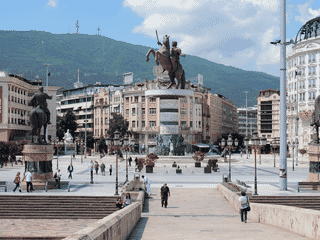

Skopje
Eastern Europe and the Balkans · North Macedonia
Did you know?
- The Stone Bridge connects the Old Town with Centar.
- Shopska salad combines tomato, cucumber and pepper with sirene cheese.
- St Saviour Church has a carved iconostasis.
See also
Overview
Skopje pairs Ottoman baths and caravanserais in Stara Čaršija with grand neoclassical monuments in Centar. The contrast gives the capital a distinctive architectural character.
Languages: Macedonian
Why Go
Skopje is a capital of striking contrasts: Ottoman Turkish baths and caravanserais fill the Stara Čaršija, while the Centar district glitters with massive neoclassical monuments to Alexander the Great. The 1963 earthquake destroyed 75% of the city, and Kenzo Tange's rebuilding plan left behind Soviet-style commieblocks alongside contemporary construction. Beyond the architecture, Skopje offers excellent museums (Macedonian Struggle, Holocaust, Mother Teresa Memorial House), vibrant café culture, and access to natural gems like Matka Canyon and Mount Vodno—all at European budget levels.
Adapted from Wikivoyage contributors · CC BY-SA 4.0
Getting In
Skopje International Airport (SKP) sits 20 km southeast, with connections to Vienna, Zurich, Dubai, Istanbul, and London Luton among others. Vardar Express buses run to/from the airport (tickets bought at the bus station). The Railway Station and Bus Station share a transport center; trains serve Belgrade and Sofia, while buses connect to Pristina (1.5 hr), Ohrid (3.5 hr), Thessaloniki (4.5 hr), and Sofia (6 hr). Note that train tickets cannot be purchased with credit cards, though the bus station has a reliable exchange office open 06:30-18:30.
Adapted from Wikivoyage contributors · CC BY-SA 4.0
Getting Around
City and regional buses depart from the transport center under the railway viaduct; bus #60 serves Matka Canyon and Millennium Cross. Urban buses are inexpensive and cover most tourist areas. The city center is walkable—Stara Čaršija, the Stone Bridge, and Macedonia Square are all within 15-20 minutes of each other. Taxis are plentiful and cheap but negotiate or insist on the meter.
Adapted from Wikivoyage contributors · CC BY-SA 4.0
When to Go
Spring (May) and autumn (September-October) offer pleasant temperatures and major festivals. The Skopje Summer Festival brings international cultural events; October hosts both the Skopje Jazz Festival (considered one of Europe's best) and the Vino Skop Wine Festival. July-August can be hot; December-February are cold with occasional snow. Skopje's nightlife concentrates in City Park nightclubs during summer months.
Adapted from Wikivoyage contributors · CC BY-SA 4.0
Where to Stay
Accommodation in Skopje is among the cheapest in Europe. The Centar district offers modern hotels and proximity to government buildings, while Stara Čaršija provides Ottoman-era charm and budget hostels near bazaars. Budget travelers can find dorm beds from 600-900 MKD and private rooms from 1,200-1,800 MKD. Using "Skopje" rather than "Skopje City Center" on booking sites reveals more options.
Adapted from Wikivoyage contributors · CC BY-SA 4.0
Food and Drink
Macedonian cuisine features burek (flaky filo pie with meat, cheese, or spinach), Shopska salata (tomato-cucumber-pepper salad with sirene cheese), and grilled meat platters. Bistros and bakery cafes serving burek are ubiquitous and cheap (around 1 EUR). The Old Bazaar and Bit Pazar offer cheap fresh produce, cheese, and spices. International cuisine—Chinese, Italian, Indian, Greek, Mexican—is well-represented in the city center. The Green Market (Zeleno Pazarce) near Parliament and Bunjakovec Market near the Cathedral provide local food shopping.
Adapted from Wikivoyage contributors · CC BY-SA 4.0
Things to Do
Key sights include the Skopje Fortress (Kale) above the Vardar, the 15th-century Mustafa Pasha Mosque, St Saviour Church with its carved iconostasis, and the Stone Bridge connecting Old Town to Centar. Macedonia Square features the massive Alexander the Great monument and Porta Macedonia triumphal arch. Mount Vodno (1,070 m) is reached by cable car, topped by the Millennium Cross. Matka Canyon hosts medieval churches and monasteries in scenic mountains, accessible by bus #60. The Old Bazaar is the largest in the Balkans, full of Ottoman-era shops.
Adapted from Wikivoyage contributors · CC BY-SA 4.0
Buy
The Old Bazaar in Stara Čaršija is the largest in the Balkans—countless small shops line historic streets. Bit Pazar is Skopje's biggest food market for cheap fruits, vegetables, cheese, teas, and spices. The Green Market (Zeleno Pazarce) near Parliament offers similar produce. Centar houses modern malls: GTC (oldest), Ramstore Mall, Super Vero, and City Gallery. Skopje City Mall in Karpoš is the region's biggest, with 150 shops, 9 cinemas, and a hypermarket. East Gate Mall in Outer Skopje is the newest and largest.
Adapted from Wikivoyage contributors · CC BY-SA 4.0
Sleep
Accommodation options are numerous and inexpensive—probably the most affordable in Europe. Most central hotels are within walking distance of the main sights. Booking directly or using "Skopje" (not "City Center") on aggregators reveals the widest selection. Budget hostels cluster near Stara Čaršija and Centar, with dorm beds starting around 600 MKD.
Adapted from Wikivoyage contributors · CC BY-SA 4.0
Drink
Skopje's bar scene has a sub-cultural feel with decent options; nightclubs concentrate in City Park during summer. The city has a mix of casual bars and occasionally shady tourist cocktail venues. Live music clubs stay open until 01:00 or later. Local wine from the Tikveš region is worth trying, and Skopje hosts the annual Vino Skop Wine Festival in October.
Adapted from Wikivoyage contributors · CC BY-SA 4.0
Do
The Macedonian National Theatre hosts year-round theatre, opera, and ballet performances. City Park contains pathways around small lakes, a children's amusement park, cafes, the city zoo, and stadium. Football matches occur at Toše Proeski National Arena, home to FK Vardar and FK Rabotnički. Annual festivals include the Skopje Summer Festival (cultural events), Skopje Jazz Festival (October, one of Europe's best), May Opera Evenings, and Taksirat Festival (late November/December, major winter event).
Adapted from Wikivoyage contributors · CC BY-SA 4.0
Safety
Skopje and all of North Macedonia are relatively safe. Standard urban precautions apply—beware of pickpockets near major tourist sites and begging, particularly targeting tourist-looking people. The article specifically advises avoiding the old town and bazaar if you want to skip tourist-oriented food, noting it's overpriced with potential scams; instead, areas south of the river offer more authentic charm and better value.
Adapted from Wikivoyage contributors · CC BY-SA 4.0
Budget
Skopje is one of Europe's most budget-friendly capitals. Street food like burek costs around 1 EUR; cheap restaurant meals run 150-300 MKD. Hostel dorms start at 600 MKD, private rooms from 1,200 MKD. City bus tickets are inexpensive; taxi rides within the city center are typically 100-300 MKD. Daily backpacker budget of 1,500-2,500 MKD (25-40 EUR) covers accommodation, food, transport, and activities.
Adapted from Wikivoyage contributors · CC BY-SA 4.0
Day Trips
Matka Canyon is Skopje's premier natural attraction—medieval churches hidden in scenic mountains, accessible by bus #60 from the transport center. Mount Vodno with the Millennium Cross is reached by cable car, offering panoramic city views. The 55-arch Skopje Aqueduct is an archaeological site nearby. Tetovo (1 hour away) features the uniquely painted Mosque and Albanian-speaking community. Kosovo—Pristina and especially Prizren—can be visited as a day trip (30 minutes to border), though overnight stays allow better exploration.
Adapted from Wikivoyage contributors · CC BY-SA 4.0
Connectivity
WiFi is widely available in hotels, cafes, restaurants, and public spaces. For mobile data, local SIM cards from Makedonski Telekom, A1, or VIP are readily available at convenience stores and operator shops. Skopje uses Type C and Type F electrical outlets (European standard, 230V). City power infrastructure is generally reliable.
Adapted from Wikivoyage contributors · CC BY-SA 4.0
Etiquette
Dress modestly when visiting mosques and churches—cover shoulders and knees. Greetings are important; a firm handshake is standard, followed by verbal greetings. Macedonians are generally hospitable and appreciate when visitors make an effort with local phrases. During Herdelezi (May 8), the wedding season begins, and wedding processions are common daily events.
Adapted from Wikivoyage contributors · CC BY-SA 4.0
Go Next
Ohrid (3.5 hr by bus) is the essential Macedonian destination—a scenic lakeside city called the "Balkan Jerusalem" with a thousand churches. Tetovo (1 hr) offers the Painted Mosque and Albanian culture. Kokino is a stunning paleolithic solar observatory atop a mountain near Kumanovo. Kosovo's Prizren is well worth the short trip for its historic Ottoman architecture. Thessaloniki, Greece (4.5 hr by bus) offers beaches and history for Macedonians seeking sun.
Adapted from Wikivoyage contributors · CC BY-SA 4.0
Field guide adapted from Wikivoyage contributors · CC BY-SA 4.0. Text has been adapted and organized for this guide. About our sources.
Places to know
A few starting points from the guide. Check current hours and prices before you go.
- sleep
Best Western Hotel
Mid-range option with good location
Recorded price: Rooms from 1,500 MKD
Adapted from Wikivoyage contributors
- eat
Bit Pazar
Largest food market with cheap produce, cheese, and spices
Adapted from Wikivoyage contributors
- eat
Bunjakovec Market
Food market near the Cathedral
Adapted from Wikivoyage contributors
- eat
Burek shops in Old Bazaar
Traditional flaky filo pies with meat, cheese, or spinach
Recorded price: Around 1 EUR
Adapted from Wikivoyage contributors
- eat
Green Market (Zeleno Pazarce)
Local produce market near Parliament Building
Adapted from Wikivoyage contributors
- see
Cerje archaeological site
Its unique finds include the figurine known as Adam from Govrlevo, one of the earliest prehistoric male figurines, from the Early Stone Age.
Adapted from Wikivoyage contributors
- see
Gradishte
A fortified settlement from the Early Byzantine period. It is believed to be Taoresion, the native town of Emperor Justinian.
Adapted from Wikivoyage contributors
- see
Holocaust Museum
Museum dedicated to the Holocaust in Macedonia
Adapted from Wikivoyage contributors
Before you go
Accommodation
Among cheapest in Europe. Dorm beds from 600 MKD. Private rooms from 1,200 MKD. Centar and Stara Čaršija best locations. Search "Skopje" not "City Center" on booking sites.
Connectivity
WiFi widely available. Local SIM cards from Makedonski Telekom, A1, or VIP available at convenience stores. Type C/F plugs, 230V.
Culture
Eclectic mix of Christian and Islamic culture. Chess-playing in morning cafés; lively bar scene until 01:00. Multi-ethnic city with Macedonian, Albanian, Turkish, Roma, Serbian communities.
Food
Must-try dishes: burek (filo pie), Shopska salata, grilled meat platters. Street food very cheap (1 EUR for burek). International cuisine abundant in city center.
Money
Macedonian denar (MKD) is the local currency. Credit cards accepted in hotels, malls, and restaurants; cash preferred in bazaars and small shops. Exchange offices plentiful, including reliable one at bus station (06:30-18:30).
Safety
Generally safe; standard precautions against pickpocketing near tourist sites. Begging occurs at major attractions. Avoid scams in touristy Old Bazaar area.
Transport
City buses depart from transport center near railway station. Bus #60 to Matka Canyon and Millennium Cross. Central area walkable. Taxis available but negotiate fares. Skopje has no metro.
Weather
Continental climate with hot summers (30°C+) and cold winters (-5 to 5°C). Spring and autumn are most pleasant for sightseeing. Mount Vodno has snow in winter.