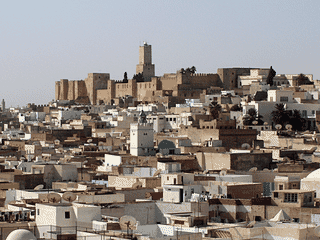

Sousse
Africa · Tunisia
See also
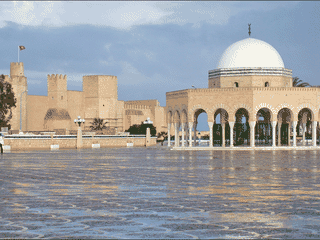
_(49758623897).jpg)
Monastir
Tunisia35.77°N 10.82°E
Tunis
Tunisia36.80°N 10.18°E · 4 m
Carthage
Tunisia36.86°N 10.33°E
Overview
Sousse is one of Tunisia's oldest cities, with a UNESCO-listed medina featuring a labyrinthine souk, a historic Ribat fortress, and a Grand Mosque built around 850 AD. Located on the coast with good beaches and clear turquoise sea, it offers a more affordable and less chaotic alternative to larger North African tourist hubs.
Languages: Arabic
Why go?
Sousse is one of Tunisia's oldest cities, with a UNESCO-listed medina featuring a labyrinthine souk, a historic Ribat fortress, and a Grand Mosque built around 850 AD. Located on the coast with good beaches and clear turquoise sea, it offers a more affordable and less chaotic alternative to larger North African tourist hubs. The city is particularly popular with Russian, Serb, Croatian, British, German, and Eastern European visitors, though you'll find many closed hotels along the northern beachfront. The medina and beach areas remain lively, and Sousse is one of the few places in Tunisia with animated nightlife.
Adapted from Wikivoyage contributors · CC BY-SA 4.0
Getting in
The nearest major airport is Enfidha–Hammamet Airport (NBE), located in the outskirts of Enfidha city. Alternatively, Monastir Airport (MIR) is served by light rail from Station Aeroport Skanes Monastir, with tickets costing 1 DT from Sousse to Monastir. The main train station is Gare Sousse, connecting the city to regional destinations.
Adapted from Wikivoyage contributors · CC BY-SA 4.0
Getting around
Taxis in Sousse have a bad reputation—always agree a price before boarding and ensure the meter is reset to the 0.500 DT standing charge. Daytime fares run about 4.100 DT to Port El Kantaoui with a proper meter, but tourist "special rates" often reach 7 DT. Between 21:00-05:00, rates increase to 0.510 DT/km. Shared taxis (louages) cost about 10% of taxi fares and connect to bigger towns; yellow-with-blue-stripe louages serve nearby destinations while white-with-red-stripe ones handle far connections. Light rail connects central Sousse to Mahdia via Monastir for 1 DT. Tuk-tuks (bright purple) and mini-trains to Port El Kantaoui (12 km away) cost 2-2.5 DT per journey. Horse-drawn carriages offer another option at no more than double taxi price.
Adapted from Wikivoyage contributors · CC BY-SA 4.0
When to go
Sousse has a hot semi-arid climate (BSh), close to hot-summer Mediterranean. Summer temperatures range from 20.6-31.5°C with minimal rainfall (2-7 mm in July-August), while winter brings 7-8°C and 43-53 mm monthly rainfall. The best beach weather runs June-September. Note that no alcohol is sold on Fridays. Peak tourist season brings more animated nightlife, though many hotels along the northern beachfront remain permanently closed.
Adapted from Wikivoyage contributors · CC BY-SA 4.0
Where to stay
Accommodation in Sousse ranges from spartan budget options to resort hotels. Hôtel Gabes in the medina offers singles at 10 DT and doubles at 16 DT—very basic but trustworthy. Hotel de Paris near the medina entrance charges from 50 DT for singles (June 2025), offering spotlessly clean rooms. The Abou Nawas Boujaafar Hotel on Avenue Habib Bourguiba features thalasso center with heated salt-water pool, private beach, and three restaurants at moderate prices. Don't compare directly to European hotels—expect to rate them a star or two lower.
Adapted from Wikivoyage contributors · CC BY-SA 4.0
Food and drink
Nice meals cost around 10 DT or less without negotiation. Tap water is generally not harmful, though most tourists prefer bottled mineral water (0.200-0.400 DT per 0.5L, 0.300-0.650 DT per 1.5L). Coke costs 0.800-1.5 DT depending on venue. The local favorite beverage is tea—au menthe (with mint and sugar) and aux ammandes (with crushed almonds)—often served while smoking hookah (chicha). You'll typically be offered tea when purchasing items over 60-70 DT in the souk. Local beer (Celtia) costs 2-3 DT for 0.3L, while local wine runs 2-12 DT in stores (double in bars). Hard alcohol is hard to find and expensive; hotel bars charge 3-6 DT for 50ml of vodka or gin, and gin or whiskey bottles cost 80-120 DT at Magasin General supermarkets (state-owned, the only outlets authorized to sell hard liquor—one is on 7 November avenue near Sousse Palace hotel).
Adapted from Wikivoyage contributors · CC BY-SA 4.0
Things to do
All main sights cluster within the medina—follow the signposted "cultural walk" or wander to discover western residential areas with hidden surprises. The Grand Mosque (5 DT, 8:00-14:00) dates to c. 850 AD in austere Aghlabite style with reed-mat prayer room. The Sousse Ribat (8 DT, 8:00-17:30 summer 8:00-19:00) offers fantastic Medina views from its watchtower. The Sousse Archaeological Museum (10 DT, 9:00-17:00) in the old Kasbah houses mosaics second only to the Bardo. Musee Dar Essid (5 DT, 10:00-18:00) on Boulevard Yahia Ibn Omar displays a furnished 200-year-old family home with a tower used to track Ramadan. The Sousse Catacombs remain closed for reconstruction since 2016. Walking around the fishing boats at the port is pleasant, and families can take 'pirate' ship trips with nautical activities. Golf is available in Port El Kantaoui and Monastir.
Adapted from Wikivoyage contributors · CC BY-SA 4.0
Safety
A terrorist attack in June 2015 killed 38 mostly British tourists; the UK government still recommends against all but essential travel to Tunisia as a whole. However, no stronger warning specifically targets Sousse as of August 2016. Street crime is nearly non-existent—most streets stay busy until late night. Respect locals and you'll be respected. Expect sales hassle in the souk; be nice with a smile and use "non, merci" to end conversations quickly. Women should avoid the red light area in the northwest medina (screened by overlapping walls). English speakers in the street are usually vendors—end conversations quickly to avoid indignation.
Adapted from Wikivoyage contributors · CC BY-SA 4.0
Connectivity
Merchants in the medina speak French, English, Spanish, and German—you can mix languages freely. WiFi is likely available at hotels and cafes, though specific providers and speeds are not detailed in the article. Power outlets likely follow the European standard (Type C/F, 230V) common in Tunisia.
Adapted from Wikivoyage contributors · CC BY-SA 4.0
Budget
Sousse is very affordable for backpackers. Daily budget can include: meals for 10-20 DT, transport within city 5-10 DT, museum entrances 5-10 DT total, water and drinks 2-5 DT. Budget accommodation starts at 10 DT, mid-range hotels from 50 DT. Nightlife venues offer free entrance with 5 DT beers. A full day of sightseeing, eating, and transport can cost as little as 30-50 DT.
Adapted from Wikivoyage contributors · CC BY-SA 4.0
Day trips
El Jem, approximately 70 km south, houses a Roman Amphitheatre arguably better preserved than Rome's—it appeared in Gladiator and is a UNESCO World Heritage site. Kairouan, west of Sousse, is an important Islamic pilgrimage center and UNESCO site. Monastir offers beaches and the largest Ribat in the Maghreb. Port El Kantaoui, 12 km away, is a purpose-built tourist resort with marina, zoo, and water park. Friguia Zoo near Enfidha lets you see lions and elephants. Sahara Explorer offers 2-day/1-night or 3-day/2-night "safaris" to the desert edge, visiting El Djem, Berber cave dwellings, Chott el Jerid salt lake, and camel rides—arrange through tour companies, travel agents, or hotel receptions.
Adapted from Wikivoyage contributors · CC BY-SA 4.0
Etiquette
Haggling is expected in the medina souk—merchants will quote outrageous prices, so bargain light-heartedly and don't feel obligated to buy if you can't agree. Soula Centre just outside the souk has fixed prices if you want to establish values first. Make your intentions clear from the start: if just browsing, say nicely with a smile that you're not interested. Don't keep thinking about the price after purchasing—focus on the good deal you made versus home-country prices. Dress modestly when visiting the Grand Mosque; traditional dress is available for covering up. Women may receive extra attention from local men but this is curiosity rather than danger.
Adapted from Wikivoyage contributors · CC BY-SA 4.0
Go next
From Sousse, onward connections include: El Jem (70 km south, UNESCO Roman Amphitheatre), Kairouan (west, Islamic pilgrimage center, UNESCO), Monastir (beaches, largest Ribat in Maghreb), Port El Kantaoui (purpose-built resort with marina), Friguia Zoo (near Enfidha), and Sahara Explorer desert tours (2-3 days). Light rail connects to Mahdia via Monastir. Shared taxis (louages) serve most bigger towns in Tunisia.
Adapted from Wikivoyage contributors · CC BY-SA 4.0
Field guide adapted from Wikivoyage contributors · CC BY-SA 4.0. Text has been adapted and organized for this guide. About our sources.
Places to know
A few starting points from the guide. Check current hours and prices before you go.
- sleep
Abou Nawas Boujaafar Hotel
Great food and services. Thalasso center with an interior (30 °C, salt water) pool, another outside and private beach. 3 restaurants. Deco from the 1980s but not expensive. 5 minutes away from the medina and near all transportations.
Adapted from Wikivoyage contributors
- sleep
Hotel de Paris
Spotlessly clean if rather austere hotel near the main entrance to the medina.
Recorded price: Singles from 50 DT (June 2025)
Adapted from Wikivoyage contributors
- sleep
Hôtel Gabes
Very spartan rooms but good location and trustworthy staff. A lot of negative reviews.
Recorded price: 10 DT for a single room, 16 DT for double
Adapted from Wikivoyage contributors
- see
Eglise St Felix
Adapted from Wikivoyage contributors
- see
Grand Mosque of Sousse
A surprisingly tranquil place despite its location in the middle of the city. Built c. 850 AD, this mosque is simple and austere in the Aghlabite style, no decoration whatsoever aside from a string of angular Arabic and curved arches. Even the prayer room is covered in reed mats instead of the usual carpet. You must be properly dressed to enter, but traditional dress is available for covering up.
Recorded price: 5 DT
Adapted from Wikivoyage contributors
- see
Musee Dar Essid
Extremely charming little museum located just within the old city walls. Approaching the Ribat from Hotel de Paris along the north wall, follow signs for Musee Dar Essid. It was the home of a long standing Tunisian family that has now become a museum with the passing of the last family member. The property centers on an open courtyard from which access to all the rooms can be gained, including bedrooms for the first and second wife and, in turn, to the children's rooms. All are delightfully fully furnished, with some curtains dating back 200 years, and with German clocks imported from the 1800s. The house is complete with a tower, which was used to watch the stars for the onset of Ramadan, from which views over Sousse can be gained - it is higher than the Ribat. There is also a small cafe area with great views. A must see.
Recorded price: 5 DT, 1 DT for photo rights
Adapted from Wikivoyage contributors
- see
Sousse Archaeological Museum
In the gently crumbling old Kasbah on the south-western edge of the Medina. Contains a large collection of mosaics second to the Bardo and other archaeologic artifacts from Roman times.
Recorded price: 10 DT
Adapted from Wikivoyage contributors
- see
Sousse Ribat
Whilst not as impressive or extensive as the Ribat in Monastir this fortified holy site is a worthwhile visit and served as home to a branch of Islamic warriors very similar in nature and creed as the Hospitaller Knights that lived in Rhodes. Climbing to the top of the watch tower affords you fantastic views over the Medina.
Recorded price: 8 DT
Adapted from Wikivoyage contributors
Before you go
Culture
Expect aggressive haggling in souk—normal and part of the culture. Tea (au menthe or aux ammandes) is the local favorite drink. No alcohol sold on Fridays.
Food
Meals cost around 10 DT or less without negotiation. Bottled water 0.200-0.650 DT. Local beer (Celtia) 2-3 DT. Local tea at cafes is the cultural staple.
Money
Local currency is the Tunisian dinar (DT). Taxis should use meters (0.500 DT standing charge); agree prices beforehand for tourist routes. ATMs available for cash withdrawal.
Safety
UK advises against non-essential travel to Tunisia following 2015 terrorist attack. Street crime is low but expect sales hassle in souk. Women should avoid northwest medina red light area.
Transport
Taxis overcharge tourists—always agree price before boarding or insist on meter. Shared taxis (louages) are 10% of taxi fares. Light rail to Monastir costs 1 DT.
Weather
Hot semi-arid climate with summer temperatures 20-31°C and minimal rain (July-August). Winters 7-8°C with more rainfall. Best beach weather June-September.