Carthage
Africa · Tunisia
See also
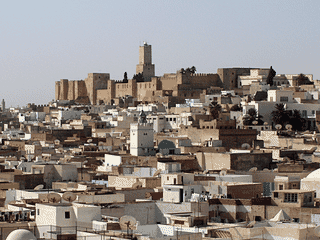

Sousse
Tunisia35.83°N 10.63°E · 6 m
Tunis
Tunisia36.80°N 10.18°E · 4 m
Overview
Carthage was a powerful Phoenician city from the 6th century BCE, home to Hannibal and later rebuilt by the Romans. Today, its extensive ruins, museums, and UNESCO listing make it a must-visit for history lovers, just a short train ride from Tunis.
Languages: Arabic
Why go?
Carthage was a powerful Phoenician city from the 6th century BCE, home to Hannibal and later rebuilt by the Romans. Today, its extensive ruins, museums, and UNESCO listing make it a must-visit for history lovers, just a short train ride from Tunis. The area is also an affluent suburb with elegant neighborhoods.
Adapted from Wikivoyage contributors · CC BY-SA 4.0
Getting in
Take the TGM light rail line from Tunis to stations like Carthage-Hannibal (for most sites), Carthage-Byrsa, or Carthage-Salammbo. The journey is quick and inexpensive.
Adapted from Wikivoyage contributors · CC BY-SA 4.0
Getting around
Most sites are within walking distance of each other, but the area is large and sightseeing can be tiring on hot days. Wear comfortable shoes and bring water.
Adapted from Wikivoyage contributors · CC BY-SA 4.0
Things to do
Explore the Antonine Baths, the largest Roman baths outside Rome, the Carthage Museum on Byrsa Hill, the Punic Tophet, the Roman Amphitheater, the Water Cisterns, and the World War II American Cemetery. A multi-site ticket grants access to several archaeological sites.
Adapted from Wikivoyage contributors · CC BY-SA 4.0
When to go
Summer brings the International Festival of Carthage with performances in the Roman theatre. Spring and autumn offer milder weather for sightseeing. Some sites may have limited hours off-season.
Adapted from Wikivoyage contributors · CC BY-SA 4.0
Food and drink
Several eateries are scattered around the district, though most are off the main tourist trail. Le Rest'O near Byrsa offers Mediterranean cuisine with great views. A small cafe at the Antonine Baths serves drinks and snacks, and Sale sucre patisserie near Saint Cyprien provides pastries.
Adapted from Wikivoyage contributors · CC BY-SA 4.0
Budget
Admission to most sites is covered by a multi-site ticket (price not specified). The Oceanographic Museum costs 0.5 DT. The American Cemetery and Water Cisterns are free. Meals and drinks are inexpensive, especially at local eateries.
Adapted from Wikivoyage contributors · CC BY-SA 4.0
Safety
It is illegal to photograph the Presidential Palace. Doing so may lead to up to 3 years in prison. Otherwise, the district is affluent and well-policed, making it safe for tourists.
Adapted from Wikivoyage contributors · CC BY-SA 4.0
Day trips from Carthage
Nearby Sidi Bou Said is a charming town just a few train stops away, perfect for sunset and dinner. La Goulette, La Marsa, and the capital Tunis are also easily accessible via the TGM line.
Adapted from Wikivoyage contributors · CC BY-SA 4.0
Go next
From Carthage, continue to La Goulette, La Marsa, Sidi Bou Said, or the laid-back capital Tunis with its authentic souk.
Adapted from Wikivoyage contributors · CC BY-SA 4.0
Field guide adapted from Wikivoyage contributors · CC BY-SA 4.0. Text has been adapted and organized for this guide. About our sources.
Places to know
A few starting points from the guide. Check current hours and prices before you go.
- sleep
Villa Didon
This pricey hotel/spa offers food near the Carthage Museum. It features a stylish lounge and terrace with delightful views. Very pleasant for an evening beer or glass of wine, though apparently closed during off season.
Recorded price: From 634 TN
Adapted from Wikivoyage contributors
- eat
Antonin Baths cafe
A small cafe on the Antonin Baths premises. Hot/cold drinks and some snacks.
Adapted from Wikivoyage contributors
- eat
Le Rest'O
Mediterranean cuisine and classy interior design. Great views of all of the city and the bay.
Adapted from Wikivoyage contributors
- eat
Sale sucre
A tiny patisserie. Drinks can be acquired opposite at the gas station.
Adapted from Wikivoyage contributors
- see
Acropolium
St Louis Cathedral forms one edge of the museum, but does not appear to be open - it was completed in 1890.
Adapted from Wikivoyage contributors
- see
Amphitheater
An eviscerated Roman amphitheatre constructed in the first century CE, ringed by forested, rolling hills. Interesting for a quick stroll, but it is unlabelled in any language. May therefore be more interesting with an enthusiastic guide. Worth a look. The adjacent forest may be a nice spot for a picnic.
Recorded price: Entrance fee included in the 10-site ticket
Adapted from Wikivoyage contributors
- see
Antonin Baths
Ruins of the largest Roman baths outside Rome itself. The site also has a Punic cemetery, some old houses, some Punic kilns, a chapel, some graves, and mosaics. Guides are available in a number of languages, and may be worthwhile as the site is large. It is illegal to take photographs in the direction of the presidential palace. Doing so, especially when traveling alone, may land you in jail for up to 3 years, though the guards don't appear too concerned.
Adapted from Wikivoyage contributors
- see
Basilica of Saint-Cyprien
This historic Christian temple was surrounded by a vast cemetery. Rediscovered in 1915, it was oriented toward a spectacular ocean view which can still be enjoyed. The temple is thought to have been dedicated to the well being of seafarers. All of the valuable remains have been removed, leaving the site somewhat empty. On the plus side, it makes a good picnic spot and there's a chocolate and pastry store right nearby with a service station opposite for drinks. Located very far north relative to most of the Carthaginian ruin sites, this is a good option for the start of a long day's walking.
Recorded price: Free
Adapted from Wikivoyage contributors
Before you go
Accessibility
The sites involve a lot of walking and uneven terrain; may be challenging for those with mobility issues.
Entry
No special entry requirements for the archaeological sites; standard Tunisian visa rules apply.
Language
Arabic and French are widely spoken. Museum signs are in Arabic and French only.
Money
Local currency is the Tunisian Dinar (TN). Many sites have a multi-site ticket. The Oceanographic Museum costs 0.5 DT.
Safety
Photographing the Presidential Palace is illegal and can lead to imprisonment. Otherwise, the area is safe and well-policed.
Transport
Carthage is easily reached from Tunis via the TGM light rail. Frequent service to multiple stations.