
Potosí
South America · Bolivia
Did you know?
- The former royal mint made coins from locally mined silver.
- Miners leave offerings to El Tío, the figure believed to rule underground.
- Kalapurka is a spicy soup served hot with a volcanic rock.
See also

Sucre
Bolivia19.03°S 65.26°W · 2,810 m

Uyuni
Bolivia20.47°S 66.83°W · 3,670 m
Torotoro National Park
Bolivia18.10°S 65.77°W · 2,542 m
Tupiza
Bolivia21.44°S 65.72°W · 2,850 m
Overview
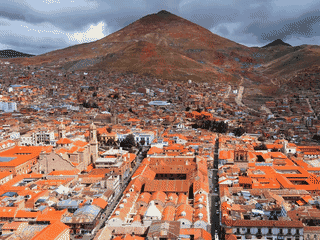
Potosí has a UNESCO-listed colonial center filled with baroque churches and mansions. Cooperative mines still operate on the slopes of Cerro Rico above the city.
Languages: Aymara, Guaraní, Quechua, Spanish
Why Go
Potosí sits at roughly 4,000 metres, making it one of the world's highest large cities. Founded in 1546 after the discovery of silver in Cerro Rico, it became one of the wealthiest cities in the Americas—possibly producing 60,000 tons of silver over three centuries. Today, the UNESCO-listed colonial centre features baroque churches and mansions built with that wealth, while cooperative mines still operate in Cerro Rico's slopes. The city offers a stark, atmospheric experience: colonial architecture, mining tours, and easy access to Sucre, Uyuni, and the salt flats beyond.
Adapted from Wikivoyage contributors · CC BY-SA 4.0
Getting Around
Taxis are cheap and plentiful throughout Potosí, though always negotiate the price before boarding—some charge per person, which can lead to disputes at payment time. Buses from the Centro area to the main bus terminal cost 1 Bs. From the main terminal, taxis run 3-5 Bs depending on your bargaining skills and time of day. The old terminal (Ex Terminal Antigua) on Av. Universitaria is a 30-minute uphill walk from the city centre; shared taxis to Sucre depart from there. The new terminal in the northeast requires a 30-minute bus ride (Bs. 1.50) and costs Bs. 2 to access the platforms. Most long-distance buses to Sucre and elsewhere use the new terminal.
Adapted from Wikivoyage contributors · CC BY-SA 4.0
See
Casa Nacional de Moneda (Cl. Ayacocha s/n) was the former royal mint of Spain, producing coins from locally-mined silver during the colonial era. Entrance costs Bs. 40 for foreigners (Bs. 20 extra for photos), Bs. 10 for Bolivians; guided tours in English run Monday–Saturday at 09:00, 11:00, and 14:30, Sunday at 10:30 or 11:00, taking about 2 hours. The museum houses religious art, contemporary art, local minerals, and centuries of technological artifacts. El Cerro Rico (the "rich hill") dominates the skyline in shades of red and tan, visible from many streets in the historic centre. Convento de Santa Teresa (Calle Chichas, bottom end of Calle Ayacucho) offers Spanish-only tours for Bs. 21 explaining Carmelite nuns' life and work. Torre de la Compañia de Jesus (Calle Ayaucho, half a block from the square) costs Bs. 10 and provides panoramic views; open Monday–Saturday 08:00–20:00, Sunday 09:00–17:00. The Cathedral Basilica of Our Lady of Peace rounds out the colonial religious architecture.
Adapted from Wikivoyage contributors · CC BY-SA 4.0
Do
The cooperative mine tour is Potosí's defining experience. Shop around—prices range Bs. 80-130—before booking. Tours start at the miners' market where you buy gifts: coca leaves, drinks, cigarettes, even dynamite. You visit an ore refinery plant, then head into the mines for 2-3 hours, crawling through passages unchanged since colonial times. A highlight is the chamber dedicated to "El Tío"—a diabolic figure miners make offerings to, saying God rules aboveground but El Tío is in charge below. Working conditions are harsh: most miners die of silicosis in their forties, and the dust contains silicon, arsenic, cyanide, and asbestos fibres. Wear a disposable mask. Water dropping from walls and ceiling has been linked to chemical contamination. Safety measures are minimal to nonexistent. For Hollywood movies in Spanish, visit Cine de Universidad at Bolivar 893.
Adapted from Wikivoyage contributors · CC BY-SA 4.0
When to Go
Potosí's high altitude (4,000m) means cold nights year-round, with temperatures dropping below freezing in winter months (May–August). Days are generally sunny but can be windy. The dry season (May–October) offers clearer skies and better conditions for photography and mine tours, though this is also peak season. Wet season (November–April) brings afternoon thunderstorms but fewer tourists. Allow 1-2 days for altitude acclimatisation before undertaking strenuous activities like the mine tour.
Adapted from Wikivoyage contributors · CC BY-SA 4.0
Where to Stay
Budget accommodation clusters around the central Plaza. Hostal More (Bs. 50 pp) offers clean rooms with shared bathroom and great views, suitable for groups up to 4. Koala Den (Junín 56, 4 blocks from the square) features heated rooms, book exchange, fast WiFi, and dorm beds for Bs. 60-70 (6-8 bed dorm) with breakfast including eggs and fruit; doubles and triples available. Carlos Hostal V (Calle Linares No 42, from Bs. 80) provides great beds, fast WiFi, warm showers, and a lounging area in the heart of Centro Potosí. Residencial Felcar (Av Serrudo esq. Bustillos 345, tel. (02)6224966) has a sunny patio, hot showers 08:00-22:00, and singles for Bs. 25. For something unique, Sky Hacienda Hotel (Mosoj Llajta, between Potosí and Sucre) costs from US$95, offering architecturally unique rooms with 360-degree panoramic mountain views.
Adapted from Wikivoyage contributors · CC BY-SA 4.0
Eat
Mercado Central holds the cheapest meals in town. Sky Room (Calle Bolivar 701, 3rd floor, also called Mirador) serves a 4-course lunch for Bs. 15 with nice views of Cerro Rico. Doña Eugenia (corner of Ortega and Santa Cruz, near the cemetery—take a cab) is a Potosí institution serving Kalapurka soup: a spicy soup served hot with a volcanic rock. Sumaj Orcko (Cl. Cobija 34) offers big plates for Bs. 30-35 and lunch deals for Bs. 15. For breakfast and pastries, try Pasteleria Cherrys (Padillo 8). Tenedor de Plata (Cnr Tarija & Linares) is an upmarket restaurant with great food at reasonable prices; start with the house salad for Bs. 12. Chifa Rosa (Cl. Cobija 38) provides cheap but unremarkable Chinese food.
Adapted from Wikivoyage contributors · CC BY-SA 4.0
Safety
Potosí is relatively safe compared to other Bolivian cities, but standard precautions apply. Avoid walking alone at night outside the main Plaza. Be aware of aggressive street dogs—some can be very confrontational. If a dog barks at you, slowly retreat without turning your back or letting it get behind you. Dog bites may require antibiotics and post-exposure rabies shots, which are available at public clinics free of charge. Mine tour safety is minimal: wear a disposable mask against silicosis, watch for unstable ceiling props, and note that asbestos fibres are visible in rock walls. Water in the mines has been linked to arsenic and cyanide exposure. Those with claustrophobia should reconsider the mine tour.
Adapted from Wikivoyage contributors · CC BY-SA 4.0
Day Trips
Potosí serves as a jumping-off point for several notable destinations. Sucre (4-5 hours by bus) is the constitutional capital and judiciary seat, plus a tourist magnet with hiking, partying, and dinosaur footprints. Uyuni (6-8 hours) is the main gateway to Salar de Uyuni, Bolivia's vast salt flats, and also accessible via San Pedro de Atacama in Chile. La Paz (8-10 hours) is the administrative capital and gateway to Huayna Potosí (highest climbable mountains in Bolivia), Lake Titicaca, and the infamous Yungas Road/Death Road. Tupiza offers interesting trails and serves as an alternative gateway for Salar de Uyuni tours and routes into Argentina. Oruro (3-4 hours) is famous for its Carnival. Tarija (8-10 hours) is Bolivia's wine region with a pleasant climate and annual Wine Festival.
Adapted from Wikivoyage contributors · CC BY-SA 4.0
Field guide adapted from Wikivoyage contributors · CC BY-SA 4.0. Text has been adapted and organized for this guide. About our sources.
Places to know
A few starting points from the guide. Check current hours and prices before you go.
- sleep
Carlos Hostal V
Here is a great hostel in the heart of Centro Potosí. Great beds, fast wifi, warm showers, and a great lounging area.
Recorded price: from Bs. 80
Adapted from Wikivoyage contributors
- sleep
Hostal More
Clean with shared bathroom and great views. Has rooms for up to 4 people.
Recorded price: Bs. 50 pp
Adapted from Wikivoyage contributors
- sleep
Koala Den
Has heating in the rooms. Book exchange, fast Internet with Wi-Fi. Dorm bed with excellent breakfast including eggs and fruit. Bs. 60-70 (dorm with 6-8 beds). Also doubles and triples. Has highly recommended tours of the silver mines even though they are a bit more expensive than other tour companies. Has a great view of the mountain from the rooftop, be careful when climbing the water tank though.
Adapted from Wikivoyage contributors
- sleep
Residencial Felcar
Sunny patio, hot showers 08:00-22:00, tiny singles
Recorded price: Single Bs. 25
Adapted from Wikivoyage contributors
- sleep
Sky Hacienda Hotel
An architecturally unique hotel above the Yotala valley, surrounded by 360-degree panoramic views of the mountains.
Recorded price: from US$95
Adapted from Wikivoyage contributors
- eat
Chifa Rosa
Cheap but not special Chinese food.
Adapted from Wikivoyage contributors
- eat
Doña Eugenia
Try the famous Kalapurka soup (spicy soup served hot with a volcanic rock). It is a Potosí institution. Take a cab.
Adapted from Wikivoyage contributors
- eat
Pasteleria Cherrys
For pastels and breakfast
Adapted from Wikivoyage contributors
Before you go
Altitude
At 4,000m, altitude sickness is a real risk. Spend 1-2 days acclimatising before mine tours or strenuous hikes. Drink coca tea, move slowly, stay hydrated.
Connectivity
WiFi available at hostels like Koala Den and Carlos Hostal V. Limited SIM card options; check with local carriers for coverage at altitude.
Money
Local currency is the Boliviano (Bs). ATMs available in the city centre. Budget accommodation runs Bs. 50-80 per person, meals from Bs. 15-35.
Safety
Avoid walking alone at night outside main Plaza. Aggressive street dogs exist—slowly retreat if confronted. Public clinics offer free rabies shots if bitten.
Transport
Taxis cheap at 3-5 Bs within city; buses to terminals cost 1-1.50 Bs. New terminal has Bs. 2 platform fee.