Oruro
South America · Bolivia
Did you know?
- A railway track runs down the middle of Avenida 6 de Agosto.
- Cala-Cala combines the Señor de Lagunas temple with prehistoric stone art.
- Carnival costumes and Chipaya artifacts appear in the local ethnography and folklore museum.
See also

Cochabamba
Bolivia17.38°S 66.17°W · 2,558 m
Quillacollo
Bolivia17.40°S 66.28°W · 2,425 m
Quime
Bolivia16.98°S 67.22°W
Tarata
Bolivia17.61°S 66.02°W · 2,766 m
Torotoro National Park
Bolivia18.10°S 65.77°W · 2,542 m
Overview
Oruro blends a mining and railway heritage with a celebrated Carnival tradition. Elaborate masks, dances and colonial streets give travelers a varied cultural stop.
Languages: Aymara, Guaraní, Quechua, Spanish
Why Go?
Oruro is famous for its Carnival, recognized by UNESCO as one of the world's great folkloric festivals with elaborate masks and dances. The city served as a major mining centre and railway hub, though declining rail connections have reduced its transit importance. Located just 3 hours and Bs. 15 by bus from La Paz, it offers a cheaper, less stressful alternative to the capital with colonial streets and Andean wildlife.
Adapted from Wikivoyage contributors · CC BY-SA 4.0
Get In
Buses from La Paz take approximately 3 hours and cost Bs. 15. The main bus terminal is located in the north of the city on Av. 6 de Agosto. Oruro is the current northern terminus for trains from Uyuni and Villazón (border with Argentina), operated by FCA with two services: the comfortable Expreso Sur and the more basic Wara Wara, each with two departures weekly.
Adapted from Wikivoyage contributors · CC BY-SA 4.0
Get Around
The streets are well planned with Av. 6 de Agosto featuring a railway track in the middle running north to south. The centre is small enough to explore on foot, with micros heading to the main bus terminal cruising this avenue. The main square, Plaza 10 de Febrero, serves as the reference point for locals and visitors. The Virgen del Socavon temple is in the west part of the city.
Adapted from Wikivoyage contributors · CC BY-SA 4.0
See
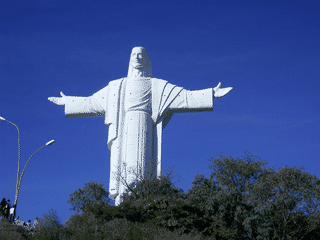
Key attractions include the Faro del Conchupata offering excellent views, El Cerrato (also known as El Corazón de Jesús), and a museum of ethnography and folklore near the zoo in the south where you can see Chipaya artifacts and carnival costumes with masks. The small town of Cala-Cala, 45 minutes from the centre, has the Señor de Lagunas temple and prehistoric stone art. The surrounding hills feature geological curiosities including a snake-shaped stone, a crocodile-shaped mountain, and a giant frog formation.
Adapted from Wikivoyage contributors · CC BY-SA 4.0
Do
The Carnival is the main event, occurring before Ash Wednesday between February 4th and March 10th. Walking up the hills surrounding the town offers easy excursions with decent views—bring ice cream and water. You can watch the train come through the middle of the main road, waiting about 1.5 hours before departure. The zoo in the south part of the city displays exotic Andean wildlife.
Adapted from Wikivoyage contributors · CC BY-SA 4.0
Eat
Fast food places serving cheap burgers, chicken, and papas fritas are found everywhere, especially around the bus station. Govinda at 6 de Octubre 6071 is an ambitious vegetarian restaurant with mains at Bs. 6-12, best visited at lunch. Negritos, two blocks from the main plaza on Bolivar, is one of few places with WiFi. For heartier meals, El Fogon near the bus station offers typical Bolivian food with generous portions, including Pique for long bus journeys.
Adapted from Wikivoyage contributors · CC BY-SA 4.0
Sleep
Budget accommodation in the centre is surprisingly rare—options are either far below standard or start at Bs. 80. Residencial El Imperia de Carlos on La Plata 6364 is the best inexpensive option at Bs. 40 per person with WiFi included. Alojamiento Rosen at 21 de Enero No. 240 across from the bus station offers twins for Bs. 30 but is very basic with shared bath. Residencial 21 de Abril on Montecinos No. 198 has private rooms with shared bath at Bs. 50 with hot water.
Adapted from Wikivoyage contributors · CC BY-SA 4.0
Go Next
Several bus companies run to Iquique and Arica in Chile from the main bus terminal. Trans Salvador charges Bs. 90 for the 10-14 hour trip including a simple meal, crossing at Tambo Quemado. Don't bring food across the border as there are X-ray searches at Chungara on the Chilean side. Sajama National Park offers beautiful Andean landscapes with Nevada Sajama (Bolivia's highest peak), accessible by tour, with buses leaving from the Tambo Quemado servis bus station in the far southwest at the ring road.
Adapted from Wikivoyage contributors · CC BY-SA 4.0
When to Go
The Carnival is the peak time to visit, occurring before Ash Wednesday (February 4 to March 10). This spectacular festival draws visitors from across Bolivia and beyond. The rest of the year is quieter, making it a peaceful budget destination.
Adapted from Wikivoyage contributors · CC BY-SA 4.0
Safety
Oruro is generally a safe city for travellers, though standard precautions apply. The bus station area attracts some petty crime. Budget accommodation options in the centre are limited, with many falling below acceptable standards.
Adapted from Wikivoyage contributors · CC BY-SA 4.0
Field guide adapted from Wikivoyage contributors · CC BY-SA 4.0. Text has been adapted and organized for this guide. About our sources.
Places to know
A few starting points from the guide. Check current hours and prices before you go.
- sleep
Alojamiento Rosen
Very basic, shared bath, no shower.
Recorded price: Twins for Bs. 30
Adapted from Wikivoyage contributors
- sleep
Alojimiento Copacabana
Decently clean rooms with shared bath. Some rooms are very small at 2x2m. Manned reception which makes the place feel safe.
Recorded price: Price for a room with two beds Bs. 35
Adapted from Wikivoyage contributors
- sleep
Hotel Bernal
Cheap option if you're spending the night to grab a bus the next morning. The clean rooms have cable TV.
Adapted from Wikivoyage contributors
- sleep
Hotel Briggs
Adapted from Wikivoyage contributors
- sleep
Hotel Eden
The newest and finest hotel in town.
Adapted from Wikivoyage contributors
- sleep
Hotel Repostero
No heating, bedroom/bathroom quality is variable. Very friendly staff.
Adapted from Wikivoyage contributors
- sleep
Residencial (El Imperia de Carlos)
The best and probably one of only a few acceptable options to stay inexpensive and likewise comfortable in Oruro. Includes WiFi.
Recorded price: Bs. 40 pp
Adapted from Wikivoyage contributors
- sleep
Residencial 21 de Abril
Quite basic but clean and with hot water. Cable in the rooms (which tend to go in a green color scale.).
Recorded price: Private room with shared bath Bs. 50
Adapted from Wikivoyage contributors
Before you go
Accommodation
Budget accommodation is surprisingly rare in the centre. Best budget option is Residencial El Imperia de Carlos at Bs. 40 per person with WiFi.
Food
Fast food and cheap burgers are everywhere near the bus station. Govinda offers vegetarian options. El Fogon serves generous portions of typical Bolivian food.
Money
Budget accommodation starts at Bs. 80 in the centre. Meals at fast food places are cheap; Govinda vegetarian restaurant offers mains from Bs. 6-12.
Transport
Buses from La Paz take 3 hours and cost Bs. 15. The train station is centrally located on Velasco Galvarro street with weekly departures to Uyuni and Villazón.
Weather
Oruro sits at high altitude. Carnival season (Feb-March) brings crowds but also rain. The rest of the year is drier.