Overview
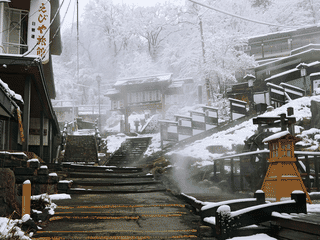
Onogawa Onsen is one of Japan's most radioactive hot springs, with radon concentrations around 10 nanocuries per litre (200 Bq/m³), but a half-hour soak equals only two hours of typical household background radiation. This small hot spring village in Yamagata prefecture regularly tops lists of "snowy hot springs" with high probability of heavy snowfall as early as December, offering one of the better-preserved "olde Japan" villages in the north.
Budget Travel · Day Trips · Festivals · Nature · Skiing
Before you go
Connectivity
A small tourist office exists in the village center with sporadic opening hours. Plan accordingly for limited connectivity.
Health
The hot spring water is quite sulphurous, producing noticeable "bad egg" odors. Those with respiratory conditions should limit soak times.
Money
Onogawa is a cash-based destination. Most transactions at inns, restaurants, and hot springs require Japanese yen.
Safety
The radon in the hot spring water is low-risk—equivalent to two hours of normal background radiation per soak. However, the water is quite sulphurous with a "bad egg" smell. Ski conditions are basic with limited runs.
Transport
Yamakō Bus runs 6 times daily (8:05AM-6:35PM) from Yonezawa station to Onogawa. Journey takes 20 min, costs ¥600. Miss the bus and a taxi runs about ¥3,000.
Weather
Onogawa receives heavy snowfall from December through March, making it one of Japan's premier "snowy hot spring" destinations.