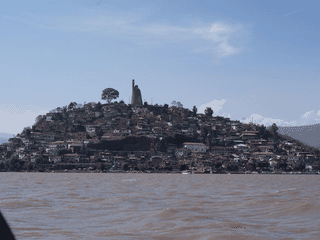

Janitzio
Mexico, Central America and the Caribbean · Mexico
Did you know?
- Murals inside the Morelos monument portray the independence hero's life.
- Butterfly-shaped nets are used to catch pescado blanco on the lake.
- San Jerónimo church has arched porticoes reminiscent of a hacienda.
See also
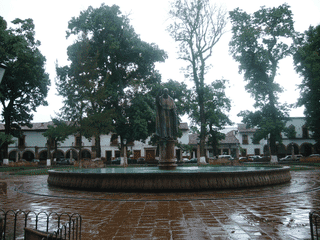

Patzcuaro
Mexico19.51°N 101.62°W · 2,140 m
Erongarícuaro
Mexico19.59°N 101.72°W · 2,071 m
Overview
The Morelos monument crowns Janitzio and is visible from the boat on arrival. An internal spiral staircase passes murals depicting the independence hero's life.
Languages: Spanish
Why go?
Janitzio is a small island with a big reputation—crowded with houses and shops catering to the thousands who flock here for Day of the Dead. The island's name means "where it rains" in Purhepecha, and it sits atop a hill as the largest of five islands in Lake Pátzcuaro. The real draw is the iconic butterfly fishermen, who still practice their nets-on-pole technique to catch pescado blanco, once depicted on Mexico's 50-peso banknote. For backpackers seeking a quick cultural hit from Pátzcuaro, Janitzio delivers old-world charm, steep cobblestone streets, and a dramatic statue of independence hero José María Morelos.
Adapted from Wikivoyage contributors · CC BY-SA 4.0
Getting in
Janitzio can only be reached by boat from Pátzcuaro's pier (embarcadero). Boats run regularly from about 07:30 to 18:00 for M$100 MXN return, taking approximately 25 minutes. During Day of the Dead celebrations, boats run 24 hours per day. Boats can also be hired for trips around other parts of the lake. The boat docks are at the base of the hill—follow everything uphill toward the giant Morelos statue.
Adapted from Wikivoyage contributors · CC BY-SA 4.0
Getting around
Walking is the only way to get around on Janitzio, which consists of steep cobblestone streets and many stairs. Street addresses are not used because everyone knows everyone on this small island—you won't get lost. Once you disembark, everything is uphill toward the statue. Shops and restaurants line the streets; if you need a specific place, just ask a local who will point you in the right direction.
Adapted from Wikivoyage contributors · CC BY-SA 4.0
When to go
Mild, spring-like temperatures prevail most of the year, rarely exceeding 27°C even in summer. Nights can get quite cold from November through March. The rainy season runs May through October, with July and August being the wettest months—expect quick thunderstorms June to September. The rest of the year is quite dry. For backpackers, November during Day of the Dead (November 1-2) is the peak pilgrimage time: thousands of candles light the cemetery, boats carry passengers all night, and fishermen wave butterfly nets to guide dead spirits to waiting families.
Adapted from Wikivoyage contributors · CC BY-SA 4.0
See
The centerpiece is the José María Morelos Monument—a 40-meter statue of Mexico's independence hero, started in 1933 and visible from the boat on arrival. Visitors climb an internal spiral staircase to the top, with interior murals by Ramón Alba de la Canal depicting Morelos's life. The 18th-century Iglesia de San Jerónimo has arched porticoes reminiscent of haciendas rather than typical Mexican churches; it's the focal point of Day of the Dead activities, with San Jerónimo as the island's patron saint. The hillside Panteon de Janitzio cemetery comes alive every year on Day of the Dead with marigold altars and thousands of candles; on other days it's a peaceful place with shade trees and lake views.
Adapted from Wikivoyage contributors · CC BY-SA 4.0
Do
Tirolesa Janitzio offers an exhilarating 1.2-mile zipline from a metal platform high on the hill down to nearby Tecuena island, where a boat returns you to Janitzio. The zipline costs M$250 and operates 12:00-19:00, though it's frequently closed if business is slow. Boat tours around the lake can be arranged from the embarcadero, allowing you to visit other islands and fishing villages.
Adapted from Wikivoyage contributors · CC BY-SA 4.0
Buy
Small shops line the narrow streets leading up the hill, selling typical Mexican crafts, souvenirs, and Day of the Dead memorabilia. The tourist market is concentrated along the main path from the dock to the statue. Prices are generally higher than in Pátzcuaro due to the island location, but there's room for negotiation.
Adapted from Wikivoyage contributors · CC BY-SA 4.0
Eat
La Palapa on the waterfront offers outdoor tables with lake views, mostly seafood including several shrimp dishes, at around M$200. Restaurante Omekua (also called Pequeña Isla) serves homestyle traditional Mexican cuisine with chicken and fish on the second floor with good views; the mojarra dorada comes highly recommended, also around M$200 and open 09:00-20:00.
Adapted from Wikivoyage contributors · CC BY-SA 4.0
Sleep
Hotel Mirador has simple rooms in a traditional Purhepecha house with basic furnishings for around M$600 per night. Finca Monarca offers rustic small cabins with lakeshore views and attractively furnished rooms, though basic toiletries are not provided so bring your own. Budget accommodations are limited on the island; most visitors return to Pátzcuaro for overnight stays.
Adapted from Wikivoyage contributors · CC BY-SA 4.0
Go next
Janitzio is part of the Lake Pátzcuaro region in Michoacán, a state rich with Purepecha cultural heritage. Pátzcuaro is the mainland hub just 25 minutes away by boat. Quiroga to the north is known for its meat market. Tzintzuntzán has impressive Purepecha ruins with pyramidal temples. Erongarícuaro is a quieter lakeside town popular with artists and writers. All can be reached by bus or collective taxi from Pátzcuaro.
Adapted from Wikivoyage contributors · CC BY-SA 4.0
Field guide adapted from Wikivoyage contributors · CC BY-SA 4.0. Text has been adapted and organized for this guide. About our sources.
Places to know
A few starting points from the guide. Check current hours and prices before you go.
- sleep
Finca Monarca
Rustic small cabins with views of the lakeshore. Comfortable rooms are attractively furnished but lack basic toiletries (so bring your own).
Adapted from Wikivoyage contributors
- sleep
Hotel Mirador
Simple rooms in a traditional Purhepecha house. Rooms have basic furnishings but not much in the way of luxuries.
Recorded price: M$600
Adapted from Wikivoyage contributors
- eat
La Palapa
Small, friendly restaurant with tables available outdoors on the lawn with waterfront views of the lake. Menu is mostly seafood with several shrimp dishes available.
Recorded price: M$200
Adapted from Wikivoyage contributors
- eat
Restaurante Omekua
Homestyle traditional Mexican cuisine with a mix of chicken and fish dishes. Good views from the second floor dining room. Recommend the Mojarra dorada.
Recorded price: M$200
Adapted from Wikivoyage contributors
- see
Iglesia de San Jerónimo
The town's church dates from the 18th century. It has a unique architectural style with arched porticoes that are more reminiscent of Haciendas than typical Mexican churches. The church is a cultural center for the island's residents and is a focal point of the annual Day of the Dead activities. San Jeronimo (St. Jerome) is the island's patron saint.
Adapted from Wikivoyage contributors
- see
Jose Maria Morelos Monument
A 40-meter high statue of José María Morelos, a great hero of Mexico's independence, started in 1933, is found on the island's highest point. You can see the statue of Morelos from the boat, when arriving. Visitors can climb to the top of the statue by way of a staircase that spirals up the inside. Along the interior walls, the life of Morelos is depicted in murals painted by Ramón Alba de la Canal and other Mexican muralism
Recorded price: M$10 (2026)
Adapted from Wikivoyage contributors
- see
Panteon de Janitzio
Beautiful old hillside cemetery that comes alive every year on Day of the Dead. Janitzio is one of the most scenic, traditional, and popular places for Day of the Dead, and on November 1, boats carry passengers to the island all night long as crowds make their way up the cobblestone streets where fishermen wave their butterfly nets to help guide the dead spirits to their waiting families. Entry to the cemetery is through stone archway and iron gates. On Night of the Dead, thousands of candles light the cemetery which is filled with marigold altars to remember the deceased. During the other 364 days of the year, it is a peaceful place with towering shade trees and views of the lake below. It's easy to understand why locals are dying to be buried here.
Adapted from Wikivoyage contributors
- do
Tirolesa Janitzio
Exhilarating 1.2 mile zipline from a metal platform high on the Janitzio hill to the nearby island of Tecuena, where a boat will take you back to Janitzio.
Recorded price: M$250
Adapted from Wikivoyage contributors
Before you go
Connectivity
Mobile coverage and WiFi are limited on the island. Purchase a SIM in larger cities like Morelia or Pátzcuaro before visiting. No internet cafes are listed.
Language
Spanish is the local language. Many Purepecha cultural influences remain. In tourist areas, basic English may be understood but don't rely on it.
Money
Cash-only island. Bring Mexican pesos from ATMs in Pátzcuaro before the boat ride. Prices in local currency (MXN/M$). Budget M$400-800/day for food and activities.
Safety
Janitzio is generally safe for tourists. Standard precautions apply—keep valuables secure and be cautious with your belongings in crowds during Day of the Dead.
Transport
Boats to Janitzio depart from Pátzcuaro's embarcadero (pier) every few minutes from 07:30-18:00. Round-trip costs M$100 MXN. During Day of the Dead (Nov 1-2), boats run 24 hours.
Weather
Mild climate year-round, rarely above 27°C. Rainy season May-October with July-August wettest. Nights can be cold Nov-March. November brings Day of the Dead crowds.