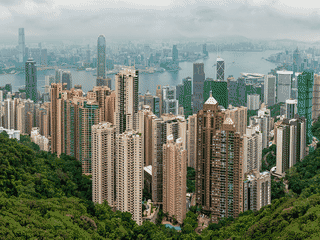

Hong Kong
East Asia · Hong Kong
Did you know?
- Over 90% of journeys use public transport across the territory.
- Country parks cover 40% of the land, with hiking beyond the urban core.
- One Octopus card works on MTR, buses, trams, ferries, and some shops.
See also
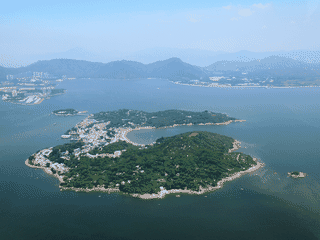

Peng Chau
Hong Kong22.29°N 114.04°E
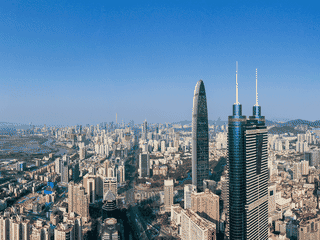

Shenzhen
China22.55°N 114.10°E · 0 m
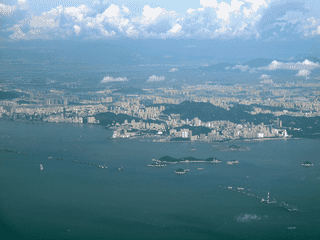

Zhuhai
China22.26°N 113.55°E · 36 m
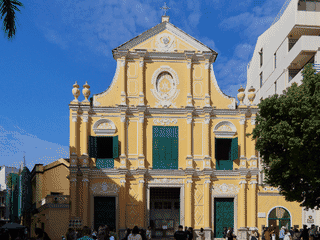

Macau
Macau22.17°N 113.55°E · 22 m
Zhongshan
China22.52°N 113.37°E · 11 m
Houjie
China22.94°N 113.67°E
Overview
Hong Kong blends Chinese identity with visible British colonial heritage. Its Special Administrative Region status and Western-style freedoms give the city a distinct character for travelers.
Languages: English, Chinese
Why Go?
Hong Kong is a place with multiple personalities—mainly Chinese yet visibly shaped by British colonial heritage. It functions as a Special Administrative Region under 'One Country, Two Systems,' retaining Western-style freedoms that make it feel distinct from mainland China. The territory combines one of the world's best airports and global finance hub status with surprising rural landscapes: cloudy mountains and rocky islands classified as Country Parks where you can find wilderness pockets despite the dense population. Its subtropical climate offers at least one season to match every traveler's comfort zone, making it the ideal first stop for those heading deeper into China or wider Asia.
Adapted from Wikivoyage contributors · CC BY-SA 4.0
When to Go
Hong Kong's humid subtropical climate brings hot, humid summers from June to September with average highs of 32°C and feels-like temperatures around 38°C—sometimes reaching 46°C on extreme days. Typhoons affect the region June to October but rarely halt business for more than a day. Winters are mild (10-20°C), making Christmas warm by European standards, though Chinese New Year often brings cold wet weather. Spring (March-May) tends to be humid and rainy; autumn (September-November) offers more comfortable temperatures around 20-25°C. Most buildings have air conditioning for summer but winter heating is less common—locals layer up indoors even during the coldest days.
Adapted from Wikivoyage contributors · CC BY-SA 4.0
Getting In
Hong Kong's visa policy is notably liberal for many nationalities. Most visitors from Western countries receive 180-day visa-free stays. Those with Entry-Exit Permits for Hong Kong SAR or Macau SAR can enter with varying arrangements. Some nationalities receive 90-day, 30-day, 14-day (with online pre-registration for India), or 7-day visa-free access depending on their passport. Visitors arriving from mainland China use the Entry-Exit Permit system. The territory can be reached by air through Hong Kong International Airport (HKG), by sea through multiple ferry terminals including the Hong Kong-Macau Ferry Terminal and Hong Kong China Ferry Terminal, or overland via the Hong Kong-Zhuhai-Macau Bridge.
Adapted from Wikivoyage contributors · CC BY-SA 4.0
Getting Around
Hong Kong has one of the world's highest rates of public transport usage (over 90%) with an excellent and cheap system. The most convenient payment method is the Octopus card, a contactless smart card accepted on MTR, buses, trams, ferries, and even convenience stores. Contactless payments with Visa, Mastercard, UnionPay, and China T-Union are being progressively rolled out but as of September 2025 are only accepted at light blue MTR gates—not on Airport Express, buses, trams, or ferries. Google Maps works in Hong Kong, unlike in mainland China. The MTR metro system covers the territory efficiently, while double-decker buses, trams on Hong Kong Island, and ferries to outlying islands provide additional options.
Adapted from Wikivoyage contributors · CC BY-SA 4.0
Where to Stay
Hong Kong offers over 50,000 hotel rooms ranging from shockingly cheap to super luxury, but budget travelers from elsewhere in Asia are often surprised that accommodation costs rival London and New York. A 3% hotel accommodation tax is levied on rooms (excluding service charges). For long-term stays, be prepared to splurge as real estate prices are among the world's highest—many locals live in cramped 'shoebox' apartments due to astronomical rents. Chungking Mansions in Tsim Sha Tsui is a notorious budget option with many guesthouses under one roof.
Adapted from Wikivoyage contributors · CC BY-SA 4.0
Food and Drink
Cuisine plays an important role in Hong Kong life—not only showcasing regional Chinese cuisines (especially Guangdong/Cantonese) but also excellent Asian and Western options with creative fusions. British influence shows in popular cakes and pastries; Indian immigrants brought curry (咖喱), though adapted to Cantonese tastes with drastically reduced spice. Exotic ingredients like dog and cat meat are banned. Many famous chefs fled the mainland after the Chinese Civil War, bringing diverse regional cuisines—Hakka and Teochew restaurants are particularly notable. Locals eat out frequently as socializing at home is impractical in crowded spaces. Expect queues outside popular restaurants during peak hours—register, get a ticket, and wait. Western food is available for those weary of Chinese cuisine.
Adapted from Wikivoyage contributors · CC BY-SA 4.0
Things to Do
Hong Kong offers diverse attractions beyond its urban core. Victoria Peak provides panoramic city views; the Star Ferry crosses the iconic harbour; temples like Man Mo sit alongside colonial architecture. The territory includes 24 Country Parks covering 40% of land, offering hiking trails with stunning views—Lantau Island's Tian Tan Buddha and Ngong Ping 360 cable car are popular day trips. Outlying islands like Cheung Chau offer beaches and seafood. For culture, the Museum of History, Science Museum, and numerous galleries provide indoor options. Shopping ranges from luxury malls in Central to street markets in Mong Kok. Note that Hong Kong doesn't have street benches—restaurants prefer quick table turnover—so comfortable shoes are essential for full days on foot.
Adapted from Wikivoyage contributors · CC BY-SA 4.0
Safety
Hong Kong is one of the world's safest cities, managing a large high-density population with diverse socio-economic backgrounds effectively. However, the National Security Law imposed by China in 2020 has ended most public protest—arbitrariness and broad applicability of the law means political demonstrations are extremely risky. Exercise normal urban precautions regarding petty crime. Some areas near the border with mainland China have specific regulations. Medical care quality is excellent but expensive for non-residents—tourists pay full costs at public hospitals though emergency treatment is guaranteed.
Adapted from Wikivoyage contributors · CC BY-SA 4.0
Connectivity
Hong Kong has excellent telecommunications infrastructure with multiple mobile carriers offering 4G/5G services. SIM cards are readily available and relatively inexpensive. WiFi is widely available in hotels, cafes, shopping malls, and public areas. The territory uses British-style power plugs (Type G with three rectangular pins) at 220V/50Hz—visitors from countries with different standards need adapters. English is widely understood in business and tourist areas, though Cantonese remains the dominant local language.
Adapted from Wikivoyage contributors · CC BY-SA 4.0
Budget
Hong Kong is expensive by Asian standards but daily budgets can be managed. Street food meals cost HK$40-80, sit-down restaurant dinners HK$100-300. MTR rides typically cost HK$10-30 depending on distance. Budget guesthouses in areas like Chungking Mansions start around HK$300-500 per night; hostel dorm beds around HK$200-400. Museums are often free; Victoria Peak tram costs around HK$100 for a round trip. Daily budget for a backpacker managing accommodation in dorms, street food, and local transport would be around HK$400-700 excluding attraction visits.
Adapted from Wikivoyage contributors · CC BY-SA 4.0
Day Trips
Hong Kong makes an excellent base for cross-border day trips. Macau (the former Portuguese colony and world's largest gambling haven) is one hour away by TurboJet ferry (around HK$200) from Sheung Wan MTR station, or 40 minutes by shuttle bus (HK$65) over the Hong Kong-Zhuhai-Macau Bridge. Shenzhen, mainland China's boomtown, is reachable by high-speed rail in under 20 minutes from West Kowloon station, or by MTR East Rail Line in about 45 minutes (cheaper, connects to Shenzhen Metro). The ferry to Shekou takes around 50 minutes and costs about HK$100. Visa arrangements vary by nationality and transport method—check requirements before crossing. Many locals head to Shenzhen for cheaper shopping, dining, and spa experiences.
Adapted from Wikivoyage contributors · CC BY-SA 4.0
Etiquette
Hong Kong blends Chinese and Western social norms. Key Cantonese phrases help: 唔該 (m'goi) means please, thank you, and excuse me—learn this one word and you'll go far. Respect at temples and religious sites—remove hats, dress modestly, don't point feet at altars. Tipping is not expected in local restaurants but appreciated in upscale establishments. Queue etiquette is important—always line up for buses, MTR, and restaurants. When visiting homes, remove shoes unless hosts indicate otherwise. Public displays of affection are less common than in Western countries but more accepted than in mainland China.
Adapted from Wikivoyage contributors · CC BY-SA 4.0
Go Next
From Hong Kong, multiple destinations beckon. Guangzhou (capital of Guangdong Province) is 45 minutes by HSR from West Kowloon station; cross-border buses take over 3 hours. Zhuhai is 40 minutes by shuttle bus over the bridge or 70 minutes by ferry. Taiwan is 1.5 hours by plane—a world-class tech hub with traditional Chinese culture. Singapore is 3.5 hours away by air, often combined with visits to Malaysia and Thailand. High-speed rail connections reach Beijing and Shanghai via Shenzhen, while road routes connect to Macau and Shenzhen via the Hong Kong-Zhuhai-Macau Bridge.
Adapted from Wikivoyage contributors · CC BY-SA 4.0
Field guide adapted from Wikivoyage contributors · CC BY-SA 4.0. Text has been adapted and organized for this guide. About our sources.
Places to know
A few starting points from the guide. Check current hours and prices before you go.
- see
HZMB Hong Kong Kong Port
Adapted from Wikivoyage contributors
- see
HZMB Macau Port
Adapted from Wikivoyage contributors
- see
Hong Kong China Ferry Terminal
Adapted from Wikivoyage contributors
- see
Hong Kong-Macau Ferry Terminal
Adapted from Wikivoyage contributors
- see
Hong Kong-Zhuhai-Macao Bridge Hong Kong Port
Adapted from Wikivoyage contributors
- see
Kai Tak Cruise Terminal
Adapted from Wikivoyage contributors
- see
Lo Wu Control Point
Adapted from Wikivoyage contributors
- see
Lok Ma Chau Control Point
Adapted from Wikivoyage contributors
Before you go
Accommodation
Over 50,000 hotel rooms available. Prices comparable to London/NYC—budget travelers should budget HK$300-500/night for guesthouses. 3% hotel tax added.
Connectivity
Excellent mobile coverage with multiple 4G/5G providers. SIM cards available. WiFi in malls, cafes, hotels. Type G plugs (British style) at 220V.
Culture
Cantonese dominant; English widely understood in business areas. Learn 唔該 (m'goi) for please/thank you/excuse me. Queue for everything.
Food
World-class cuisine from dim sum to international. Street food HK$40-80, restaurants HK$100-300. Expect queues at popular spots—register and wait.
Health
Medical care excellent but expensive for tourists. Heat stroke risk while hiking—carry water and rest. Air conditioning inside can be very cold (18°C) while outside is 35°C.
Language
Cantonese is the local language; English is official alongside Chinese. Written Chinese differs from mainland—use characters rather than romanization for communication.
Money
Hong Kong Dollar (HKD) is the local currency with roughly 7.8 HKD per USD. Credit cards widely accepted but street vendors and most taxis need cash. Octopus cards work for transport and convenience stores.
Safety
Very safe for tourists but avoid political demonstrations due to National Security Law. Normal urban precautions apply. Some border areas have specific regulations.
Tipping
Not expected in local establishments. Appreciated in upscale restaurants and hotels. Service charge often added to restaurant bills.
Transport
MTR metro and buses are cheap and efficient. Get an Octopus card for convenience. Google Maps works here unlike mainland China.
Visa
Most Western passport holders get 180-day visa-free stays. Visa policy varies significantly by nationality—check requirements for your passport before arrival.
Weather
Hot humid summers (June-Sept, 32°C average, feels like 38°C). Mild winters (10-20°C). Autumn (Sept-Nov) most comfortable. Typhoons June-Oct.