
Guerrero Negro
Mexico, Central America and the Caribbean · Mexico
Did you know?
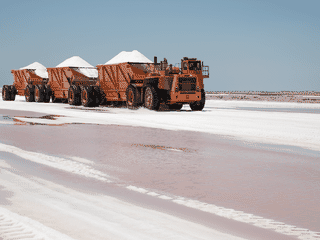
- Guided visits explore the salt works outside town.
- Grey whales use Ojo de Liebre lagoon to give birth and mate.
- A bar-side museum displays Japanese fishing floats and other beach flotsam.
See also
Overview
Guerrero Negro is a desert base for winter grey whale encounters in Pacific lagoons. Salt production shapes the town beyond its wildlife trips.
Languages: Spanish
Why go?
Guerrero Negro is a remote desert city of 14,000 people on the edge of the Vizcaíno Desert, best known as the world's top grey whale watching destination. The town sits at the southern edge of the El Vizcaíno Biosphere Reserve, making it the primary home base for exploring sensitive Pacific coast lagoons where grey whales migrate each winter to give birth and mate. While salt production is the local industry, the whale encounter experience draws visitors from around the globe.
Adapted from Wikivoyage contributors · CC BY-SA 4.0
Getting in
Aeroservicios Guerrero flies from Ensenada to Guerrero Negro on Monday, Wednesday, and Thursday at 11:30 with a stop at Isla de Cedros (+52 615 157 01 37). To reach Ensenada, fly to San Diego and cross into Tijuana, or take the hourly bus from Tijuana airport departing since 08:30 (2-hour journey). Driving from Tijuana takes 12 hours and is cost-effective with two or more passengers. Bus service from Tijuana Central Station departs at 12:15, 16:00, and 18:00 (12-hour ride). Alternative: fly to Los Cabos, rent a car or take the 10:00, 16:00, or 23:00 bus to La Paz, then continue 12 hours to Guerrero Negro.
Adapted from Wikivoyage contributors · CC BY-SA 4.0
Getting around
Walking or taxi is the easiest way to get around town. You'll need to hire a boat to explore the lagoons of Ojo de Liebre, where grey whale watching tours operate. The lagoon complex is a Ramsar Convention wetland of international importance and a UNESCO World Biosphere Reserve, making bird watching another major draw. Nearby attractions include sand dunes around town, guided visits to the largest open salt company, and rock painting sites in the Sierra San Francisco and Mesa del Carmen ranges.
Adapted from Wikivoyage contributors · CC BY-SA 4.0
When to go
The grey whale migration season runs from December through March, with peak sightings in January and February. The town holds an annual festival during the first half of February to celebrate the whales' arrival. Winter months offer the best bird watching, including one of the world's largest osprey concentrations that hatch by the end of February. Summer months are extremely hot in the desert environment.
Adapted from Wikivoyage contributors · CC BY-SA 4.0
Where to stay
All accommodations in Guerrero Negro are very basic. Malarrimo hotel on Blvd. Emiliano Zapata offers rooms from M$1,200 and includes an on-site restaurant with over 30 years of whale tourism experience. Hotel Los Caracoles on Calzada De La República provides a restaurant and limited WiFi. Hotel TerraSal sits just off Hwy 1 on the main approach into town, offering modern stucco finish and satisfying restaurant food for weary travelers.
Adapted from Wikivoyage contributors · CC BY-SA 4.0
Food and drink
Restaurants are scattered along Emiliano Zapata Boulevard and a few to the north. Malarrimo Restaurant (daily from 07:30) on Blvd. Emiliano Zapata has been a tourist favorite since 1973, serving seafood, Mexican and international specialties with full bar service and banquet facilities. Tacos El Muelle operates from a food truck serving fish tacos. The Malarrimo bar side features a small museum with flotsam collected from Malarrimo Beach including sand-blasted bottles, Japanese fishing floats, ship pieces, and a wooden ship's wheel.
Adapted from Wikivoyage contributors · CC BY-SA 4.0
Things to do
Guerrero Negro has the world's highest concentration of grey whales, primarily found at Scammon Lagoon (Laguna Ojo de Liebre) where they migrate in winter to give birth and mate. Malarrimo Eco-Tours (malarrimo.com) was the first private operator permitted by the Mexican government for area tours and remains the most popular, offering cave painting tours, bird watching, salt tours, and peninsula pronghorn viewing; tours leave at 08:00 and 11:00 for approximately 650 MXN. Mario's Tours (mariostours.com) offers whale watching, bird watching, and rock painting tours. The largest salt works in the world operates nearby and offers guided visits.
Adapted from Wikivoyage contributors · CC BY-SA 4.0
Buy
Casa El Viejo Cactus (casaelviejocactus.com) is a gift shop with Baja books, maps, and a great collection of local and national crafts. Souvenirs include t-shirts, caps, key chains, cups, mugs, and tequila shot glasses, many featuring marine and whale motifs reflecting the region's main attraction. The shop is the best source for locally made handicrafts in town.
Adapted from Wikivoyage contributors · CC BY-SA 4.0
Go next
Ensenada, the third-largest city in Baja California, lies to the north along Highway 1. Guadalupe Island, a large desert island in the Pacific Ocean, offers diving and shark cage diving opportunities. El Vizcaíno Biosphere Reserve, Mexico's largest protected natural area and grey whale breeding waters, extends south along the peninsula. Santa Rosalia lies to the south along Highway 1.
Adapted from Wikivoyage contributors · CC BY-SA 4.0
Safety
Guerrero Negro is a small, generally safe town with a tourism-friendly atmosphere. Standard precautions for remote areas apply: keep valuables secure, use registered taxis, and be cautious when exploring desert areas without a guide. The nearest major hospital is likely in Ensenada or La Paz.
Adapted from Wikivoyage contributors · CC BY-SA 4.0
Connectivity
Hotel Los Caracoles mentions WiFi availability but it is limited. Malarrimo hotel and restaurant may offer WiFi for guests. For reliable internet, consider purchasing a Mexican SIM card (Telcel, AT&T, or Movistar) in larger cities before arriving. Power outlets use standard US-style two-flat-pin plugs (Type A/B).
Adapted from Wikivoyage contributors · CC BY-SA 4.0
Budget
Guerrero Negro is a remote destination with limited budget infrastructure. Accommodation ranges from M$1,200 per night for hotels. Whale watching tours cost approximately 650 MXN per person. Transport from Tijuana by bus costs significantly less than flying or driving. Food at local restaurants and taco trucks offers affordable options. Budget an additional M$200-400 daily for meals.
Adapted from Wikivoyage contributors · CC BY-SA 4.0
Field guide adapted from Wikivoyage contributors · CC BY-SA 4.0. Text has been adapted and organized for this guide. About our sources.
Places to know
A few starting points from the guide. Check current hours and prices before you go.
- sleep
Hotel Los Caracoles
Restaurant and a little bit of wifi available.
Adapted from Wikivoyage contributors
- sleep
Hotel TerraSal
A modern-looking hotel for weary travelers and such. The stucco finish is appealing and the restaurant food is satisfying too.
Adapted from Wikivoyage contributors
- sleep
Malarrimo hotel, tours and RV parking
Also has a restaurant. Over 30 years experience with whale tourism.
Recorded price: M$1200
Adapted from Wikivoyage contributors
- eat
Tacos El Muelle
They do fish tacos on a food truck.
Adapted from Wikivoyage contributors
- see
Guerrero Negro Salt Works
The largest salt works in the world, offering guided tours of the operations.
Adapted from Wikivoyage contributors
- see
Malarrimo Beach Museum
Quirky bar museum displaying Japanese fishing floats, ship pieces, sand-blasted bottles, army containers, and a wooden ship's wheel recovered from the beach.
Adapted from Wikivoyage contributors
- see
Scammon Lagoon (Laguna Ojo de Liebre)
One of three grey whale nursery lagoons in Mexico, with the world's highest concentration of grey whales.
Adapted from Wikivoyage contributors
- buy
Casa El Viejo Cactus
Gift shop. Baja books and maps, great collection of local and national crafts, souvenirs like t-shirts, caps, key chains, cups, mugs, and Tequila shot glasses. Many of these crafts and souvenirs are made of marine and whales motifs, since whales and other marine life is the main attraction of this region.
Adapted from Wikivoyage contributors
Before you go
Connectivity
WiFi is limited and basic at hotels. Purchase a Mexican SIM card in Ensenada or before arriving for mobile data coverage.
Money
Local currency is Mexican Peso (MXN). Small town establishments may be cash-only. ATMs available but limited—bring sufficient cash from larger cities.
Packing
Bring binoculars for whale watching and bird watching. Desert sun protection essential year-round. Layered clothing for winter whale watching boat trips.
Transport
Getting to Guerrero Negro requires planning: fly or bus to Ensenada then connect, or make the 12-hour drive from Tijuana. Once there, taxis and walking suffice for town; boat hire needed for lagoon tours.
Weather
Best visited December-March for grey whale season. Winter brings cool desert temperatures and excellent bird watching. Summer months are extremely hot.