Caxias do Sul
South America · Brazil
Did you know?
- Museu Casa de Pedra occupies an immigrant house from 1878.
- Wood-fired pizza, pasta and churrasco reflect an Italian-influenced food culture.
- Farmers from Veneto began arriving in 1875.
See also
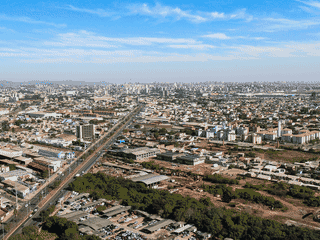
.jpg)
Porto Alegre
Brazil30.03°S 51.23°W · 10 m
Overview
Italian immigration shaped the city's regional identity. Farmers from Veneto joined settlers from Lombardy and Trento in the surrounding area.
Languages: Portuguese
Why go?
Caxias do Sul is the second-largest city in Rio Grande do Sul and the self-styled Capital da Serra Gaúcha (Capital of the Gaucho Mountain Range). Founded by Italian Veneto farmers in 1875, it rewards visitors with a living Italian-Brazilian cultural identity: colonial-era museums, vineyards, family wineries, and the biennial Festa da Uva (GrapeFest). It’s also a working industrial hub — one of Brazil’s wealthiest per capita — giving it a livelier commercial pulse than nearby tourist towns like Gramado. For backpackers, it’s a practical mid-range base for the wine country and a taste of southern Brazilian urban life without full big-city chaos.
Adapted from Wikivoyage contributors · CC BY-SA 4.0
Understand
The region was originally called “Campo dos Indígenas” (Indians’ Field) when cattlemen and indigenous peoples roamed it. Italian immigrants — mostly farmers from the Veneto region of northern Italy — began arriving in 1875, settling Nova Milano and nearby areas, with additional settlers from Lombardy and Trento. Despite governmental support (tools, seeds, supplies), everything had to be reimbursed. The colonial headquarters was renamed Caxias Colony in 1877; the town was officially created on July 20, 1890 and acknowledged August 24. The first economic cycle centered on viticulture: immigrants grew grapes and made wine first for subsistence, then for sale. On June 1, 1910, Caxias do Sul was granted city status and the first train arrived, connecting it to Porto Alegre. Urbanization and industrialization followed rapidly. Today Caxias do Sul is known as the “Pérola das Colônias” (Pearl of the Colonies) and remains the pole of Italian cultural identity in southern Brazil, home to vast vineyards, wineries, and a diversified industrial park.
Adapted from Wikivoyage contributors · CC BY-SA 4.0
Climate
Caxias do Sul has a mountainous climate with cold winters and mild summers. Winter temperatures can drop to 8°C (46.4°F), with frost common and occasional snow. Summer averages range from 26°C (78.8°F) to 16°C (60.8°F). Rainfall occurs year-round — there is no dry season — with monthly precipitation between 111–189 mm. Pack layers year-round; winter visitors should bring a warm jacket and expect indoor heating to be uncommon.
Adapted from Wikivoyage contributors · CC BY-SA 4.0
Get in
Caxias do Sul lies 128 km from Porto Alegre. By air, Aeroporto Hugo Cantergiani (Campo dos Bugres, IATA: CXJ) handles flights via São Paulo airports on carriers Azul and GOL. By bus, the comfortable executive coaches of Caxiense, Unesul, and other operators run from Porto Alegre and throughout Rio Grande do Sul. The estação rodoviária (intercity bus station) at Rua Ernesto Alves 1341 has baggage storage (guarda-volumes in Sector 6), a snack bar, and shops. Foreigners can usually just show up and buy a ticket; during holidays, book ahead if possible. Bus operators serving Caxias do Sul include Caxiense, Unesul, Citral (to Gramado, Canela, Taquara), Bento Transportes, Ozelame (to Bento Gonçalves, Farroupilha, Garibaldi), São Marcos (to Cambará do Sul, Florianópolis), Planalto, Santa Cruz, and São João.
Adapted from Wikivoyage contributors · CC BY-SA 4.0
Getting around
VISATE operates the municipal bus network; most routes include the bairro (neighborhood) name in the route name. A city map with bairro subdivisions is useful for planning. Check the VISATE website for route maps and schedules. Taxis and rideshares are widely available. The city center (Centro) and surrounding neighborhoods like São Pelegrino, Ana Rech, and Pio X are walkable.
Adapted from Wikivoyage contributors · CC BY-SA 4.0
When to go
The best time for most travelers is October–April, when temperatures are mild and outdoor sightseeing (vineyards, waterfalls, viewpoints) is comfortable. Winter (June–August) brings cold, frost, and occasional snow — scenic for some, but limit outdoor activities. The biennial Festa da Uva (GrapeFest) occurs in February or March of even-numbered years at the R. Ludovico Cavinatto pavilions, celebrating Italian-Brazilian viticulture with food, wine, and cultural events. Accommodation fills during this event and major Brazilian holidays (Semana Santa, Christmas, New Year).
Adapted from Wikivoyage contributors · CC BY-SA 4.0
Where to stay
Hotels cluster in the Centro and adjacent neighborhoods. Budget options include Ibis Caxias do Sul (near Iguatemi Shopping, west side of city) at R$120–R$160/night, and Tri Hotel Executive Caxias do Sul (Rua Ernesto Alves, Centro) from R$99/night, noted as best value for modern, clean rooms. Mid-range options: Personal Royal Hotel (Rua Garibaldi, Pio X) at R$159–R$460, Blue Tree Towers Caxias do Sul (Rua Pinheiro Machado, Pelegrino) at R$240–R$470, and Bandeira Hotel (Rua Sinimbu). For a more local feel, Coophotel and Hotel Pousada Caxiense offer simpler accommodations on Rua Sinimbu. Note that Ibis and hotels outside Centro require transit, taxi, or car to reach the city center.
Adapted from Wikivoyage contributors · CC BY-SA 4.0
Food & drink
Caxias do Sul’s Italian heritage means pizza, pasta, and grilled meats dominate. Alameda Pizzeria (Rua Matteo Gianella 1440) serves wood-fired pizza. Churrascaria Gaudério (Rua Mário de Boni 1766) offers Brazilian churrasco (grilled meat buffet). Chateau Lacave (BR 116, Km 143) is both a winery and restaurant: open daily 11:30–15:00, Tu–Th evenings 19:30–22:00, F–Sa evenings 19:30–23:00, with tours, wine and grape juice tastings, and a full restaurant. Paiol Espaço Nativo is a local drink venue. Wine is a highlight — the Serra Gaúcha region produces internationally recognized wines, and winery visits (see listings) are central to the Caxias do Sul experience.
Adapted from Wikivoyage contributors · CC BY-SA 4.0
Things to do
Key attractions include: Museu Casa de Pedra (Stone House Museum, Rua Matheo Gianella 531, 09:00–17:00) — an 1878 immigrant house and Living Museum of Latin America; São Pelegrino Church (Av. Itália 54, 08:00–18:00, closes at noon for lunch) — Catholic cathedral with works by Italian-Brazilian artist Aldo Locatelli and bronze doors by August Murer; Museu de Uva e Vinho Primo Slomp (Tu–Su 09:00–17:00, Bairro Forqueta) — dedicated to grape and wine history; the Replica of Historic Caxias do Sul (Rua Ludovico Cavinatto 1431) — 15 wooden buildings reproducing 1885 city architecture; and the Monumento Nacional ao Imigrante (east end of Av. Júlio de Castilhos on BR-116) — 1954 monument to Italian immigrants. Wine enthusiasts should tour Castelo Lacave winery (R$10 adults, R$5 children 6–11) and the Marcopolo Bus Factory (Av. Rio Branco 4889, Ana Rech) for an industrial tour. Belvedere da Cascata Véu da Noiva in Galópolis offers a viewpoint over Bridal Veil Falls on BR-116.
Adapted from Wikivoyage contributors · CC BY-SA 4.0
Safety
Caxias do Sul is generally a safe mid-sized Brazilian city. Standard urban precautions apply: guard valuables in crowded areas, avoid displaying electronics, use registered taxis or rideshare apps at night. The city center and main tourist attractions are well-patrolled. Exercise caution on BR-116 near Galópolis when pulling in and out of viewpoints — the road is narrow and winding.
Adapted from Wikivoyage contributors · CC BY-SA 4.0
Connectivity
Brazil uses Type C/N (Europlug) and Type N (3 pins, 200–240V) power outlets. SIM cards from major carriers (Vivo, Claro, TIM, Oi) are widely available at shopping malls and phone shops; prepaid tourist packages are common. Free WiFi is available at shopping centers, some cafes, and hotels. International roaming from most carriers works but can be expensive; a local SIM is recommended for stays over a few days.
Adapted from Wikivoyage contributors · CC BY-SA 4.0
Budget
A backpacker daily budget in Caxias do Sul runs R$120–R$200 covering dorm/budget hotel (R$80–R$160/night), simple meals at pizza joints and markets (R$30–R$50/day), and local bus transit (R$4–R$6/ride). Mid-range travelers should budget R$250–R$400/day for private hotel rooms, restaurant dinners, and winery tours. The Brazilian Real (R$) is the local currency.
Adapted from Wikivoyage contributors · CC BY-SA 4.0
Day trips
Bento Gonçalves (the Wine Capital of Brazil) is a top day trip — reachable by bus via Ozelame in under an hour. Gramado, a German-themed tourist town on the Rota Romântica (Romantic Route), is about 1.5 hours by bus (Citral). Canela, Gramado’s sister city, offers eco-tourism (river rafting, hang gliding, hiking) and the stunning Parque do Caracol waterfall. All three are covered by Citral buses from the Caxias do Sul bus station.
Adapted from Wikivoyage contributors · CC BY-SA 4.0
Go next
Onward connections from Caxias do Sul: north on BR-116 to Nova Petrópolis and Novo Hamburgo; south to Vacaria and Lages (Santa Catarina). West on BR-453 to Garibaldi and Farroupilha; east to Terra de Areia and São Francisco da Paula. North on RS-122 to São Vendelino, Flores da Cunha, and Antônio Prado; south to Feliz and Vale Real. By bus: Bento Gonçalves (wine country), Gramado and Canela (serra tourism), Garibaldi and Farroupilha (wine and sparkling water), and longer routes to Florianópolis, Santa Maria, and Santana do Livramento.
Adapted from Wikivoyage contributors · CC BY-SA 4.0
Field guide adapted from Wikivoyage contributors · CC BY-SA 4.0. Text has been adapted and organized for this guide. About our sources.
Places to know
A few starting points from the guide. Check current hours and prices before you go.
- sleep
Bandeira Hotel
Adapted from Wikivoyage contributors
- sleep
Bela Vista Parque Hotel
Adapted from Wikivoyage contributors
- sleep
Blue Tree Towers Caxias do Sul
Recorded price: R$240 to R$470
Adapted from Wikivoyage contributors
- sleep
Coophotel
Adapted from Wikivoyage contributors
- sleep
Cosmos Hotel
Adapted from Wikivoyage contributors
- sleep
Hotel Intercity Premium
Adapted from Wikivoyage contributors
- sleep
Hotel Pousada Caxiense
Adapted from Wikivoyage contributors
- sleep
Ibis Caxias do Sul
Ibis is a discount French chain hotel with very adequate accommodations. The hotel is outside of the city center, so you should plan on public transit, taxi or car to reach the center from this point.
Recorded price: About R$120 and R$160 per night.
Adapted from Wikivoyage contributors
Before you go
Culture
Caxias do Sul is the center of Italian-Brazilian culture in southern Brazil. Italian (Veneto) heritage is visible in architecture, cuisine (pizza, pasta, wine), festivals (Festa da Uva), and traditions. Portuguese is the language; Italian phrases may be heard among older residents.
Food
Italian-influenced cuisine dominates: wood-fired pizza, pasta, churrasco (grilled meat). Wine and grape juice are local specialties. Market halls and bakeries offer affordable meal options.
Money
Currency is the Brazilian Real (R$). ATMs are widely available in Centro and shopping malls. Credit cards are accepted at hotels, mid-range restaurants, and shopping centers but not at smaller markets or street vendors.
Safety
Generally safe for a city of its size. Standard urban precautions: guard valuables, use registered taxis or rideshares at night, be cautious on winding BR-116 near viewpoints.
Transport
VISATE municipal buses cover the city; Caxiense and other intercity operators connect Caxias do Sul to Porto Alegre (128 km, ~2.5 hours by bus) and regional destinations. Aeroporto Hugo Cantergiani (CXJ) has flights via São Paulo.
Visa
Most visitors from Latin America, Europe, and many other countries do not need a visa for Brazil for tourism stays up to 90 days. Check current entry requirements before traveling.
Weather
Mountainous climate: winters cold (down to 8°C) with frost and occasional snow; summers mild (16–26°C). Year-round rain. Pack layers and a warm jacket for winter visits.