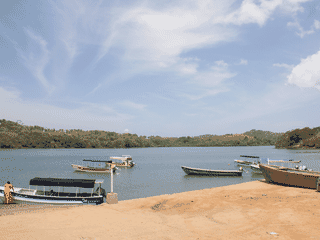

Boca Chica
Mexico, Central America and the Caribbean · Panama
Did you know?
- Informal local meals often feature seafood caught that day.
- The village's access road ends at the Pedregal River estuary.
- Water taxis from the port connect nearby islands and arrange island camping trips.
See also
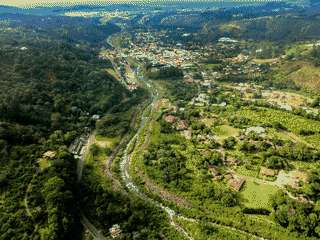

Boquete
Panama8.78°N 82.44°W · 1,200 m
Overview
This small fishing village sits beside an estuary on Panama's Pacific coast. Boca Brava lies across the water, with the Gulf of Chiriquí islands drawing travelers onward by boat.
Languages: Spanish
Why Go
Boca Chica is a sleepy fishing village on Panama's Pacific west coast, 50 km from David and 28 km south of the Inter-American Highway via Horconcitos. It sits at the mouth of the Pedregal River estuary, directly across from Boca Brava island and at the doorstep of Parque Nacional Marino Golfo de Chiriquí. Savvy sport fishermen consider this stretch of water one of the best-kept secrets for big-game fishing, while scuba divers and snorkelers have access to nearby Coiba National Marine Park, the Coiba islands, and Las Ladrones—all known for huge coral reefs and diverse marine life including orcas, dolphins, whales, sharks, and multiple marlin species.
Adapted from Wikivoyage contributors · CC BY-SA 4.0
Getting In
Boca Chica is reachable only by the single road that ends at the Pedregal River estuary. From the Inter-American Highway, take the turnoff at Horconcitos and drive 28 km south. The road used to be notoriously rough, especially during rainy season, but recent improvements have made it an easier drive. There is no public transportation; travelers typically arrive by private vehicle or hired taxi from David (50 km north). There is one gas station at the last junction before the water, 150 m from the town center, which also has a small shop and café with internet.
Adapted from Wikivoyage contributors · CC BY-SA 4.0
Getting Around
Boca Chica is small enough to explore on foot. The only practical way to reach nearby islands (Boca Brava, Isla Saino, and the island groups further out) is by boat. Water taxi operators are based in the small port area; they can arrange transfers, day tours, and island camping. Negotiate with local boat operators for transport.
Adapted from Wikivoyage contributors · CC BY-SA 4.0
When to Go
The Pacific coast of Chiriquí province is best visited during the dry season, roughly December through April, when seas are calmer for boat trips and diving conditions are optimal. The rainy season (May–November) brings rougher roads and waters, though some fishermen consider the green season productive for certain species. Ask local operators about current conditions before booking multi-day boat excursions.
Adapted from Wikivoyage contributors · CC BY-SA 4.0
Where to Stay
Accommodation options are limited and mostly small-scale. Seagull Cove (San Lorenzo, Chiriquí; www.seagullcovelodge.com) is a boutique hotel offering a higher comfort level. Gone Fishing (www.gonefishingpanama.com) is a family-owned inn popular with sport fishermen. For budget travelers, there are a few budget accommodations on Boca Brava island, a short boat ride away, and camping is possible on Isla Saino. Advance booking is advisable during peak fishing season (December–April).
Adapted from Wikivoyage contributors · CC BY-SA 4.0
Food and Drink
Boca Chica has a small selection of restaurants, including Wahoo Willy's located in the town's small port area. There is a supermarket next to the gas station at the last junction, 150 m before the water, and another small shop on the eastern town road. For better grocery selection, travelers can make a 28 km trip north to Horconcitos, which has a decently priced supermarket. Eating out is informal; most meals are fresh seafood, often caught that day by local fishermen.
Adapted from Wikivoyage contributors · CC BY-SA 4.0
Things to Do
Boca Chica is the jumping-off point for several island destinations: Boca Brava, Isla Palenque, Islas Ladrones, Islas Paridas, and Islas Secas. Scuba diving experiences are available—ask around the village for local divemasters. Game fishing is the headline activity, with world-class sport fishing for marlin, tuna, and dorado near Las Ladrones and Las Secas; operators include Gone Fishing (www.gonefishingpanama.com) and Panama Big Game Fishing Club (www.panama-sportfishing.com). The ultimate day trip is to Coiba National Marine Park, featuring massive coral reefs, whale watching, and encounters with sharks, manta rays, and dolphins. Water taxi operators in the village can arrange full-day tours combining whale watching, beach visits, and snorkeling for groups—at roughly $100 per boat or $20 per person for a larger group. Isla Saino, 10 minutes by boat, has a deserted beach with calm waters; it can get busy with day-trippers (10-20 people) but often empties out for overnight campers.
Adapted from Wikivoyage contributors · CC BY-SA 4.0
Safety
Boca Chica is a quiet, small village with generally low crime. Standard precautions apply: secure valuables, avoid walking alone late at night in unfamiliar areas, and use common sense near the water. Boat operators may speak only Spanish, so learning a few phrases helps. The boats used for island tours are often simple and may feel rickety; check that safety equipment is available before departing. Sun exposure and dehydration are greater risks here than crime—bring sunscreen and water on any boat trip.
Adapted from Wikivoyage contributors · CC BY-SA 4.0
Connectivity
Internet appears to be available in or near the café next to the gas station, though speeds and reliability are not guaranteed. There is no mobile network information provided for the area; travelers should check with their carrier about coverage in Chiriquí province before arrival. Power plugs follow US standards (Type A/B, 110V/60Hz), the same as mainland Panama.
Adapted from Wikivoyage contributors · CC BY-SA 4.0
Go Next
From Boca Chica, the main onward options are: Boca Brava island (short boat ride; budget accommodations available on the island), David (50 km north; Panama's second-largest city and transport hub for the Chiriquí highlands and Costa Rica border), and Las Lajas (Pacific beach town further west along the coast). Boats depart from the Boca Chica port for all island destinations; buses and taxis are available from the village for overland travel to David and beyond.
Adapted from Wikivoyage contributors · CC BY-SA 4.0
Field guide adapted from Wikivoyage contributors · CC BY-SA 4.0. Text has been adapted and organized for this guide. About our sources.
Places to know
A few starting points from the guide. Check current hours and prices before you go.
- sleep
Boca Brava Accommodations
Several budget options available on Boca Brava island, a short boat ride from Boca Chica.
Adapted from Wikivoyage contributors
- sleep
Gone Fishing
Family-owned inn.
Adapted from Wikivoyage contributors
- sleep
Seagull Cove
Boutique hotel.
Adapted from Wikivoyage contributors
- eat
Boca Chica Village Restaurants
A few informal restaurants in the village serving daily fresh catch; options are limited but authentic.
Adapted from Wikivoyage contributors
- eat
Wahoo Willy's
Restaurant in Boca Chica's small port area, serving fresh local seafood.
Adapted from Wikivoyage contributors
- see
Isla Palenque
Island destination for day trips from Boca Chica, part of the marine park network.
Adapted from Wikivoyage contributors
- see
Islas Ladrones
Island group known for world-class scuba diving and sport fishing, reachable by boat from Boca Chica.
Adapted from Wikivoyage contributors
- see
Islas Secas
Remote island group with pristine reefs, excellent for diving and deep-sea sport fishing.
Adapted from Wikivoyage contributors
Before you go
Connectivity
Limited connectivity: internet is available at the café near the gas station. Mobile coverage may be spotty; check with your carrier about Chiriquí province service. US-style power plugs (Type A/B, 110V) apply.
Food
Restaurants are limited but serve fresh seafood. The supermarket near the gas station stocks basics; better options are in Horconcitos (28 km north). Eating out is casual and inexpensive compared to tourist zones.
Money
Panama uses the US dollar (USD) as its official currency. No currency conversion needed for US travelers. Credit cards may not be accepted in the village; carry cash for restaurants, boat tours, and small shops. ATMs are available in David, not in Boca Chica itself.
Safety
Boca Chica is a low-crime village with a friendly community. As in any remote area, exercise standard travel precautions. Boat tours use simple vessels—confirm safety gear is provided. Sun and heat are the primary health risks; bring water and sunscreen.
Transport
The road to Boca Chica from the Inter-American Highway (via Horconcitos) has been improved but can still be rough in places, especially after heavy rain. No public buses serve the village; travelers rely on private vehicles, taxis, or hired drivers. Within the village, everything is walkable; boats are the only way to reach islands.