.jpg)
Beijing
East Asia · China
Did you know?
- Mutianyu adds a toboggan rail slide to a Great Wall hike.
- Wangfujing, Qianmen, and Panjiayuan cover major shopping moods from modern to traditional.
- The ring roads are rectangular rather than circular, framing an orderly city plan.
See also
Tangshan
China39.60°N 118.17°E
Overview
Beijing pairs imperial history with modern technology and social innovation. Within the ring roads, historical architecture and alleyways coexist with the capital's orderly urban grid.
Languages: Chinese
Why go?
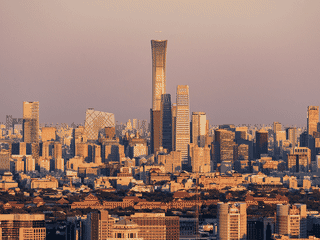
Beijing is China's capital and its second-largest city after Shanghai, with a population of around 22 million. With a rich history as the capital of Imperial China for much of its past, Beijing became the political and cultural heart of the People's Republic of China following the Chinese revolutions. The city is renowned for its flat terrain and orderly layout. Beijing's urban structure is marked by its concentric "ring roads," which are actually rectangular in shape. Beijing is a city where the old meets the new, particularly within the 2nd and 3rd Ring Roads. Here, cutting-edge technologies and modern social innovations coexist with historical architecture and alleyways.
Adapted from Wikivoyage contributors · CC BY-SA 4.0
Getting in
Beijing is served by two major airports: Beijing Capital International Airport (PEK) and Beijing Daxing International Airport (PKX). The Capital Airport Express subway line connects PEK to downtown for ¥25, while Daxing Airport Express serves PKX. High-speed trains arrive at multiple stations including Beijing South (for Shanghai, Tianjin) and Beijing West (for Chengdu, Xi’an), with affordable fares from other Chinese cities.
Adapted from Wikivoyage contributors · CC BY-SA 4.0
When to go
Beijing has a monsoon-influenced continental climate with hot, humid summers and cold, dry winters. The best time to visit is in September and October, during the "Golden Autumn". In spring, dust storms from the Gobi Desert can turn the sky yellow and significantly reduce air quality. Masks are advisable during these events. Summer can be oppressively hot and the tourist crowds tend to be the largest as well. Winter is cold and dry, with infrequent but beautiful snow. Temperatures can easily fall below -10°C in winter or rise above 35°C in summer.
Adapted from Wikivoyage contributors · CC BY-SA 4.0
Language
The language of Beijing is Mandarin Chinese. Mandarin was the imperial court language of the Ming and Qing dynasties, and Standard Mandarin is based mainly on the Beijing dialect. For language students, this makes Beijing an excellent place to practice your Mandarin. That being said, Beijing dialect has the "er" sound at the end of many words. English speakers are not common in Beijing, so it's advisable to carry your hotel's business card in case you get lost. Likewise, ask the hotel staff to write down the names of any tourist attractions you plan to visit in Chinese.
Adapted from Wikivoyage contributors · CC BY-SA 4.0
Get around
For the most up-to-date maps, use Baidu or AutoNavi Maps (Amap) on your smartphone. Baidu Maps is in Chinese, whilst AutoNavi Maps are available in foreign languages inside Apple Maps (when in China). Apple's built-in Maps app remains accessible and is a common alternative. Google Maps is blocked in China. Beijing boasts a world-class public transportation network, featuring an extensive subway system that reaches most major tourist attractions. Frequent buses and dockless shared bicycles available outside stations complement the subway, providing convenient last-mile connectivity. Many locals use ride-hailing apps like DiDi for transportation. For visitors, ordering a taxi in English is possible through the Alipay app (using Amap) or WeChat (using DiDi). Do not count on finding a taxi driver or passerby who knows English well. Before crossing, assume that none of the road users will yield to you.
Adapted from Wikivoyage contributors · CC BY-SA 4.0
Do
Hiking, camping, and tobogganing on the Great Wall: There are numerous hiking options available on the Great Wall, with various tours and groups offering guided experiences, such as the well-established but expensive tour operator Beijing Hikers. The unrestored Jiankou section, although dangerous, is often considered the most beautiful. At the Mutianyu section, there is even a toboggan rail slide that allows visitors to ride down the Great Wall in a wheelless sled. Bike through the hutongs: exploring the remaining hutongs by bicycle is a fantastic way to experience Beijing. Get a foot massage for a fraction of the price in the West.
Adapted from Wikivoyage contributors · CC BY-SA 4.0
Work
Beijing is a major hub for business and technology companies. The Central Business District (CBD) around Guomao and Wangjing are popular office areas for international business. Haidian District is home to many of China's largest tech companies. For entrepreneurs, the German Centre offers office space within a unique ecosystem. Teaching English at a training center is relatively easy for native speakers, but policies have become stricter.
Adapted from Wikivoyage contributors · CC BY-SA 4.0
Buy
Beijing is home to many high-net-worth households and offers a wide range of upscale shopping destinations. Tourists can enjoy shopping at Wangfujing, the Qianmen area, and Hongqiao Pearl Market. Wangfujing is a long, bustling pedestrian street lined with shopping complexes. For a more traditional experience, visit Qianmen Street and Dashilar Commercial Street, which have historical Chinese architectural backdrops. Panjiayuan Market is famous for cultural gifts and imitation antiques.
Adapted from Wikivoyage contributors · CC BY-SA 4.0
Eat
Beijing provides an ideal opportunity to sample food from all over the country. Some of Beijing's best restaurants serve food from Sichuan, Hunan, Guangzhou, Tibet, Yunnan, Xinjiang, and more.
Adapted from Wikivoyage contributors · CC BY-SA 4.0
Sleep
Beijing offers a wide range of accommodations starting with budget options under 300 yuan. Rates for a four-star hotel typically start at around 500 yuan, while five-star hotels range from 1,200 to 2,100 yuan. For unique overnight experiences, consider camping on the Great Wall: the Chen family at Great Wall Fresh can rent you a tent for 100 yuan. Since the pandemic, a limited number of hostels cater to backpackers. A notable option is Pagoda Light, located next to the 13th-century Baitasi stupa in Xicheng District, featuring a rooftop café and restaurant.
Adapted from Wikivoyage contributors · CC BY-SA 4.0
Stay healthy
Tap water in Beijing is not safe for drinking. Hygiene for cooked food is generally not an issue. Air pollution has traditionally been a big problem; check air-quality readings online. N95 or KN95 masks provide good protection against smog. Chinese public hospitals are generally not recommended due to lack of English-speaking staff. Recommended hospitals include Raffles Medical Beijing, Beijing United Family Hospital, Peking Union Medical College Hospital, and Beijing Sino-Japanese Friendship Hospital.
Adapted from Wikivoyage contributors · CC BY-SA 4.0
Go next
Tianjin — one of China's largest cities, accessible by high-speed rail in 31 minutes. Chengde — home to the Summer Mountain Resort, about 1 hour by high-speed rail. Shanghai — reachable by 2-hour flight or 4.5-hour high-speed train. Mongolia — overland travel via Erlian, or a low-cost 1h35m flight.
Adapted from Wikivoyage contributors · CC BY-SA 4.0
Field guide adapted from Wikivoyage contributors · CC BY-SA 4.0. Text has been adapted and organized for this guide. About our sources.
Places to know
A few starting points from the guide. Check current hours and prices before you go.
- sleep
Great Wall Fresh tent rental
Camping on the Great Wall with tent rental for 100 yuan
Recorded price: 100 yuan
Adapted from Wikivoyage contributors
- sleep
Pagoda Light (北京白塔之光酒店)
Hostel next to Baitasi stupa with rooftop café and restaurant
Adapted from Wikivoyage contributors
- eat
Daoxiangcun Pastry Shop
Famous for traditional Chinese pastries on Qianmen Street.
Adapted from Wikivoyage contributors
- eat
Liubiju Pickle Shop
Pickled delicacies on Dashilar Commercial Street, acquired taste but popular.
Adapted from Wikivoyage contributors
- eat
Maliandao Tea Street
Vast wholesale tea market for tea enthusiasts to sample and buy.
Adapted from Wikivoyage contributors
- see
Forbidden City
Imperial palace complex in the heart of Beijing
Adapted from Wikivoyage contributors
- see
Peking University
China's most prestigious general university, hosting Yenching Academy
Adapted from Wikivoyage contributors
- see
Tsinghua University
China's most prestigious university for technical subjects, offering Schwarzman Scholars
Adapted from Wikivoyage contributors
Before you go
Accommodation
Budget hostels from under 300 yuan; four-star hotels from 500 yuan.
Connectivity
VPN is required to access most Western websites; install before arrival. SIM cards are available at airports and shops.
Culture
Respect local customs; dress modestly at temples. Learn a few Mandarin phrases.
Health
Air pollution can be severe; check aqicn.org and wear N95/KN95 masks when unhealthy.
Language
English speakers are not common; carry your hotel's business card and have attractions written in Chinese.
Local transport
Subway is efficient; buy a Yikatong card for convenience. Taxis are metered but have destinations written in Chinese.
Money
China is increasingly cashless; Alipay and WeChat Pay are widely used. Some small vendors may still prefer cash, but ATMs are available.
Safety
Crossing roads can be challenging; assume vehicles will not yield. Stand still if multiple vehicles approach.
Transport
Use Baidu Maps or Amap; Google Maps is blocked. The subway reaches most tourist attractions.
Visa context
Visa rules depend on passport; check current entry rules before booking.
Water
Tap water is not safe for drinking.
Weather
Best time is September–October (Golden Autumn). Spring has dust storms; summer is hot and crowded; winter is cold and dry.