
Kigali
Rwanda1.97°S 30.06°E · 1,567 m
11 places in the index.
1.97°S 30.06°E · 1,567 m
1.48°S 29.62°E · 1,883 m
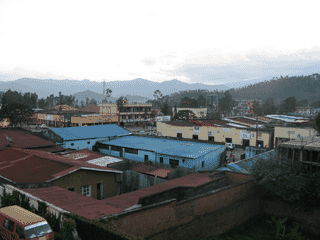
Butare (also known as Huye) is Rwanda's third-largest city and its intellectual heart, home to the National University and the excellent National Museum. With around 50,000 inhabitants, it offers a calmer, more manageable alternative to Kigali while providing access to significant historical sites including the Murambi Genocide Memorial Centre and nearby royal palaces.
Atlas entry
Cyangugu is a low-density lakeside town at the southern tip of Lake Kivu, often paired with Kamembe across the border in DRC. It primarily serves as a practical stopover for travelers crossing between Rwanda and the Democratic Republic of Congo, though the lake views and relaxed atmosphere make it pleasant for a few days if your schedule allows.
Atlas entry
Gisenyi sits on the north shore of Lake Kivu, sharing its border with Goma in DR Congo. The town features Rwanda's best sandy beaches along the lake, making it a popular weekend escape for Rwandans and travelers seeking water sports, relaxation, and scenic views of the Congolese highlands.
Atlas entry
Kibeho is a small Rwandan town of profound religious significance, famous in central Africa as the site where groups of young men and women reported visions of the Virgin Mary in the 1980s. One of the few Vatican-approved Marian sightings, Kibeho draws pilgrims annually, especially during the Assumption of Mary on August 15 when the tranquil village triples or quadruples in size with visitors from neighboring countries.
Atlas entry
Kibuye (officially Karongi) is one of Rwanda's least densely populated districts, with just 334 inhabitants per square kilometer, offering a calm, scenic counterpoint to Kigali. The main draws are Lake Kivu's island-studded horizon, distant volcanic silhouettes, and the Bisesero Genocide Memorial — one of four sites forming Rwanda's UNESCO-listed genocide memorial.
Atlas entry
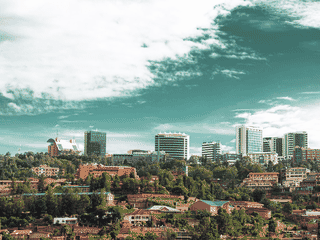
Kigali is Rwanda's political and commercial capital, a clean and ordered city spread across multiple hills that often surprises first-time visitors with its tidiness and safety. The city is a major draw for long-term expats, NGO workers, and digital nomads who appreciate the relaxed lifestyle, reliable infrastructure, and the ability to raise children safely.
Muhanga (formerly Gitarama until 2006) is a regional city in Rwanda's Southern Province, positioned roughly equidistant between the north and south of the country. Located about 45 km southwest of Kigali at an elevation of roughly 1,800 meters, it serves primarily as a transit stop and regional market center rather than a destination in its own right.
Atlas entry
Nyamata is a city of 35,000 people in Rwanda's Eastern Province, known for its magnificent hills and valleys, agriculture, and handicrafts. However, the town is most significant as a site of remembrance for the 1994 Rwandan genocide.
Atlas entry
Nyandungu Eco-park is Rwanda's first restored urban wetland, transformed from a degraded swamp into a 121-hectare nature sanctuary. The park offers ornamental ponds named after Rwanda's great lakes, a native fig forest, and the historic Pope's Garden where John Paul II delivered a sermon in 1990.
Atlas entry
Nyungwe National Park is probably the best-preserved rainforest in the mountains throughout Central Africa, designated a UNESCO World Heritage Site in 2023. The park contains 13 primate species (25% of Africa's total), 275 bird species, 1068 plant species, 85 mammal species, and 32 amphibian and 38 reptile species.
Atlas entry
Ruhengeri (also called Musanze) is Rwanda's adventure capital, sitting at the doorstep of Volcanoes National Park where the rare mountain gorilla lives. The city of about 153,000 serves as the base for one of Africa's most iconic wildlife experiences: spending an hour with habituated gorilla families.
In development: the whole atlas offline, a trip planner and a private journal. We'll post here when it ships. No newsletter to join.
