Zhangjiajie
East Asia · China
Did you know?
- Minibuses leave for the park every 20-30 minutes from 06:30.
- The park ticket is valid for three days.
- Wulingyuan's scenery includes more than 3,000 sandstone pillars.
See also
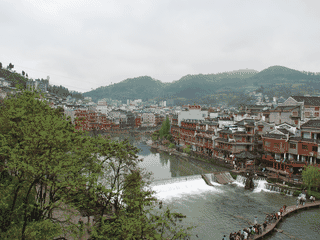
.jpg)
Fenghuang
China27.95°N 109.59°E · 330 m
Overview
Zhangjiajie is a base for sandstone pillars, misty forests, cableway rides, and multi-day park walks. Split time between Wulingyuan and Tianmen Mountain, and carry food because park dining is costly.
Languages: Chinese
Why Go
Zhangjiajie serves as the gateway to one of China's most surreal landscapes—the UNESCO-listed Wulingyuan scenery where 3,000+ sandstone pillars rise like a floating mountain kingdom. The region inspired the peaks of Avatar and offers trekking through ancient forests, cliff-hanging temples, and the world's longest alpine cableway at Tianmen Mountain. For backpackers seeking natural drama without Beijing/Shanghai prices, Zhangjiajie delivers otherworldly scenery at roughly ¥170 accommodation.
Adapted from Wikivoyage contributors · CC BY-SA 4.0
Getting In
Zhangjiajie is about 250 km northwest of Changsha. The new high-speed rail link (opened December 2019) stops at Zhangjiajie West Station, cutting travel from Changsha to about 3 hours. Zhangjiajie Station serves regular trains from Changsha (4 hours), Huaihua (4 hours), and Shenzhen West (17 hours overnight, about ¥480). Zhangjiajie Hehua International Airport has direct flights to domestic destinations plus Taiwan and South Korea—about 25 flights per day. The city has two main urban areas: Yongding District (where most tourists arrive) and Wulingyuan District (closer to the park).
Adapted from Wikivoyage contributors · CC BY-SA 4.0
Getting Around
Zhangjiajie Central Bus Station operates minibusses to Zhangjiajie National Forest Park's entrance. You do not need to buy a ticket at the window—simply go through security, keep left, and exit through Exit 1. The bus fare is ¥12 paid directly to the driver. The journey takes about 1 hour 20 minutes with many stops for local commuters. Minibusses depart every 20-30 minutes; first departure is 06:30, last return from the park around 18:00. The terminus is about five minutes on foot from the park entrance. Roads are substandard as of 2018.
Adapted from Wikivoyage contributors · CC BY-SA 4.0
When to Go
Peak season runs March through November. Summer months (July-August) bring large crowds and higher prices. Spring and autumn offer milder temperatures and thinner crowds. Winter (December-February) sees off-season pricing at Tianmen Mountain but reduced hours (08:00-16:30) and potential park closures. Rain is common year-round—trails become slippery and visibility drops in the misty mountains.
Adapted from Wikivoyage contributors · CC BY-SA 4.0
Where to Stay
Accommodation in Zhangjiajie typically costs around ¥170. Many options cluster within walking distance of the train/bus station in Yongding District. Outside the Forest Park Ticket Station, numerous hotels and guesthouses stay lively with tourist trade—convenient but noisier than staying inside the park. Wulingyuan town near the park entrance offers mid-range options including the Pullman Zhangjiajie Jingwu Hotel (¥758) for those preferring proximity to the scenery. Budget travelers can find hostels and guesthouses for ¥80-150 in Yongding District.
Adapted from Wikivoyage contributors · CC BY-SA 4.0
Food and Drink
Food options inside Wulingyuan park are limited and highly inflated—bring food and water. In the city, budget meals run ¥10-60. Highlights include: Qindama (¥60, open 08:30-01:30, crispy oil specialties, riverside location); Yinmandou restaurant (¥58, famous for sauerkraut beef and spicy roasted yellow beef); Hushifu restaurant (¥56, 10:00-21:00, signature pot dishes); Dazhangjie Noodle Shop (¥15-20, diagonally opposite Zhangjiajie West Railway Station, good noodles and dumplings); Jiawang Snacks (¥10, 313 Jiefang Rd, extremely tender beef noodles). Zhangjiajie berry tea is a local specialty from Yongding District.
Adapted from Wikivoyage contributors · CC BY-SA 4.0
Things to Do
Zhangjiajie is the entry point for two stunning UNESCO sites. Wulingyuan Scenic Area (¥224) encompasses Zhangjiajie National Forest Park, Suoxi Valley Nature Reserve, Tianzi Mountain Nature Reserve, and Yangjiajie Scenic Area—the 3,000+ strange peaks with vivid images and magnificent momentum. The park ticket is valid for three days. Key sub-attractions: Huangshizhai Scenic Area (08:30-17:00, Five Finger Peak), Yuanjiajie (07:00-18:00, first bridge under the sky), Golden Whip Stream (07:00-18:00, Huaguo Mountain, Waterfall Cave), Yangjiajie (08:30-16:00, Longquan Waterfall—world's first wonder waterfall), Tianzi Mountain (08:00-16:00, Tianzi Peak and Cave), and Wulongzhai (08:00-17:00, formerly Black Dragon, newly developed site only 20% explored). Tianmen Mountain (¥278 year-round including round-trip cableway and shuttle) features the natural sky-gate cave and the world's longest alpine passenger cableway. Other sites: Huanglong Cave (Hekou Village, Suoxiyu Town), Baofeng Lake (Baofeng Road, Wulingyuan), Puguang Chan Temple (¥40, 08:00-18:00, 15th-century Chan Buddhist temple), Zhangjiajie Museum (free, 09:00-16:30, closed Mondays), and Tujiafengqingyuan cultural park (¥80, 08:30-17:00, 809 acres near airport).
Adapted from Wikivoyage contributors · CC BY-SA 4.0
Safety
The main safety concern for backpackers is currency access—perhaps 99% of visitors to Tianmen Mountain and Wulingyuan are domestic Chinese, making foreign currency exchange surprisingly difficult. There appear to be no currency exchange stores in Zhangjiajie city. The only option may be Bank of China, located about 15 minutes north of the bus/train stations at the first major intersection north of the river. Wulingyuan is rumored to have currency exchange stores if needed. Standard urban precautions apply—guard valuables on crowded buses and at tourist sites.
Adapted from Wikivoyage contributors · CC BY-SA 4.0
Budget
Daily backpacker budget for Zhangjiajie: accommodation ¥170, food ¥40-80 (bring your own park food to save), park ticket ¥224 (valid 3 days), local transport ¥24-50. Budget accommodation starts at ¥80-120 for hostels; mid-range hotels ¥300-500. Street food and noodle shops ¥10-25 per meal. Tianmen Mountain ticket ¥278 includes cableway and shuttle—significant but covers all transport. Total daily budget: ¥300-500 for mid-range travel, ¥600+ if visiting both major sites.
Adapted from Wikivoyage contributors · CC BY-SA 4.0
Day Trips
Beyond the main parks, Zhangjiajie offers several cultural sites: People's Square Commercial Pedestrian Street (famous snack street near People's Cinema) and Tianzi Street Ethnic Tourism Mall (10:00-22:00, shopping plaza with supermarkets, theaters, restaurants). The Maoyan River Jiutian Cave scenic area stretches over 100 km through Kuzhu Village, Kuzhu River Grand Canyon, and the Jade Emperor Grottoes. Several national and provincial cultural relic protection units offer glimpses into revolutionary history and traditional Tujia architecture, including the Site of the Hunan-Hubei-Sichuan-Guizhou Revolutionary Base, Tian Family Courtyard, and Shiyanping Ancient Buildings. Fenghuang ancient town is a possible overnight trip (2-3 hours by bus), known for its Ming-Qing architecture and stilted houses over the Tuo River.
Adapted from Wikivoyage contributors · CC BY-SA 4.0
Go Next
From Zhangjiajie, onward destinations include Changsha (capital of Hunan Province, 3 hours by high-speed rail, 4 hours by regular train) and Fenghuang (famous ancient town with stilted houses, 2-3 hours by bus). The high-speed rail station (Zhangjiajie West) connects to the broader Hunan rail network, while the airport offers flights to major domestic hubs and limited international routes to Taiwan and South Korea.
Adapted from Wikivoyage contributors · CC BY-SA 4.0
Field guide adapted from Wikivoyage contributors · CC BY-SA 4.0. Text has been adapted and organized for this guide. About our sources.
Places to know
A few starting points from the guide. Check current hours and prices before you go.
- sleep
Grand Hotel Zhangjiajie
Adapted from Wikivoyage contributors
- sleep
Pullman Zhangjiajie Jingwu Hotel
Recorded price: ¥758
Adapted from Wikivoyage contributors
- eat
Dazhangjie Noodle Shop
Good noodles and dumplings.
Recorded price: ¥15-20
Adapted from Wikivoyage contributors
- eat
Hushifu restaurant
The popularity is very strong, and the ingredients are also abundant. One small pot is enough for two people, and it is very tasty. The signature three-time pot is the most powerful and cost-effective.However, it is not suitable for those who like light flavors.
Recorded price: ¥56
Adapted from Wikivoyage contributors
- eat
Jiawang Snacks
Extremely tender beef noodles. Excellent price.
Recorded price: ¥10
Adapted from Wikivoyage contributors
- eat
Qindama
The oil is fragrant and crispy.Now there are several branches in Zhangjiajie. The environment is good. After eating, you can just walk along the river and enjoy the night view of Zhangjiajie.
Recorded price: ¥60
Adapted from Wikivoyage contributors
- eat
Yinmandou restaurant
The classic dishes are sauerkraut beef and spicy roasted yellow beef, but Sanxiaguo is also delicious: although it is a small shop, the taste is really good, the price is reasonable, and you can bring your own drink.
Recorded price: ¥58
Adapted from Wikivoyage contributors
- see
Baofeng Lake
Adapted from Wikivoyage contributors
Before you go
Accommodation
Budget accommodation around ¥170 average, with many options walking distance from Zhangjiajie Station. Wulingyuan town offers proximity to park but less convenient transit.
Connectivity
Mobile coverage is good throughout the city and major tourist areas. China Mobile, China Unicom, and China Telecom provide 4G service. WiFi common in hotels but limited in parks.
Food
Food inside Wulingyuan park is expensive—bring snacks and water. City dining is affordable: ¥10-60 per meal at local noodle shops and restaurants near the station areas.
Money
Foreign currency exchange is extremely difficult in Zhangjiajie. There are no dedicated exchange stores—Bank of China may be the only option, located 15 minutes north of the bus/train stations. ATMs accepting foreign cards may be limited outside major banks. Bring sufficient RMB or exchange before arriving.
Transport
Minibusses from Zhangjiajie Central Bus Station to Wulingyuan Park cost ¥12 and take 1hr 20min. Depart every 20-30 minutes from 06:30, with last return around 18:00. Road conditions are substandard.
Weather
Mountain weather is unpredictable—mist and rain common year-round. Summer crowds are heavy; spring/autumn offer best balance of weather and fewer tourists.