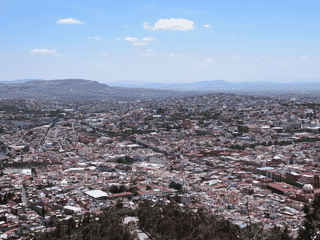

Zacatecas
Mexico, Central America and the Caribbean · Mexico
Did you know?
- The Teleférico links Cerro del Grillo with Cerro de La Bufa.
- Birria de chivo is a regional goat stew.
- Mina El Edén tours include an underground train ride.
See also
Overview
Zacatecas owes its historic center to silver wealth. Baroque churches and colonial monasteries fill a UNESCO-listed urban landscape.
Languages: Spanish
Why Go?
Zacatecas is a UNESCO World Heritage Site built on silver wealth, with a remarkably preserved colonial Centro Historico filled with baroque churches, 18th-century monasteries, and the world's only nightclub inside an old silver mine. The city sits at 2,400 meters (8,000 feet) altitude, giving it a cooler, more manageable climate than much of Mexico while still offering excellent food, vibrant callejoneada street parties, and regional dishes like asado de boda (orange-flavored mole) and birria de chivo (goat stew) that are rarely found elsewhere.
Adapted from Wikivoyage contributors · CC BY-SA 4.0
Getting In
Zacatecas International Airport (ZCL) near Victor Rosales handles flights from Mexico City, Guadalajara, Monterrey, and Durango via Aeroméxico Connect and Volaris. Most major northern Mexican cities offer direct buses to the Central de Autobuses; travelers from southern Mexico typically connect through Mexico City. First-class buses from Guadalajara take roughly 4-5 hours.
Adapted from Wikivoyage contributors · CC BY-SA 4.0
Getting Around
Walking is the best way to explore the compact Centro Historico, though be aware of the altitude—acclimatize before strenuous activity. Taxis are moderately priced and negotiable; ask '¿Cuánto cuesta ir a..?' before boarding. Ride-hailing apps Uber and Didi are readily available. The Maxibus tourist circuit costs M$100 for adults (M$80 for minors, as of 2023), runs about 45 minutes, and departs from Plaza de Armas.
Adapted from Wikivoyage contributors · CC BY-SA 4.0
When to Go
The city celebrates the anniversary of the Battle of Zacatecas (June 23, 1914) with annual festivities. April brings live musicians to Alameda Trinidad García de la Cadena park in early morning hours. Zacatecas has a semi-arid climate with desert conditions in surrounding mountains; the high altitude keeps temperatures moderate year-round, though nights can be cool.
Adapted from Wikivoyage contributors · CC BY-SA 4.0
Where to Stay
Budget hostels cluster near the cathedral in the Centro Historico. Cielito De María Hostal offers 8-bed dorms at M$240/night and private rooms from M$580/night—currently the best hostel option despite interior-facing rooms. Hostal Rada (M$350 private) is cheaper but less clean. Mid-range options include Hotel Maria Benita and Hotel Terraza Castro (both around M$600/night), with rooftop terraces and central locations. Hotel Misión Argento and Hotel La Central target the M$690-1,000 range. For splurges, Quinta Real Zacatecas (from M$2,600) occupies a converted bullring with bullring-view dining.
Adapted from Wikivoyage contributors · CC BY-SA 4.0
Food and Drink
Zacatecas specializes in regional dishes rarely found outside the state: asado de boda (orange mole typically served over chicken) and birria de chivo (goat stew, versus Jalisco's lamb version). Birrieria Don Polo in Mercado Arroyo de la Plata serves their 50-year-famous birria de chivo for M$150. Street food includes Tacos Envenenados 'El Minero' (crispy tacos, Justo Sierra 210) and Minas Papas (loaded fries, M$45-85). La Leyenda (M$100-300, Tu-Su 09:30-21:30) doubles as an art gallery with Huichol art and devil masks. For mezcal, stick to 100% agave brands like Zacatecas Huitzila; avoid Cuervo Gold.
Adapted from Wikivoyage contributors · CC BY-SA 4.0
Things to Do
Ride the Teleférico cable car (adult single/return M$100/160, child M$50/80) from Cerro del Grillo to Cerro de La Bufa for panoramic city views. Tour Mina El Edén (adults M$150, students M$120, under-11 M$80, daily 10:00-18:00), the largest mine tour in Mexico, with underground train rides and an on-site nightclub on weekends. Join the nightly Callejoneada—a walking party through narrow callejones with live music, mezcal, and a donkey—departing from Plaza de Armas. Hikers can climb to the summit of La Bufa marked by a large cross; the view is spectacular. Museums include Museo Rafael Coronel (M$30, mask collection in a 16th-17th century convent, Diablo room not to be missed), Museo de Arte Abstracto Manuel Felguérez (closed Mondays), and Museo de la Toma de Zacatecas (M$12 adults, free for children) documenting Pancho Villa's 1914 battle.
Adapted from Wikivoyage contributors · CC BY-SA 4.0
Safety
As of 2024, Zacatecas city is safe for tourists despite blanket warnings for Zacatecas State from U.S. and Canadian governments. Other towns and villages in the state carry genuine risks—avoid driving between Zacatecas city and Jalisco or Durango on rural highways where tourists have been murdered. Bus travel in any direction across the state remains safe. Use standard urban precautions in the Centro Historico, particularly at night.
Adapted from Wikivoyage contributors · CC BY-SA 4.0
Connectivity
Telcel provides 4G coverage throughout the city; 5G had not reached Zacatecas as of 2024. WiFi can be spotty in hotels due to the age and thick stone construction of historic buildings—call ahead to confirm strong signal if connectivity is essential.
Adapted from Wikivoyage contributors · CC BY-SA 4.0
Budget
Budget travelers can manage on M$500-700/day including dorm accommodation (M$240), basic meals (street food and market meals M$45-150), and one paid attraction or transport. Mid-range travelers spending M$1,000-1,500/day get private rooms, restaurant dinners, and multiple attractions. Major museums charge M$30 entry; La Quemada archaeological site is M$70. Silver shopping ranges from M$100+ for small items to thousands for serious pieces at Centro Platero de Zacatecas in Guadalupe.
Adapted from Wikivoyage contributors · CC BY-SA 4.0
Day Trips
La Quemada archaeological ruins (53 km south, M$70 entry, daily 09:00-17:00) feature mysterious pre-Columbian structures with an on-site museum. The Museum of Guadalupe (8 km away in Guadalupe, M$65, Tu-Su 10:00-16:00) occupies the Franciscan monastery that sent missionaries to Texas, New Mexico, and California—making it the mother of U.S. Spanish missions. Museo Comunitario de Zóquite (13 km east, Santa Cruz 46) showcases Pleistocene megafauna fossils. The Centro Platero de Zacatecas in Guadalupe displays silver processing history from a former hacienda where mercury-based enrichment was developed.
Adapted from Wikivoyage contributors · CC BY-SA 4.0
Etiquette
Zacatecas is a conservative colonial city with strong Catholic traditions evident in its many churches and religious festivals. Dress modestly when visiting churches, especially the Cathedral Basilica and Santo Domingo. The altitude (2,400m) can cause dehydration—drink more water than usual and acclimatize before strenuous hiking. Tipping is customary at restaurants (10-15%) and for exceptional service.
Adapted from Wikivoyage contributors · CC BY-SA 4.0
Go Next
From Zacatecas, direct bus connections reach Aguascalientes, San Luis Potosí, León, and Guadalajara. Flying is possible via Zacatecas International Airport to major Mexican hubs. The drive to Guadalajara (approximately 5-6 hours by bus) passes through scenic highland terrain. The state of Jalisco to the west and Durango to the north have rural sections with security concerns—opt for bus travel rather than driving privately.
Adapted from Wikivoyage contributors · CC BY-SA 4.0
Field guide adapted from Wikivoyage contributors · CC BY-SA 4.0. Text has been adapted and organized for this guide. About our sources.
Places to know
A few starting points from the guide. Check current hours and prices before you go.
- eat
Acropolis Café Y Restaurante
A good bet for tourists who want a conventional breakfast, if you can find a seat. Founded as a small cafe in 1938. Back in the days it used to be a hotspot for dignitaries, celebrities and artists visiting the city, evidence of whose passage line the walls, although these days it has more of a charmless chain-restaurant feel. That said, the Italian-style coffee is quite nice, and the huevos rancheros come recommended.
Adapted from Wikivoyage contributors
- eat
Birrieria Don Polo
Small food vendor in the town market, known for over 50 years for their distinctive birria de chivo (goat stew). Grab a bowl of birria, served with tortillas, or you can get it drained of liquid and served as a taco.
Recorded price: M$150
Adapted from Wikivoyage contributors
- eat
El Barretero
has excellent food and usually live music (strings, piano, Mexican popular music, not mariachi). Try the cabrito (baby goat).
Adapted from Wikivoyage contributors
- eat
Garufa
Argentinian restaurant with beautiful view of the Jardín Juárez.
Recorded price: M$200-400
Adapted from Wikivoyage contributors
- eat
La Fonda De Los Deseos
Adapted from Wikivoyage contributors
- eat
La Leyenda
This restaurant could more aptly be described as an art museum and gallery where you can share a meal and drinks. It's a place of culture, dreams, and nightmares. There's some beautiful pieces of Huichol art, devil masks, paper maché demons and dragons to name but a few of the kinds of works found here. It is an experience, with nearly every surface is a piece of art. The owner and collector is there most evenings and is very approachable. And he welcomes people to come and view the massive collection.
Recorded price: M$100-300
Adapted from Wikivoyage contributors
- eat
La Toska
Adapted from Wikivoyage contributors
- eat
La Traviata
Good Italian fare in the shopping district.
Adapted from Wikivoyage contributors
Before you go
Altitude
Zacatecas sits at 2,400 meters (8,000 feet). Acclimatize before strenuous activity and drink extra water to avoid altitude sickness.
Connectivity
Telcel 4G covers the city; 5G not yet available. WiFi in historic hotels may be weak due to thick colonial walls.
Language
Spanish is the primary language. English is limited outside major hotels and tourist restaurants.
Money
Prices quoted in Mexican pesos (M$). Budget hostels from M$240, meals from M$45, museums M$12-70. Credit cards accepted at larger hotels and restaurants.
Safety
Zacatecas city is safe for tourists as of 2024, but avoid driving between the city and Jalisco or Durango on rural highways. Bus travel is safe across the state.
Transport
Walk the compact Centro Historico. Taxis are negotiable; Uber and Didi available. Maxibus tourist circuit costs M$100 (M$80 minors).