
Yuzhno-Sakhalinsk
Eastern Europe and the Balkans · Russia
Did you know?
- A former Japanese bank houses the regional art museum.
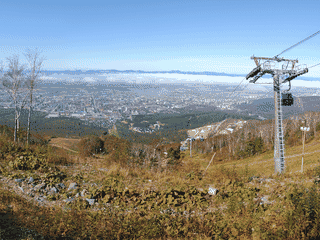
- Chekhov Peak has a hiking trailhead behind Santa Resort.
- Market stalls bring Russian, Korean and seafood dishes together.
See also
Overview
Yuzhno-Sakhalinsk pairs Japanese-era architecture with regional museums. It provides a base for outings to Pacific coastline, fishing lakes and mud volcanoes.
Languages: Russian
Why go?
Yuzhno-Sakhalinsk is the administrative capital of Sakhalin Oblast, a remote island in the Russian Far East that most travelers reach as a stepping stone to the Kurils or onward to Japan. The city of 173,000 has a boisterous oil-industry economy that makes it noticeably more expensive than comparable Russian towns, but it rewards those who pause with surviving Japanese colonial architecture from the Toyohara era (1908-1930s), solid regional museums, and easy access to wild Pacific coastline, mud volcanoes, and fishing lakes.
Adapted from Wikivoyage contributors · CC BY-SA 4.0
Getting in
Yuzhno-Sakhalinsk Airport (Khomutovo, IATA: UUS) sits 8 km south of downtown and is served by Aurora/Aeroflot flights from Moscow, Vladivostok, Khabarovsk, and several East Asian cities. The railway station (Lenina Sq, open 5:30AM-11PM, luggage room 7:30AM-8:40PM) connects to the island's Soviet-era narrow-gauge line but has no direct mainland service. Ferries to Japan depart from Korsakov (south of the city), while car ferries to the Russian mainland run from Kholmsk. Bus 3 and 63 connect the airport to downtown; taxis are also available.
Adapted from Wikivoyage contributors · CC BY-SA 4.0
Getting around
Intracity transport relies on a sparse network of public buses running along main avenues and numerous unscheduled minibuses on fixed routes. A single bus ticket costs RUB 20 (2017). Downtown is compact enough to walk between most sights. Taxis are the next option for reaching outlying attractions like the mud volcano or ski center.
Adapted from Wikivoyage contributors · CC BY-SA 4.0
When to go
Yuzhno-Sakhalinsk has humid continental climate with milder seasonal swings than mainland Siberia — summer highs reach 21-22°C (July-August) and winter lows dip to -17°C (January-February). Summer brings fog and regular rain; winter sees heavy snowfall (49-58 cm per month Dec-Feb). The best window for sightseeing and outdoor activities is late May through September. Ice hockey season runs September-April at Kristall arena.
Adapted from Wikivoyage contributors · CC BY-SA 4.0
Where to stay
Hotels are pricey due to oil-industry demand. Western-style single rooms start around RUB 3,000, and rates climb steeply from there. Budget alternatives include Hostel Ostrova (from RUB 700 per bed in 2-6 bed rooms) and apartment rentals from RUB 2,000/day listed on sakh.com. Most mid-range hotels charge extra for internet and breakfast.
Adapted from Wikivoyage contributors · CC BY-SA 4.0
Food and drink
Eating out is expensive for a Russian mid-sized city. Cheap cafés exist; a market at Lenina & Sakhalinskaya corners offers affordable Russian, Korean, and seafood dishes. Restaurants cover Russian, Japanese, and Korean cuisines. Local seafood is easier to find at market stalls than in restaurants. Nightlife is lively for the city's size: hotel bars, Mishka Pub (basement of Rubin Hotel, expat hangout), and beer tents in Gagarin Park in summer. The Khinkalnaya Kazbegi serves fresh local brew.
Adapted from Wikivoyage contributors · CC BY-SA 4.0
Things to do
City museums worth a half-day include the Sakhalin Regional Museum (Japanese-era building, ethnographic collection, outdoor exhibition of indigenous houses and Japanese steles) and the Sakhalin Regional Art Museum (1930s Japanese bank building with Korean and Japanese art). Architecture buffs can tour five surviving Japanese-era buildings including the 1908 Karafuto Guard Units HQ. Outdoors, hike Chekhov Peak (6 hours round trip, trailhead behind Santa Resort), visit the 20 km-distant mud volcano by train to Novoderevenskaya, or go diving to Moneron Island via Sakhalin Diving.
Adapted from Wikivoyage contributors · CC BY-SA 4.0
Stay safe
Downtown is safer than outlying neighborhoods, but Yuzhno-Sakhalinsk has a reputation for street crime. Standard urban precautions apply: avoid flashing valuables, stay alert after dark in non-central areas.
Adapted from Wikivoyage contributors · CC BY-SA 4.0
Budget
Daily costs run higher than typical Russian cities due to the oil boom. Budget travelers should budget RUB 1,500-2,500/day covering a dorm bed or cheap apartment (RUB 700-2,000), simple meals at the market or cheap cafés (RUB 500-1,000), local transport (RUB 100-200), and museum entrance fees (RUB 100-300 per site). Mid-range travelers staying in hotels should add RUB 2,000-4,000 per night.
Adapted from Wikivoyage contributors · CC BY-SA 4.0
Day trips
Korsakov (1-2 hours south) is the departure point for ferries to Wakkanai, Japan. The drab port town itself has little to offer but the crossing is a major regional experience. Kholmsk (2 hours west) has ferry links to the mainland and a disused railway now a popular hiking trail. Aniva Bay on the southern coast is a recreation area good for swimming, fishing, and beach activities. Lake Tunaycha on the west coast is Sakhalin's largest freshwater lake, popular in summer, with nearby salt lake Izmenchivoe known for therapeutic mud baths.
Adapted from Wikivoyage contributors · CC BY-SA 4.0
Go next
Korsakov — ferry port for Wakkanai, Japan. Kholmsk — port with ferry to Russian mainland and abandoned railway hiking trail. Aniva Bay — southern coast recreation area. Lake Tunaycha region — largest freshwater lake plus mud bath lakes on the west coast. The Kuril Islands are reachable via Omega Plus tours and ferry tickets booked in Yuzhno-Sakhalinsk.
Adapted from Wikivoyage contributors · CC BY-SA 4.0
Field guide adapted from Wikivoyage contributors · CC BY-SA 4.0. Text has been adapted and organized for this guide. About our sources.
Places to know
A few starting points from the guide. Check current hours and prices before you go.
- eat
Black Cat Café
Dishes out Russian and European meals, in a pleasant atmosphere with jazz music on the stereo.
Adapted from Wikivoyage contributors
- eat
Furusato Restaurant
A pretentious Japanese restaurant.
Adapted from Wikivoyage contributors
- eat
Kolobok Café
Adapted from Wikivoyage contributors
- eat
Nihon Mitay Sushi Bar
Self-service sushi bar and Japanese restaurant.
Adapted from Wikivoyage contributors
- eat
Restaurant Shanghai Blues
Cozy Chinese restaurant in the north of the city, also some Western food on the menu. Large servings, friendly staff and popular with expats.
Recorded price: mains about RUB
Adapted from Wikivoyage contributors
- eat
Restaurant Toyohara
Upscale restaurant serving Asian, primarily Japanese, cuisine.
Adapted from Wikivoyage contributors
- eat
Smak Café
Recorded price: average dish RUB
Adapted from Wikivoyage contributors
- eat
Stolovaya Sovyetskaya
A canteen from Soviet times, that was renovated in 2014 and lost some of its original character. There are still Soviet posters on the walls and music from the era is played.
Recorded price: RUB
Adapted from Wikivoyage contributors
Before you go
Accommodation
Hotels overpriced due to oil industry; budget backpackers should seek Hostel Ostrova or daily apartment rentals from RUB 2,000.
Connectivity
WiFi common in hotels (usually paid); a few internet cafés operate M-F 8AM-8PM. Mobile coverage is solid via Russian carriers.
Food
Market at Lenina & Sakhalinskaya offers cheapest meals. Russian, Japanese, Korean cuisines available. Seafood more accessible at market stalls than restaurants.
Language
Russian dominant; English limited outside hotels and tourist agencies. Learn basic Russian phrases or use translation apps.
Money
Rubles (RUB) only. Hotels and mid-range restaurants accept cards; markets and cheap cafés are cash-only. ATMs available citywide.
Safety
Downtown is relatively safe; outlying areas have street crime risk. Standard urban precautions advised.
Transport
Bus 3 and 63 connect airport (8 km south) to downtown. Local buses RUB 20. Taxis for longer trips. Russian narrow-gauge railway for regional destinations.
Weather
Humid continental climate. Summer (Jun-Aug) 17-22°C with rain and fog. Winter (Dec-Feb) -17 to -4°C with heavy snow. Best months: May-September.