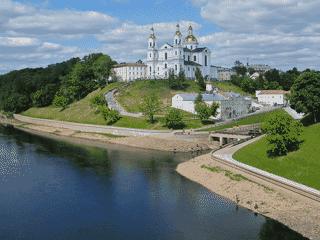

Vitebsk
Eastern Europe and the Balkans · Belarus
Did you know?
- The town hall's clock tower belongs to an 18th-century civic landmark.
- The Marc Chagall Art Center displays drawings and lithographs.
- Slaviansky Bazaar fills summer with Slavic music, exhibitions and craft markets.
See also
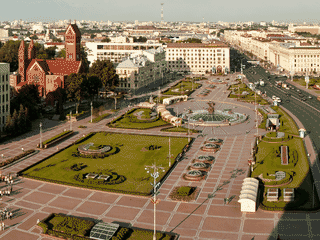

Minsk
Belarus53.90°N 27.57°E · 280 m
Overview
Vitebsk pairs a compact historic center with an avant-garde art heritage. Marc Chagall's hometown museum and the Slaviansky Bazaar music festival make art and performance central to a visit.
Languages: Belarusian, Russian
Why Go to Vitebsk
Vitebsk is the cultural capital of Belarus and the birthplace of Marc Chagall, whose hometown museum draws pilgrims from around the world. The city hosts the Slaviansky Bazaar, one of the largest Slavic music festivals, attracting performers and visitors from across the former Soviet sphere. Beyond Chagall, Vitebsk offers a compact historic center with wooden Orthodox churches, Soviet-era architecture, and a surprising avant-garde art scene rooted in the early 20th-century Vitebsk School of Art.
Adapted from Wikivoyage contributors · CC BY-SA 4.0
Getting In
Vitebsk railway station sits near the city center and connects to Minsk (3 hours, hourly trains), Polotsk (1.5 hours), and Moscow (8 hours). From Belarus, buses from Minsk and other regional cities are cheaper than trains but slower. International rail connections exist from Russia and Ukraine. The city has no commercial airport; nearest is Minsk National Airport.
Adapted from Wikivoyage contributors · CC BY-SA 4.0
Getting Around
Buses, trolleybuses, and trams serve the city at roughly US$0.40 per ride. Monthly passes are available for extended stays. Private buses and route taxis run more frequently and punctually but cost more. Taxis are plentiful at the train station and city center; agree on a price beforehand, typically under US$5. All major tourist sights are within walking distance of the center.
Adapted from Wikivoyage contributors · CC BY-SA 4.0
See
The Marc Chagall Home Museum preserves his birthplace and includes works by his teacher Yevgeny Pen and rotating exhibitions from the city's modernist artist community. The Marc Chagall Art Center (Putna 2) displays drawings and lithographs, with European avant-garde works by Miró, Braque, Matisse, and one Picasso—call ahead to book tours. The 18th-century Town Hall (Ratusha) features a notable clock tower. St. Barbara's Catholic Church showcases Romanesque Revival architecture, while the St. Alexander Nevsky Church near the Yakub Kolas Theatre demonstrates traditional wooden Orthodox style. The Vitebsk Museum of Art (Lenina 32) exhibits works from the Vitebsk School of Painting. Zdravnevo, the former estate of painter Ilya Repin, is reachable by bus 26A in about an hour.
Adapted from Wikivoyage contributors · CC BY-SA 4.0
Do
The National Academic Dramatic Theatre named for Yakub Kolas is one of the world's last two professional theatres performing exclusively in Belarusian. Performances are visually striking and avant-garde, transcending language barriers. November brings the International Festival of Modern Choreography with global dance companies. The Slaviansky Bazaar in summer is the city's flagship event—huge music festival spanning the Slavic-speaking world with exhibitions and craft markets in the Yakub Kolas Theatre.
Adapted from Wikivoyage contributors · CC BY-SA 4.0
Buy
Traditional Belarusian handicrafts sell at the Univermag department store on ul. Zamkovaya and the market near the train station. Local vodka from Vitebsk's distillery makes a distinctive souvenir. The best time for arts and crafts is during Slaviansky Bazaar when dozens of artists sell hand-made items. Quality vodkas come in tourist-worthy bottles—look for Vitebsk distillery products.
Adapted from Wikivoyage contributors · CC BY-SA 4.0
Eat
Belarusian cuisine centers on meat and potatoes. Draniki—fried potato pancakes often filled with meat and served with sour cream—are the signature dish. Kotlety (pork cutlets) and mushroom-heavy dishes reflect the region's forests and lakes. Soups are excellent and not to be missed. Salads differ from Western expectations: expect rice, mayonnaise, mushrooms, and chopped eggs rather than leafy greens. Kiosks serve fast food including hot dogs, pizza slices, and tchebureks. Arena Pizza in the city center offers spotless dining and vegetarian options. Usad'ba near the concert hall is the top restaurant for atmosphere and food quality, with English menus.
Adapted from Wikivoyage contributors · CC BY-SA 4.0
Drink
Vodka is traditionally drunk with food; if not eating, at least order a soft drink as a chaser—drinking straight vodka without a chase is associated with heavy drinking. Foreign spirits like Jack Daniels or Jose Cuervo command high prices. Local beers are cheap and accessible—look for Nikolayevskoe and Dvinskij Brovar own brands, plus Russian Baltika and Minsk's Olivariya. Cafe Teatralnoye beneath the Yakub Kolas Theatre, Club Aurora, and the Hotel Vitebsk club are the main nightlife spots. Cafe Gulliver behind the theatre and Cafe Aladdin offer quieter drinks.
Adapted from Wikivoyage contributors · CC BY-SA 4.0
Where to Stay
Hotels are overpriced but functional. Hotel prices differ for foreigners versus CIS citizens. The 4-star Eridan costs US$60-120 per night. Luchyosa is similarly priced with comparable service. Hotel Vitebsk on the Dvina river provides all necessary amenities despite its Soviet character. Hotel Vetraz near Luchyosa offers Soviet-style hospitality. Smaller private hotels are scattered throughout the city—consult Vitebsk Yellow Pages for more options.
Adapted from Wikivoyage contributors · CC BY-SA 4.0
Stay Safe
Belarusians are generally friendly, but be cautious of individuals who befriend tourists with intent to rob—particularly targeting those who become intoxicated. Western men should be wary of attentive females in clubs and bars, as some operate scams where a large "boyfriend" appears demanding "apology" payment. Registration is critical: hotels register automatically, but private accommodation requires a lengthy office visit. Being caught with registration older than three days creates serious problems—keep registration documents on you at all times. Police are strict about dress and appearance; avoid unusual fashion that might attract scrutiny.
Adapted from Wikivoyage contributors · CC BY-SA 4.0
Go Next
Polotsk lies to the north, a historic city with UNESCO-linked churches. Minsk, the Belarusian capital, is 3 hours south by train. Smolensk and Sankt-Peterburg (St. Petersburg) in Russia are accessible to the east, with St. Petersburg roughly 8-10 hours by train. Mogilev lies to the southeast.
Adapted from Wikivoyage contributors · CC BY-SA 4.0
Field guide adapted from Wikivoyage contributors · CC BY-SA 4.0. Text has been adapted and organized for this guide. About our sources.
Places to know
A few starting points from the guide. Check current hours and prices before you go.
- sleep
Hotel Eridan
4-star hotel with standard international amenities
Recorded price: US$60-120/night
Adapted from Wikivoyage contributors
- sleep
Hotel Luchyosa
Overpriced but quality service comparable to Eridan
Adapted from Wikivoyage contributors
- sleep
Hotel Vetraz
Bank river location near Luchyosa for Soviet-style hospitality experience
Adapted from Wikivoyage contributors
- sleep
Hotel Vitebsk
Soviet-style hotel on the Dvina river with all necessary amenities
Adapted from Wikivoyage contributors
- eat
Arena Pizza
Spotlessly clean city-center pizza restaurant popular with locals, vegetarian option available
Adapted from Wikivoyage contributors
- eat
Cafe Teatralnoye
It has a fairly extensive menu and reasonably attractive dining area. Closer to midnight, the cafe hosts show-girls performances.
Adapted from Wikivoyage contributors
- eat
Melody
A stylish, cosy cafe with live music every weekday.
Adapted from Wikivoyage contributors
- eat
Traktir
Another famous dining venue, yet with arguable quality of food
Adapted from Wikivoyage contributors
Before you go
Connectivity
Belarusian mobile operators offer prepaid SIMs with data. WiFi is available in hotels and some cafes but not ubiquitous.
Culture
Vitebsk is Belarus's 'Cultural Capital'—Chagall's hometown with strong avant-garde art scene, Belarusian-language theatre, and the massive Slaviansky Bazaar festival.
Etiquette
Remove hats in churches. Dress modestly for religious sites. Tipping is not expected but appreciated in upscale establishments. Punctuality is valued.
Food
Belarusian cuisine is hearty: draniki (potato pancakes), kotlety (pork cutlets), soups. Salads are mayonnaise-based rather than leafy. Street kiosks sell fast food including tchebureks. Fine dining options are limited.
Language
Russian is dominant; Belarusian is used in official cultural venues like the Yakub Kolas Theatre. English is limited outside tourist-facing establishments.
Money
Cash is king in Vitebsk; credit card acceptance is limited outside upscale hotels and restaurants. Exchange currency at banks or official exchange offices. Prices are sometimes quoted in US dollars but paid in Belarusian rubles.
Registration
Foreigners must register with OVIR within 3 business days of arrival. Hotels handle this automatically; private stays require a visit to the local immigration office. Keep registration documents on you at all times—police checks are common.
Safety
General crime is low but scam risks exist in nightlife. Dress conservatively to avoid police attention. Register properly and carry documentation at all times.
Transport
City transit (buses, trolleybuses, trams) costs roughly US$0.40 per ride. Taxis are cheap if pre-negotiated, typically under US$5. Train from Minsk takes about 3 hours.
Weather
Continental climate: cold winters with snow, warm summers (15-25°C). Best visiting months are May through September for warm weather and festivals.