_02.jpg)
Trinidad
Mexico, Central America and the Caribbean · Cuba
Did you know?
- Streets commonly carry both old and new names.
- A former convent houses the Museum of the War Against the Bandits.
- Drawn-thread tablecloths are a specialty of the crafts markets around Plaza Mayor.
See also
Overview
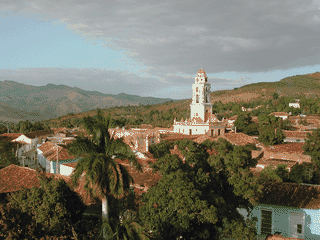
Trinidad's cobbled lanes weave between pastel colonial mansions and old churches. Salsa music and rum cocktails add to the atmosphere of its UNESCO-listed old town.
Languages: Spanish
Why Go
Trinidad is a UNESCO World Heritage Site offering one of Cuba's most beautifully preserved colonial old towns. The cobblestone streets, pastel-colored colonial mansions, and centuries-old churches create an atmospheric backdrop for salsa music, affordable rum cocktails, and encounters with welcoming locals. Unlike larger Cuban cities, Trinidad is small enough to explore on foot, making it ideal for backpackers who want to experience authentic Cuban culture without the chaos of Havana.
Adapted from Wikivoyage contributors · CC BY-SA 4.0
Getting In
Viazul buses serve Trinidad's Central Bus Station with twice-daily service from Havana (stopping at Cienfuegos) and daily service from Santiago de Cuba (stopping at Holguin, Camaguey, and Sancti Spiritus). There is also service to/from Varadero via Santa Clara. The tiny train station offers historic steam train excursions. Cubatour Office can arrange additional transport options.
Adapted from Wikivoyage contributors · CC BY-SA 4.0
Get Around
The old city is compact enough to explore on foot, though streets are cobblestone, irregular, and difficult for high heels. Almost all streets carry two names (old and new), which can be confusing. Offline GPS maps are useful, but locals are helpful if you ask. The streets around Plaza Mayor form the central focal point.
Adapted from Wikivoyage contributors · CC BY-SA 4.0
When To Go
The best time to visit is during the dry season from November to April, when temperatures are milder and rainfall is minimal. The summer months (June-August) can be extremely hot, making outdoor activities strenuous. Evenings in the main square frequently feature live music, salsa dancing, and events that run until the early hours.
Adapted from Wikivoyage contributors · CC BY-SA 4.0
Where To Stay
Casas particulares (private homestays) are the primary accommodation option in Trinidad, offering an authentic way to experience local life. Rooms typically cost 15-25 CUC per night, with many hosts offering optional breakfast (around 3 CUC) and dinner (around 7 CUC). These colonial houses often feature roof terraces, air conditioning, and hot water. Some casas can accommodate groups or travelers with Cuban companions.
Adapted from Wikivoyage contributors · CC BY-SA 4.0
Food And Drink
Local food stalls offer fixed-menu meals for around 1 CUC, while paladares (private restaurants) serve international cuisine. La Botija is an authentic tavern with antique decor serving tapas for 1-3 CUC and live jazz music. Paladar San Jose is popular for delicious international food with welcoming staff. At night, the main square comes alive with Casa de la Musica offering salsa performances from 21:00 onwards. Mojitos and rum cocktails are reasonably priced, and locals drink draught beer at casual street-side spots.
Adapted from Wikivoyage contributors · CC BY-SA 4.0
Things To Do
Plaza Mayor is the heart of the colonial center, surrounded by beautiful colonial homes and crafts markets where drawn thread tablecloths are a specialty. The Museum of the War Against the Bandits (Lucha Contra Bandidos) is housed in a former convent near the cathedral, with excellent views from its tower. Climb Cerro de la Vigia hill for panoramic town views, passing Disco Ayala, a famous cave nightclub. Waterfall swimming is available via horseback riding tours, and the nearby Gran Parque Natural Topes de Collantes offers hikes to waterfalls and rivers.
Adapted from Wikivoyage contributors · CC BY-SA 4.0
Safety
Trinidad is generally considered safe for tourists, though standard precautions apply. Be aware of petty theft and guard valuables on crowded buses. When climbing Cerro de la Vigia, children may ask for clothes or trinkets. Avoid walking alone at night on the hill paths. When visiting the Disco Ayala cave, be cautious on uneven surfaces.
Adapted from Wikivoyage contributors · CC BY-SA 4.0
Connectivity
Internet access in Cuba can be limited and expensive. WiFi hotspots exist but require purchase of internet cards. Mobile coverage may be available through ETECSA, the state telecommunications company. Power plugs typically follow European two-prong standards (Type F) or sometimes American-style outlets.
Adapted from Wikivoyage contributors · CC BY-SA 4.0
Budget
Daily budget for a backpacker in Trinidad can range from 25-40 CUC including accommodation in a casa particular (15-25 CUC), meals (5-10 CUC), activities (5-10 CUC), and drinks/transport (5-10 CUC). Many attractions like Plaza Mayor are free to explore. The Valle de los Ingenios train trip costs around 10 CUC, while beach trips to Playa Ancon can cost 2-6 CUC depending on transport choice.
Adapted from Wikivoyage contributors · CC BY-SA 4.0
Day Trips
Playa Ancon is the most popular beach day trip, located on the Ancon peninsula where you can access a resort-quality beach without staying at a hotel. A taxi takes 10-15 minutes (6-10 CUC), or an overcrowded bus leaves 4 times daily from Cubatur and Havanatur (2 CUC round-trip). The Valle de los Ingenios (Valley of the Sugar Mills) is 15 km northeast, accessible by the historic steam train that runs to the village of Iznaga with its former slave-watch tower. La Boca fishing village and nearby Sancti Spiritus are also reachable options.
Adapted from Wikivoyage contributors · CC BY-SA 4.0
Etiquette
Dress modestly when visiting churches and religious sites. Tipping is appreciated for good service at restaurants and for musicians performing at venues. When visiting homes (casas particulares), remove shoes if indicated by your hosts. Photography of military installations or personnel should be avoided. Bargaining is expected at markets but done politely.
Adapted from Wikivoyage contributors · CC BY-SA 4.0
Go Next
Before returning to Havana, consider stopping at Cienfuegos (the Paris of the Caribbean) or enjoy beach/diving time at Playa Giron or Playa Larga on the Bay of Pigs. La Boca fishing village and Playa Ancon make nice short excursions. Santa Clara (Che Guevara's final resting place) and Sancti Spiritus are both within reasonable distance for onward travel.
Adapted from Wikivoyage contributors · CC BY-SA 4.0
Field guide adapted from Wikivoyage contributors · CC BY-SA 4.0. Text has been adapted and organized for this guide. About our sources.
Places to know
A few starting points from the guide. Check current hours and prices before you go.
- sleep
Casa Las Tres Naranjas
B&B run by a young couple, native speakers of English, Dutch and Spanish. Two rooms, each with a queen size bed. They are connected by a large shared bathroom. Additionally one children's bed is available. To cool off the rooms include fans, large windows, as well as air conditioning. There's a garden, private balconies and rooftop terrace with views of the Escambray Mountains.
Adapted from Wikivoyage contributors
- sleep
Casa Marla y Fernando
Colonial house with a nice terrace. Fridge, a/c, hot water. Very friendly couple. Optional delicious breakfast and/or dinner.
Adapted from Wikivoyage contributors
- sleep
Casa de Benito Rodríguez Rodríguez
Two large rooms with a shared bath in a colonial house filled with antiques. The food is excellent. Best of all, Benito and his wife are very nice and helpful, such as finding you another casa if their rooms are booked.
Adapted from Wikivoyage contributors
- sleep
Casa de la Amistad
Centrally located hostal, popular amongst revolution sympathisers, run by ICAP (Instituto Cubano de Amistad con los Pueblos). Clean, a/c, tv, fridge, hot water (from a tank not the electric type that give you a shock if you touch them).
Recorded price: ~US$25 for a double room
Adapted from Wikivoyage contributors
- sleep
Dra. Onidia Puente Landestoy
2 brand-new rooms, each one with a tv, air-conditioner, fridge, a double bed and a single bed, and fancy shower and toilet. The owner, Onidia, is friendly, fun to talk to, speaks some English, and live in the house with her mother and her daughter. Location is about 4 blocks from Parque Cespedes. Great room for a decent price.
Adapted from Wikivoyage contributors
- sleep
Hostal "Felina y Otto
The accommodation is on the top floor of the house and is very private and features a roof terrace. The hosts offer a good breakfast (~US$3) and Dinner (~US$7). Food is delicious and the hosts are happy to provide advice on local attractions.
Recorded price: ~US$15 per night excluding food
Adapted from Wikivoyage contributors
- sleep
Iberostar Grand Hotel
A beautiful colonial hotel on the main causeway up to the square. It is a little expensive, but worth it as it has colonial rocking chairs and 2 four poster beds.
Adapted from Wikivoyage contributors
- sleep
La Niña
Pretty colonial house with courtyard. Located in the center of the city. Comfortable room, a/c, fridge and good hot water. Very friendly couple. Huge and delicious breakfast included. Delicious evening meals also available. Secure. Keys to street and room provided.
Recorded price: ~US$25
Adapted from Wikivoyage contributors
Before you go
Accommodation
Casas particulares (private homestays) are the primary accommodation, ranging 15-25 CUC per night. Hosts often offer breakfast and dinner.
Connectivity
Internet access is limited and expensive in Cuba. WiFi hotspots exist but require internet cards purchased from ETECSA.
Food
Local food stalls offer meals around 1 CUC. Paladares (private restaurants) serve international cuisine. The square comes alive at night with salsa music and reasonably priced cocktails.
Money
The main currency is the Cuban Convertible Peso (CUC). There is a bank with ATM on Jose Marti street. Credit cards issued by US banks are generally not accepted.
Safety
Generally safe for tourists. Standard precautions against petty theft recommended. Avoid walking alone on hill paths after dark.
Transport
Viazul buses connect Trinidad to Havana (twice daily), Santiago de Cuba (daily), Varadero, and intermediate cities. A tiny historic train station offers steam train excursions to Valle de los Ingenios.