Trieste
Western Europe · Italy
Did you know?
- Historic Viennese-style cafes anchor the local coffee culture.
- Austrian and Slavic influences shape the local cuisine.
- Molo Audace is a long pier across from Piazza Unità.
See also
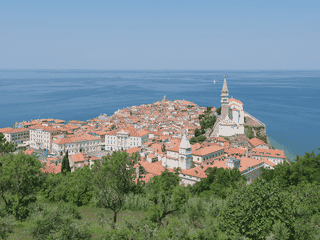

Piran
Slovenia45.53°N 13.57°E · 7 m
Koper
Slovenia45.55°N 13.73°E · 3 m
Overview
Trieste has a lively cafe culture. Historic Viennese-style establishments give its coffee stops a distinctive setting.
Languages: Catalan, Italian
Why Go?
Trieste is a charming, underestimated city on Italy's Adriatic coast that tourists often skip in favor of bigger destinations like Rome or Venice. The city retains a quiet, almost Eastern European atmosphere with several pubs and cafes, stunning Habsburg-era architecture, and beautiful sea views. It was once a powerful center of politics, literature, music, and culture under Austro-Hungarian dominion, and famously served as the residence of Irish writer James Joyce.
Adapted from Wikivoyage contributors · CC BY-SA 4.0
Understand
Trieste is the capital of the autonomous region of Friuli Venezia Giulia with about 200,000 inhabitants (2023). Located at the crossroads of German middle Europe, Slavic masses and the Balkans, Italy, and the Mediterranean Sea, the city displays a unique artistic and cultural heritage blending Roman ruins, Austrian empire architecture similar to Vienna, and Mediterranean styles. Trieste was a major port during the 18th century.
Adapted from Wikivoyage contributors · CC BY-SA 4.0
Getting In
Trieste can be reached by air via Trieste – Friuli Venezia Giulia Airport (http://www.aeroporto.fvg.it), by coach to the Trieste coach station, or by train to Trieste Centrale railway station. The railway station has a left luggage office open from 8-18h charging €5 per piece. The Trieste–Opicina tramway (line #2) connects to Opicina for train connections to Ljubljana, though service was suspended in October 2025 due to mechanical problems.
Adapted from Wikivoyage contributors · CC BY-SA 4.0
Get Around
Trieste has a public transport system including buses and trams. The city center is walkable, with many narrow streets in the old town closed to traffic. The #6 bus from Piazza Oberdan reaches Miramare Castle in about 20 minutes. City bus #42 provides access to Grotta Gigante 15km away.
Adapted from Wikivoyage contributors · CC BY-SA 4.0
When to Go
Trieste can be visited year-round, though summer months (June-August) offer the best weather for beach activities at Barcola and sailing trips. Easter brings traditional pinza sweet bread, while Carnival features fritole pancakes and fave cookies. The osmizze tradition allows visitors to taste local wines and products at temporary farm stands.
Adapted from Wikivoyage contributors · CC BY-SA 4.0
Where to Stay
Accommodation options range from the 74-bed Tergeste Youth Hostel (Viale Miramare, 331) with panoramic terrace and sea views, to budget options like B&B Adria in Sistiana (€22-24 per person/night including breakfast), and mid-range hotels like Hotel Porta Cavana near Piazza Unità (€36-130 for singles/doubles). The tourist information office in Piazza Unita provides accommodation lists and can make bookings.
Adapted from Wikivoyage contributors · CC BY-SA 4.0
Food and Drink
Trieste's cuisine reflects its multicultural history with Austrian and Slavic influences. Traditional dishes include caldaia (boiled pork), jota soup (pork, potatoes, cabbage, beans), Austrian-style gnocchi, and brodetto fish soup. The city has numerous 'buffets' (restaurants) serving local Triestine cuisine. For quick eats, try piadina at La Caveja or La Piadineria (both on Viale XX Settembre). Buffet da Siora Rosa (Piazza Hortis 3) has served typical cuisine since before WWII, with meals costing €10-25 per person. Local wines include Terrano, Rosso, Malvasia, and white Vitovska Garganja.
Adapted from Wikivoyage contributors · CC BY-SA 4.0
Things to Do
Major attractions include Piazza Unità (Europe's largest sea-front square), the Austrian Quarter with Habsburg palaces, Città Vecchia (old town with medieval streets closed to traffic), San Giusto Cathedral and Castle with panoramic views, and Miramare Castle (19th-century, accessible via bus #6). The FVG Card grants free access to nearly all major attractions: €18 for 48 hours, €21 for 72 hours, €29 for 7 days. Other sites include the Roman Theatre, Arco di Riccardo (Roman gate from 33 AD), Canal Grande, and numerous museums including Museo Revoltella and Museo di Storia, Arte e Orto Lapidario (€5, €3 reduced).
Adapted from Wikivoyage contributors · CC BY-SA 4.0
Buy
Trieste was once the top shopping destination for Yugoslav tourists. The Ghetto and Piazza Unità area offer Biedermeier and Liberty furniture, Bohemian glassware, and Austrian silverware antiques. Look for glassworks from France and Venice, paintings, prints, and antique engravings. The city has several markets and specialty shops.
Adapted from Wikivoyage contributors · CC BY-SA 4.0
Nightlife
Trieste has a lively cafe culture centered on historic Viennese-style establishments. Caffè Tommaseo (Riva 3 Novembre), Caffè San Marco (via Battisti, 18, open since 1914), Caffè Torinese (Corso Italia, 2), and Caffè Pasticceria Pirona (where James Joyce was a regular) all offer historic ambiance. For chocolate, visit Chocolat (via Cavana 15) for hot chocolate in winter and ice cream in summer.
Adapted from Wikivoyage contributors · CC BY-SA 4.0
Outdoor Activities
Molo Audace is the long pier across from Piazza Unità, perfect for sunset watching. The Karst (Carso) limestone plateau above the city offers excellent walking with views of the Gulf of Trieste, Slovenia, and Croatia. Strada Vicentina is a 6km pedestrian road from Opicina to Prosecco with superb views. Barcola provides a concrete beach south of Miramare for sunbathing. Sailing trips with Discover Friuli (http://discoverfriuli.com) cost €100-234 depending on duration and group size. Snorkeling and diving are available in the Miramare Marine Protected Area.
Adapted from Wikivoyage contributors · CC BY-SA 4.0
Safety
Trieste has long been Italy's safest city, ranking among the safest in Europe, partly due to its border location with former heavy security presence. Walking at night, taking taxis, and avoiding pickpocketing pose minimal risk. Normal precautions should be taken. As a border city, Trieste lies on migrant routes from the Middle East, and the main railway station can attract suspicious individuals—simply avoiding eye contact and walking purposefully is sufficient.
Adapted from Wikivoyage contributors · CC BY-SA 4.0
Connectivity
Italy uses Type L power plugs (3 pins, 16A). Mobile coverage is provided by major Italian carriers with 4G/LTE networks available throughout the city. WiFi is available at most cafes, restaurants, and hotels.
Adapted from Wikivoyage contributors · CC BY-SA 4.0
Budget
Budget travelers can eat cheaply with street food (piadina €3-5, pizza slices €2-4), buffets offering lunch specials around €10-15, or self-catering at local markets. Accommodation ranges from €22-24 per person at budget B&Bs to €36-130 for mid-range hotels. Local transport is affordable at €1-2 per bus ride. Museum admission typically €3-6, with the FVG Card offering good value for multiple attractions.
Adapted from Wikivoyage contributors · CC BY-SA 4.0
Day Trips
The island of Grado makes a good half-day boat trip with return tickets costing €6. The Skocjan Caves in Slovenia are a short trip from Basovizza suburb. Slovenian coastal cities Koper and Piran are 30 minutes away by car or 1 hour by bus (€5.30 one way). Twin cities Gorizia (Italy) and Nova Gorica (Slovenia) are 45 minutes by train, with Nova Gorica offering connections to Lake Bled. During summer, daily ferries go to Piran and Croatian destinations Porec, Rovinj, and Pula for around €40 return. Austria is 2 hours by car or 3 hours by train via Udine or Nova Gorica.
Adapted from Wikivoyage contributors · CC BY-SA 4.0
Go Next
From Trieste, travelers can explore the Riviera (Muggia, Sistiana, Duino) with farm stays and local wine. Venice and Ljubljana are major nearby destinations. The Karst region offers rural accommodation and local salami, cheese, and ham. Summer ferries connect to Croatian Istrian cities (Porec, Rovinj, Pula) and Slovenian Piran. The trip to Austria takes 2 hours by car or 3 hours by train.
Adapted from Wikivoyage contributors · CC BY-SA 4.0
Field guide adapted from Wikivoyage contributors · CC BY-SA 4.0. Text has been adapted and organized for this guide. About our sources.
Places to know
A few starting points from the guide. Check current hours and prices before you go.
- eat
Al Barattolo
Considering that this restaurant is right at the Grand Canale, it has very moderate prices (and of course a beautiful view).
Adapted from Wikivoyage contributors
- eat
Antica Trattoria Le Barettine
Italian seafood restaurant, huge wine collection, in Trieste's historical city center.
Recorded price: €30-50 (April 2014)
Adapted from Wikivoyage contributors
- eat
Buffet da Siora Rosa
One of Trieste's oldest family-owned restaurants operating since before World War II, serving typical Triestine cuisine. Particularly famous for their proscuitto cotto: cooked ham served with piquant mustard and horseradish.
Recorded price: €10-25 per person (June 2014)
Adapted from Wikivoyage contributors
- eat
Celestino
Adapted from Wikivoyage contributors
- eat
Desideri e Auguri Da Marino's
Excellent little Italian restaurant. The food is like homemade. The best place to have a good meal with dishes that are as alternative as they are delicious. Very friendly owner, quiet and welcoming environment.
Adapted from Wikivoyage contributors
- eat
La Caveja
A good selection of wraps. The best piadina. Big portions and nice ambient in the street.
Adapted from Wikivoyage contributors
- eat
La Piadineria
Quick place to stop in and get some relatively healthy food. Outdoor seating is available. The piadina dough is very good. Good ingredients in general. Excellent choice of flavors. There is another branch of La Piadineria in Via del Ponte, 9/B
Adapted from Wikivoyage contributors
- eat
La Pizza di Cittavecchia Trieste
Great pizza and friendly, The service efficient. It's nice to get away from the crowds outside and find this place with a more local feel.
Adapted from Wikivoyage contributors
Before you go
Culture
Trieste is officially quadrilingual (Italian, Slovene, Friulian, German) but primarily Italian-speaking. The local Triestine dialect is a form of Venetian. Expect influences from Austrian, Slavic, and Mediterranean cultures in food, architecture, and customs.
Food
Trieste's cuisine blends Austrian, Slavic, and Italian traditions. Try jota soup, caldaia (boiled pork), Austrian-style gnocchi, and brodetto fish soup. Buffets are traditional restaurants serving local cuisine.
Language
Italian is the primary language. English is spoken at tourist venues and hotels. Slovene is spoken in surrounding villages and in the Karst region.
Money
Italy uses the Euro (€). Credit cards are widely accepted at hotels, restaurants, and shops. ATms are readily available throughout the city.
Safety
Trieste is one of Italy's safest cities with very low crime rates. Normal urban precautions suffice. Border city on migrant routes—avoid the railway station at night if uncomfortable around crowds.
Transport
Trieste has a bus and tram network. The #6 bus reaches Miramare Castle from Piazza Oberdan. Buses to Koper/Piran depart from the bus station (€5.30 one way). Trains connect to Venice (2-3 hours), Ljubljana (2-3 hours), and Gorizia (45 min).
Weather
Trieste has a subtropical climate with hot summers (25-30°C) and cool winters (2-8°C). The bora wind is famous—the Museo della Bora (Via Belpoggio, 9) documents this phenomenon.