Overview
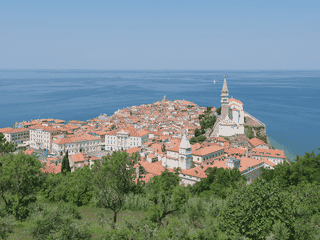
Koper's old city occupies the former island of Capris. Its Venetian heritage is visible around Tito Square.
Architecture · History · Day Trips · Food
Did you know?
- An earlier name, Insula Capraria, meant goat island.
- The Praetorian Palace on Tito Square dates to the 15th century.
- Paintings by Vittore Carpaccio hang in the Cathedral of the Assumption.
Why go?
Koper is Slovenia's only commercial port and one of its oldest towns, with a remarkably rich history spanning Roman, Byzantine, Venetian, and Yugoslav periods. The Venetian-era old city on the former island Capris features Tito Square, one of the finest Venetian-style squares in the Mediterranean. Unlike the nearby tourist-heavy Piran, Koper offers authentic Istrian atmosphere, excellent local wine cellars, and a growing backpacker scene with affordable accommodation options. The city makes a convenient base for exploring the entire Slovenian coast.
Understand
Koper developed on a rocky island called Capris during Roman times, later known as Insula Capraria ('goat island') under Pope Gregory I in 599, then Iustinopolis under the Byzantine Empire, and finally Caput Histriae ('head of Istria') by the Aquileia Patriarchs. The Venetians rendered this as Capodistria, while the Slovenian name is simply Koper. The longest reign (1279-1797) under the Venetian Republic brought economic prosperity through trade and salt production, leaving architectural heritage that the city has preserved despite numerous later interventions. In the Middle Ages, Koper was a fortified island surrounded by walls, connected to the mainland by a wooden bridge toward Škocjan, protected by Lion Castle and vast saltpans. The saltpans were entirely abandoned in 1912, and under Italian rule, the city completely lost its island character through draining of the saltpans. After WWII, it became part of Yugoslavia and experienced profound changes including massive port development.
Get in
Koper is accessible by bus from major Slovenian cities, with FlixBus serving routes to and from the city. Local carriers include Arriva for inter-city connections, Nomago for regional routes, and Črnja tours. Public buses run every 20-30 minutes to nearby coastal towns (Izola, Piran, Portoroz). For those sharing rides, Prevoz (ride-sharing platform) has a stop in Koper with connections to Ljubljana for around €5. The nearest major airports are Trieste (TRS, 64 km), Pula in Croatia (PUY, 102 km with border checks), Ljubljana (LJU, 124 km), and Venice (VCE, 176 km). Shared shuttle services like GoOpti offer transport from airports to Koper.
Get around
Koper's old town is compact and walkable, with most sights reachable on foot. The city bus network is operated by Arriva, connecting the old town with residential areas and nearby beaches. For exploring beyond the city, rent bikes from Izposoja Koles at Kidričeva ulica 45 (open 08:00-20:00, helmets included). The coastal path toward Izola and Piran is ideal for cycling, skating, or walking. Taxis are available from Cammeo (€1 per km), Taxi Drift, and Taxi Laguna.
When to go
The best time to visit Koper is late spring (May-June) or early autumn (September-October) when weather is pleasant and tourist crowds are manageable. Summer (July-August) brings the most visitors to the coast, with higher accommodation prices and crowded beaches. The Škocjanski zatok Nature Reserve offers excellent birdwatching opportunities year-round. FC Koper football matches at Bonifika stadium (500m south of town centre) provide local entertainment when in season.
Where to stay
Budget travelers will find good options in Koper. Hostel Secret Garden at Dimnikarska ulica 6 offers dorm beds from €14.73-18.73 depending on season (July-September high season). Hostel Histria at Ulica pri Velikih vratih 17 provides another central option. The Dijaški dom Koper and Motel Port offer additional budget accommodation. For mid-range options, Hotel Bio and Garni hotel Pristan are available. The only hotel in the old city is Koper Hotel at Pristaniška ulica 3.
Food and drink
Koper offers diverse dining from budget to upscale. For cheap eats, try Anacur Döner Kebab at Kidričeva ulica 8 (kebab around €1.20) or Oly Burger near the bus station (open late on weekends). Fritolin at Pristaniška ulica 2 serves inexpensive fresh seafood (€4-7) until sold out each day. Traditional Istrian taverns (gostilnas) like Istrska klet Slavček and Gostilna Belvedur serve regional home-style food. Don't leave without trying local olive oil from Istrian providers. The city has numerous wine cellars with rich local offerings—wine bar Okusi Istre at Kidričeva ulica 37 sells high-end Istrian wines by the glass for €3-5. Traditional osmicas (farmers offering homemade food and wine) are worth seeking out in surrounding villages.
Things to do
Start at Tito Square (Titov trg), the main square surrounded by the Praetorian Palace (15th century, now housing the tourist office), Loggia, Cathedral of the Assumption with paintings by Vittore Carpaccio, and the Bell Tower (€5 adults, €4 students). Climb the Bell Tower for views and to see the oldest working bell in Slovenia. Walk down Čevljarska ulica to Prešeren Square with the Da Ponte Fountain (1666, a reproduction of Venice's Rialto Bridge). Exit through the Muda Gate, the only preserved city gate out of the original twelve. Visit the Koper Regional Museum at Kidričeva ulica 19 (open Tu-Sa 09:00-17:00). Škocjanski zatok Nature Reserve (122 ha, the largest brackish wetland in Slovenia) offers flora and fauna near the port area. The public beach lies just west of the marina.
Safety
Koper is generally a safe city for travelers. Standard precautions apply—keep valuables secure in crowded areas and be aware of traffic when walking in the port zone. The Škocjanski zatok nature reserve should be explored with appropriate caution during nesting seasons.
Connectivity
Slovenia uses standard European mobile networks. Major providers include Telekom Slovenije, A1, and Telemach. SIM cards are widely available in convenience stores and official outlets. WiFi is available in most cafés and restaurants in the city centre. Power sockets use Type C and F (European two-pin and Schuko).
Day trips
Koper is the ideal base for exploring Slovenian Istria. Frequent buses (every 20-30 minutes) connect to Piran (15 minutes), Izola (15 minutes), and Portoroz. Piran is the most atmospheric medieval Venetian town on the Adriatic, with Tartini Square and St. George's Cathedral. Izola offers a quieter, more authentic fishing town experience. Rent a bike and ride to Piran and back—a full-day trip is easily doable. In the Koper hinterland, visit the Church of the Holy Trinity at Hrastovlje with famous medieval frescoes including the Dance of Death, or the Defence tower at Podpeč (11th century).
Go next
From Koper, continue exploring the Slovenian coast toward Piran (15 minutes by bus, the most visited Venetian town), Izola (15 minutes, authentic fishing port), or Portoroz (resort town). Trieste in Italy is 64 km away and makes an excellent day trip or onward destination. Ljubljana is 124 km by bus or train. For those heading deeper into Istria, cross into Croatia toward Pula (102 km, note border checks). The entire Julian Alps region is accessible for mountain trekking and Lake Bled for a classic Slovenian experience.
Guide text adapted from Wikivoyage contributors under CC BY-SA 4.0.
Where to start
Eat
Al mulin
Eat
Anacur Döner Kebab
Typical Turkish restaurant locally known for the cheapest fresh pizza in town. Great for students and backpackers.
Price when recorded: €1.20 (Aug 2020)
Eat
Avokado
Vegan & Vegetarian food. Takeaway with tables outside & across road.
Eat
Azure Koper
Eat
Baladur tavern
Eat
Brič restaurant and enotheque
Eat
Casa de Rin
Buy
Agraria Koper
Agraria Koper is a farmer's co-op supermarket selling high-quality products from local and regional producers. Produce, meats, honey, pastas, wine, and more. Something between a farmer's market and Whole Foods. It's definitely worth a visit if you want to cook yourself or bring some special treats home. There is also a much smaller location closer to the centre.
Before you go
Accommodation
Hostel dorms range from €14.73-18.73 depending on season. Budget hotels and guesthouses are available throughout the city.
Food
Istrian cuisine features fresh seafood, olive oil, and local wines. Budget travelers can eat well for €10-15 per day. Traditional taverns (gostilnas) offer the best value.
Language
Slovenian and Italian are official languages. Croatian/Serbian/Bosnian is widely understood, and most people speak English, especially in tourist areas.
Money
Slovenia uses the Euro (€). Credit cards are accepted at most hotels, restaurants, and shops. ATMs are available throughout the city, including near the bus station.
Transport
Public buses run every 20-30 minutes to nearby coastal towns. FlixBus and Arriva serve longer routes. Taxis from Cammeo cost around €1 per km.