.jpg)
Tainan
East Asia · Taiwan
Did you know?
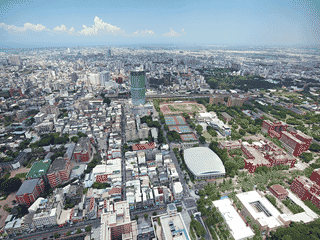
- The old center clusters Chihkan Tower, the Confucian Temple, and temple streets.
- Oyster omelette, danzai noodles, and coffin toast are local staples.
- The Sicao Green Tunnel makes a mangrove ecology trip by boat.
See also

Kaohsiung
Taiwan22.63°N 120.26°E · 9 m
Overview
Tainan layers Dutch forts, Qing temples, and Japanese buildings with a famously snack-focused food scene. A compact old center makes it easy to combine historic sites, night markets, and local noodles on foot.
Languages: Chinese
Why go?
Tainan is Taiwan's oldest city, a place where Dutch forts, Qing-dynasty temples, and Japanese colonial buildings coexist on the same block. It is famous as the country's 'City of Snacks' (小吃城), with iconic dishes like oyster omelette (蚵仔煎), danzai noodles (擔仔麵), and coffin toast (棺材板) sold at every corner and night market. The city draws far fewer foreign tourists than Taipei, giving backpackers a more intimate, locally Taiwanese experience with lively retro bar culture and folk festivals like the thunderous Yanshui Beehive Fireworks Festival. It works as both a weekend food pilgrimage and a base for exploring Southern Taiwan.
Adapted from Wikivoyage contributors · CC BY-SA 4.0
Getting there
Tainan is accessible by high-speed rail (HSR) from Taipei in roughly 2 hours (THSR Tainan Station, then bus or taxi into the city). Regular TRA trains connect Tainan to Taipei (~5 hours), Taichung (~2.5 hours), and Kaohsiung (~1 hour). Long-distance buses from Taipei (Ubus, Kuo-kang, Ho hsin) cost NT$450-455 and take ~4 hours. Tainan Airport handles domestic flights to Kinmen and Penghu via Uni Air and limited international flights from Hong Kong six times weekly via China Airlines. The Tainan Bus Station (臺南轉運站, 291 Gongyuan Rd) is next to Tainan Park with orange luggage lockers (NT$40-60/3 hr).
Adapted from Wikivoyage contributors · CC BY-SA 4.0
Get around
Tainan's city center is compact and walkable, especially around Chihkan Tower, the Confucian Temple, and the old-city temple clusters. Buses are the main public transit option—most routes stop at either the train station or Chihkan Tower, making both reliable landmarks. A cheap taxi from the city center to Tainan Airport costs roughly the same as the local bus number 5. Scooters are widely rented and popular with locals, offering flexibility for visiting Anping District, but roads can be chaotic with an average of 200 traffic deaths and 20,000 injuries per year reported for Tainan alone.
Adapted from Wikivoyage contributors · CC BY-SA 4.0
When to go
Tainan has a hot, humid subtropical climate with temperatures ranging from 14.5°C in January to 33.1°C in July. June through September brings the heaviest rainfall (up to 478.9 mm in August), while October through February is drier and cooler. The city is busiest during Taiwanese public holidays, school vacations, and weekends when domestic tourists flock to its festivals and heritage sites—avoid the January/February or October Golden Weeks if you prefer fewer crowds. The Yanshui Beehive Fireworks Festival takes place on the 15th day of the first lunar month (typically late January to mid-February), drawing enormous crowds for its explosive, full-face-helmet-required celebrations.
Adapted from Wikivoyage contributors · CC BY-SA 4.0
Where to stay
Hotels near the train station or Chihkan Tower are most convenient for public transport; Chihkan Tower is particularly central for walking to major temples and night markets. Budget hostels include Guest House Hamuya (dorm NT$500/bed), Fuqi Hostel (dorm NT$450, free WiFi/kitchen/laundry), and loft18 hostel (dorm NT$510, aircon, 10-bed dorm with lockers). Mid-range options include Guang Hwa Hotel near the station (double from NT$700, free breakfast/internet) and the Tainan City Labour Recreation Centre (single NT$550, double NT$550, open 06:00-00:00). Weekends and Taiwanese public holidays drive up hotel demand significantly since most visitors are domestic tourists, so book ahead for holiday periods.
Adapted from Wikivoyage contributors · CC BY-SA 4.0
Food and drink
Tainan's reputation as 'the City of Snacks' is well-earned—street vendors and night markets serve cheap, delicious local specialties day and night. Must-try dishes include oyster omelette (蚵仔煎 kèzǎijiān), oysters and thin noodles (蚵仔麵線), danzai noodles (擔仔麵, famously at Du Hsiao Yueh on Zhongzheng Road), coffin toast (棺材板, fried bread stuffed with chicken, beans, seafood, and milk-based sauces), and beef soup from the surrounding high-quality beef region. The three major night markets—Garden Night Market (花園夜市, open Th Sa Su, Haian Road), Da Dong Night Market (大東夜市, open M Tu F, Linsen Rd), and Wu Sheng Night Market (武聖夜市, open W Sa, West Central District)—each draw different crowds, with Garden Night Market being the largest. For a sit-down splurge, A Xia Restaurant (紅蟳米糕, NT$500-1500) is famous for its crab sticky rice. Pearl milk tea (珍珠奶茶) is a must; Hanlin Tea House (翰林茶館) is one of two claimants to having invented the drink.
Adapted from Wikivoyage contributors · CC BY-SA 4.0
Things to do
Tainan's historic sites fall into three main clusters: around Chihkan Tower (Fort Provintia) in the Central District, along Zhongzheng Road within the old Qing-era city walls, and in Anping District. Key sights include Chihkan Tower (NT$70, daily 08:30-21:30)—the landmark historic site with steles, statues, and colorful ponds—Anping Fort (Fort Zeelandia, NT$70, daily 08:30-17:30) for sunset views over the ocean, the Anping Tree House (NT$70 combined ticket, daily 08:30-17:00) with its banyan-wrapped Dutch warehouse, and the Eternal Golden Fortress (億載金城, NT$70, daily 08:30-17:00), a 19th-century Qing coastal fort with paddle boats in the moat. Cultural stops include the National Museum of Taiwan Literature (free, Tu-Su 09:00-18:00) in a restored Japanese colonial building, the National Museum of Taiwan History (NT$80, Tu-Su 09:00-17:00, take bus 18 from TRA station) with large-scale interactive displays, and the Chimei Museum (NT$200, Tu-Su 09:30-17:30, Bao'an TRA Station) with its world-class violin collection and incongruous European architecture. For nature, the Sicao Green Tunnel (NT$150-200, four草綠色隧道) in Taijiang National Park offers mangrove boat rides where the rare black-faced spoonbill can be spotted. Baseball fans can catch the Uni-President Lions at Tainan Municipal Baseball Stadium (NT$150-300, season March-June and July-September).
Adapted from Wikivoyage contributors · CC BY-SA 4.0
Safety
Tainan is very safe for tourists in terms of crime, on par with the rest of Taiwan. The primary safety concern is traffic—the Bureau of Transportation reports an average of 200 deaths and 20,000 injuries per year from traffic incidents within Tainan alone. Scooters and motorcycles dominate the roads; cross carefully, wear a helmet, and avoid busy intersections on foot. Some of the quieter back-alley bars can get lively late at night, but violent crime targeting tourists is rare. The areas around Zhongshan Road, Beimen Road, and the train station make up the safe downtown core.
Adapted from Wikivoyage contributors · CC BY-SA 4.0
Connectivity
Free trilingual (Chinese, English, Japanese) map-guides are available at Tainan Railway Station to help visitors navigate. Younger locals may speak basic conversational English, but English is not widely spoken—taxi drivers especially typically do not speak English, so have your destination written in Chinese characters. WiFi is widely available in hostels, cafes, and some bars (The Hangout Bar on Gongyuan Rd offers free public computer and WiFi). SIM cards and mobile data are available through Taiwan's major carriers at the airport and convenience stores citywide.
Adapted from Wikivoyage contributors · CC BY-SA 4.0
Budget
Tainan is one of Taiwan's most affordable cities for backpackers. Street food meals cost NT$30-80, night market dinners NT$50-150, and sit-down restaurants NT$200-500 per person. Dorm beds range NT$450-530, double rooms NT$550-700, mid-range hotels NT$700-1500. Bus fares within the city are inexpensive, and the Tainan Bus Station offers luggage lockers (NT$40-60/3 hr). A reasonable daily backpacker budget is NT$800-1500 including dorm, street food, local transport, and one or two paid attractions. A daily budget under NT$1000 is achievable with careful spending on night markets and free temples.
Adapted from Wikivoyage contributors · CC BY-SA 4.0
Day trips
Several worthwhile day trips radiate from Tainan. The Sicao Green Tunnel in Taijiang National Park (NT$150-200 boat ride, ~1 hour) is reachable by bus for mangrove ecology and black-faced spoonbill watching. The Anping District cluster (Anping Fort, Anping Tree House, Eternal Golden Fortress, Tianhou Temple) can be toured in half a day by bus or taxi. About 1 hour southeast, Fo Guang Shan is Taiwan's largest and most impressive Buddhist monastery. Kaohsiung is one hour south by TRA train and makes an easy overnight or day trip. Chiayi serves as the gateway to Alishan via the scenic narrow-gauge forest railway. The Guanziling area offers hot springs, and the Dongshan Coffee Route is a scenic mountain road lined with organic coffee farms and cafes.
Adapted from Wikivoyage contributors · CC BY-SA 4.0
Etiquette
Tainan's temples and religious sites require modest dress—cover shoulders and knees before entering. Remove shoes when indicated. Many temples are active places of worship; observe respectfully, avoid flash photography during ceremonies, and do not pose inappropriately with statues. Tipping is not expected in restaurants or for taxis. Bargaining is uncommon in Taiwan outside of markets, where modest discounts may be possible. Smoking is prohibited in most indoor public spaces and many outdoor areas.
Adapted from Wikivoyage contributors · CC BY-SA 4.0
Go next
From Tainan, Kaohsiung (1 hour south by TRA, ~1 hour by HSR) is Taiwan's port city and second-largest metropolis, offering a livelier nightlife and the Fo Guang Shan monastery nearby. Chiayi (1-2 hours north by TRA) is the jumping-off point for the beautiful Alishan mountain region via the scenic narrow-gauge Alishan Forest Railway. Guanziling to the north is one of Taiwan's best-known hot spring areas. The Dongshan Coffee Route offers a scenic mountain road with organic coffee farms and cafes. Kinmen, accessible by air from Tainan Airport (50 min to Kinmen), provides an intriguing counterpoint to Tainan as islands tied to the Chinese mainland. The THSR station connects onward to Taipei (2 hours) via Taichung.
Adapted from Wikivoyage contributors · CC BY-SA 4.0
Field guide adapted from Wikivoyage contributors · CC BY-SA 4.0. Text has been adapted and organized for this guide. About our sources.
Places to know
A few starting points from the guide. Check current hours and prices before you go.
- eat
A Xia Restaurant
A restaurant famous for its crab sticky rice (紅蟳米糕), often patronized by government officials and foreign dignitaries whenever they visit Tainan.
Recorded price: NT$ 500-1500
Adapted from Wikivoyage contributors
- eat
Da Dong Night Market
Very popular among the local university students, especially on Friday nights.
Adapted from Wikivoyage contributors
- eat
Du Hsiao Yueh
A famous purveyor of dan zai mian (擔仔麵), also known as peddlers' noodles because it was made to be sold by fishermen on the roadside. It's a small dish of noodles in pork-shrimp broth, decorated with a single shrimp and delicately balanced with a dash of garlic on top. This is the original branch, and they have opened more stores elsewhere in the country, including one on Yongkang St in Taipei and another in Taoyuan International Airport.
Adapted from Wikivoyage contributors
- eat
Elite Cake
Adapted from Wikivoyage contributors
- eat
Garden Night Market
The biggest and most famous open-air night market, there are tons of food stalls and game booths set up in a gigantic parking lot. This market can get very busy (i.e. mosh pit busy) on some days.
Adapted from Wikivoyage contributors
- eat
SongChun
Famous purveyor of traditional Taiwanese braised meats. What makes them stand out from other braised meat shops in Taiwan is that they smoke their meats before stewing, giving it a unique smoky flavor. They have three other branches in Tainan and one branch in Taichung but this is the main branch, just a simple stall inside a wet market, where you can buy their meats still warm. Takeaways only
Adapted from Wikivoyage contributors
- eat
Wu Sheng Night Market
While also popular for its food, this night market stands out for its carnival-style games.
Adapted from Wikivoyage contributors
- see
Anping Fort
In the early 17th century, European seafarers came to Asia to trade and develop colonial outposts. In 1624, the Dutch occupied today's Anping and took ten years to build a fort named "Fort Zeelandia." After 1662, because Koxinga and his son lived here, it was named "King Castle," "Anping Castle" as well as "Taiwan Castle." The Japanese rebuilt it and named it "Anping Old Fort." Today, the only Dutch remains are the ruins of a semicircular bulwark and a section of the outer fort's brick wall; the root of an old banyan tree on the wall remains a witness to the fort's long history. Its commanding views of the ocean make it a popular place to watch the sunset. Nevertheless, the fort itself is not that impressive, and neither is the view from the tower during the day. Also, there is not much space in the tower, so it is questionable that many people will be able to enjoy the sunset. Hence, you could skip it for Anping Tree House instead.
Recorded price: NT$70
Adapted from Wikivoyage contributors
Before you go
Accommodation
Weekends and Taiwanese public holidays get busy with domestic tourists. Booking ahead is recommended during Golden Weeks (January/February, October). Budget hostels NT$450-530 dorms; mid-range doubles NT$550-700 near the train station.
Connectivity
Free WiFi available in most hostels and some cafes. SIM cards available at the airport and convenience stores. The Hangout Bar (128-132 Gongyuan Rd) offers free public computer and WiFi.
Food
Tainan is famous as the 'City of Snacks.' Must-tries: oyster omelette (蚵仔煎), danzai noodles (擔仔麵), coffin toast (棺材板), beef soup. Three major night markets rotate: Garden (Th Sa Su), Da Dong (M Tu F), Wu Sheng (W Sa). Du Hsiao Yueh on Zhongzheng Road is the famous danzai noodle original.
Language
Taiwanese (Minnan) is the prestige dialect spoken in Tainan; Mandarin is universally understood. English is limited outside tourist areas. Taxi drivers typically do not speak English—carry your destination in Chinese characters. Free trilingual map-guides are at the railway station.
Money
Taiwan's currency is the New Taiwan Dollar (NT$). Cash and card are both widely accepted. ATMs are plentiful near the train station, night markets, and convenience stores (7-Eleven, FamilyMart). Hostel lockers cost NT$40-60 per 3 hours at the bus station.
Safety
Very safe for crime. The main hazard is traffic—Tainan averages 200 deaths and 20,000 injuries per year from road incidents. Wear helmets on scooters and be cautious crossing roads.
Transport
Most city buses stop at either the train station or Chihkan Tower, making both reliable navigation landmarks. Taxis are inexpensive; a city center to airport ride is a cheap taxi fare. Scooter rental is popular but traffic can be hazardous.
Weather
Hot and humid summers (June-September, 30-33°C) with heavy rainfall in July-August. Winters are mild and drier (December-February, 14-24°C). Typhoons can occur from July to September.