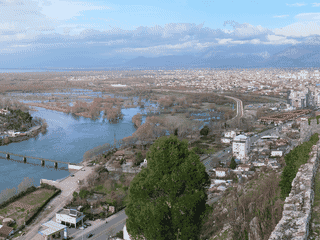

Shkodër
Eastern Europe and the Balkans · Albania
Did you know?
- The Marubi museum tells Albania's history through photography.
- Shirokë is known for carp, while sheqerpare adds a sweet local finish.
- Rozafa's fortress walls are tied to a legend of a woman buried within them.
See also
Overview
Shkodër offers a fortress, a local history museum and a national photography museum. Together they give a city stay a strong focus on Albanian heritage.
Languages: Albanian
Why Go
Shkodër was Albania's capital for centuries until 1915, making it one of the country's oldest and most historic cities. Now the second-largest city with 135,612 residents, it offers a slower pace than Tirana with authentic northern Albanian culture. The city has undergone renovations with new promenades and a bridge over the Buna River, yet retains its working-class character. Its claim to fame: the 'bicycle capital of Albania' where cyclists weave through traffic in all directions.
Adapted from Wikivoyage contributors · CC BY-SA 4.0
Get In
Shkodër has no formal bus station—instead, buses and vans gather at scattered points around the city. From Tirana, frequent minibuses (furgons) depart throughout the day. The main gathering points include areas near Sheshi Demokracia (Democracy Square) where you can find transport to Velipoja, Kelmend, Theth, and Koman. Buses from Montenegro may arrive at the northern gathering point.
Adapted from Wikivoyage contributors · CC BY-SA 4.0
Get Around
Finding your way around Shkodër is complicated by road renaming—old names still appear on maps while new signs show different names. Public buses run inside the city, and an infrequent bus serves the nearby village of Shirokë. Cycling is popular; bike rental shops near the city centre charge around 100 lek per hour (as of July 2022). Walking is feasible for most central destinations.
Adapted from Wikivoyage contributors · CC BY-SA 4.0
When to Go
The best time to visit is spring (April-June) or fall (September-October) when weather is mild for sightseeing and outdoor activities. Summer brings festivals including the Carnival, Children's Festival, AniFest Rozafa Animated Film Festival, Lake Day, and Shkodra Jazz Fest. Winter roads to mountain destinations like Theth can be difficult due to snow.
Adapted from Wikivoyage contributors · CC BY-SA 4.0
Where to Stay
Budget backpackers should head to Shkodra Backpackers (dorm bed 1,000 lek) or Arka Hostel (900 lek/bed in twin room), both popular with travelers. Hotel Rozafa offers basic communist-style rooms from 2,000 lek for a double. Mid-range options include Hotel Kaduku (€50 double with breakfast) and Hotel Tradita (€50) with traditional atmosphere. Camping Lake Shkodra Resort is 8 km from the city with lake access.
Adapted from Wikivoyage contributors · CC BY-SA 4.0
Food and Drink
Local specialties include carp fish in Shiroke village, sheqerpare (dessert), and lakra turshi (pickled cabbage). The main pedestrian street Rruga Kolë Idromeno has many dining options; the promenade near Buna River Old Bridge (Rruga e Molos) offers restaurants and pizzerias. For traditional Shkodran cuisine, try Taverna Ulqini near Sheshi Demokracia. Fast food along Rruga Wilson costs 100-250 lek. Local beers are 'Korça' or 'Tirana'; try Zadrima Winery and Albanian rakija.
Adapted from Wikivoyage contributors · CC BY-SA 4.0
Things to Do
The crown jewel is Rozafa Fortress (Kalaja/Rozafa), 2 km southwest with 400 lek entry (200 lek museum extra)—legend says a woman named Rozafa is buried in its walls. Shkodër Historical Museum (Rr. Oso Kuka, no. 12) costs 150 lek and is open 09:00-14:00. Marubi National Museum of Photography on Rruga Kolë Idromeno showcases Albanian photography history for 700 lek (200 lek students). The Lake Koman ferry is a breathtaking journey from Koman to Fierze; catch the 06:30 furgon from the second roundabout on Marin Barleti.
Adapted from Wikivoyage contributors · CC BY-SA 4.0
Safety
Shkodër is generally safe for travelers. Use normal urban precautions against petty theft. Cycling requires caution as drivers can be reckless. The road to Theth involves mountainous terrain—check weather conditions before departing. At Rozafa Fortress, taxis can be difficult to find for the return trip.
Adapted from Wikivoyage contributors · CC BY-SA 4.0
Connectivity
Mobile coverage is available from Albanian providers. WiFi is common in hostels, cafes, and restaurants. Power plugs use standard European Type C/F with 230V. Ask at your accommodation for local SIM card recommendations if needed.
Adapted from Wikivoyage contributors · CC BY-SA 4.0
Budget
Shkodër is very affordable for backpackers. Dorm beds cost 900-1,000 lek; budget meals 100-250 lek; museum entry 150-400 lek. A double room in budget hotels runs 2,000 lek. Public transport via furgons is inexpensive. Budget 2,000-3,000 lek per day for basic comfort.
Adapted from Wikivoyage contributors · CC BY-SA 4.0
Day Trips
Theth is a picturesque mountain village in the Albanian Alps with national park, waterfalls, and traditional stone houses—minibuses run daily in summer (3-4 hours). Valbona offers stunning alpine valley and hiking on the famous Theth-Valbona trail (bus to Koman Lake 2 hours, ferry 2-3 hours, minibus 1-2 hours). Velipojë is a seaside town on the Adriatic coast 30 km away (under 1 hour). Lezhë is a historic town south with the Mausoleum of Skanderbeg (1 hour by bus).
Adapted from Wikivoyage contributors · CC BY-SA 4.0
Go Next
From Shkodër, mountain lovers head to Theth or Valbona in the Albanian Alps. Beachgoers choose Velipojë on the Adriatic or cross to Ulcinj, Montenegro (1.5-2 hours by car or minibus). Lezhë offers Skanderbeg history. The Lake Koman ferry connects to Bajram Curri and onward to Kosovo. Furgons depart from gathering points near Sheshi Demokracia to all these destinations.
Adapted from Wikivoyage contributors · CC BY-SA 4.0
Field guide adapted from Wikivoyage contributors · CC BY-SA 4.0. Text has been adapted and organized for this guide. About our sources.
Places to know
A few starting points from the guide. Check current hours and prices before you go.
- eat
Cafe Oraldi
Superb cakes. Definitely one of the best in Albania. Extremely popular with locals.
Recorded price: 80–150 lek
Adapted from Wikivoyage contributors
- eat
Fisi Restaurant
Traditional Food
Adapted from Wikivoyage contributors
- eat
Pizzeria Italia
Pizzeria Italia's chef and owner is a Shkodra native, that has worked as a chef in Italy and Barcelona. His culinary experiences from abroad, combined with the local traditions and ingredients, make the food served in his restaurant absolutely delicious and unique.
Adapted from Wikivoyage contributors
- eat
Restaurant
This is an upscale restaurant by Albanian standards, serving delicious food including fish. It has a nice atmosphere and is in a small garden.
Recorded price: 300–700 lek
Adapted from Wikivoyage contributors
- eat
Restaurant PURI
Adapted from Wikivoyage contributors
- eat
San Francisco Bar & Restorant
A proper restaurant's look and feel and an extensive menu are provided. Some portions are huge, some aren't. The quality of food varies a lot, from superb to simply uneatable. It has a second floor terrace.
Recorded price: 300–1,500 lek
Adapted from Wikivoyage contributors
- eat
Shega e Eger
Adapted from Wikivoyage contributors
- eat
Shkreli fast food
Typical fast food place with plenty of seating, though very busy during lunch time. The cheeseburger for 120lek is tasty and a great deal for the price. No table service: order and pay at the counter.
Recorded price: 100–250 lek
Adapted from Wikivoyage contributors
Before you go
Etiquette
Albanians are generally hospitable. Dress modestly when visiting mosques and churches.
Language
Albanian is the local language. English is limited but younger people and tourism workers may speak some.
Money
Local currency is Albanian lek (LEK). Euro is sometimes accepted in hotels but lek is preferred.
Transport
No formal bus station—furgons gather at various points around the city. Main hub is near Sheshi Demokracia.
Weather
Summers are warm; winters can bring snow especially on mountain roads to Theth. Spring and fall offer mild temperatures.