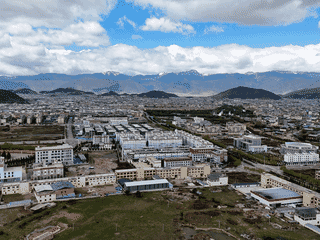

Shangrila
East Asia · China
Did you know?
- The town sits at 3,200 m, with summers around 15-25°C.
- Old-town dancing runs from about 19:00 to 22:00, and tourists are welcome.
- Songzanlin Monastery dominates a visit; allow half a day.
See also
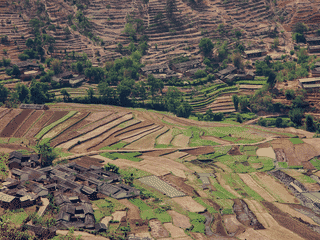

Lijiang
China26.87°N 100.23°E · 2,400 m
Overview
Shangri-La brings Tibetan architecture, monasteries, high-altitude grasslands, and yak-butter-tea culture to a 3,200 m mountain setting. Allow time to acclimatize before monastery visits, lake trips, or treks.
Languages: Chinese
Why go?
Shangri-La (Xianggelila) is Yunnan’s most Tibetan-flavored town — a former Kham province outpost where prayer wheels spin, yak butter tea is standard, and horse treks into alpine grasslands are easy to arrange. The 2001 rebranding from Zhongdian was crass, but the crowds never came like they did to Lijiang, so the surrounding countryside still feels explorable. Songzanlin Monastery alone justifies the detour; add in the reconstructed old town, hot springs, and Shika Mountain cable car, and you have a multi-day base.
Adapted from Wikivoyage contributors · CC BY-SA 4.0
Getting in
Diqing Shangri-La Airport (DGQ) has daily flights from Kunming, Lhasa, and Chongqing. The Shangri-La Railway Station (Shika Road, west side of old town) handles trains from Kunming (4½-5½ hours) and Lijiang (1 hour 20 minutes). Long-distance buses arrive from Lijiang, Dali, and Deqin; the bus station is at the north end of town on Changzheng Road.
Adapted from Wikivoyage contributors · CC BY-SA 4.0
Getting around
The town runs north-south along Changzheng Road. Old town (Dukezong) sits at the south end; the bus station at the north. Bus 3 (green buses) runs to Songzanlin Monastery for ¥1. Taxis around town cost ¥20; a taxi to the monastery or Shika Mountain costs around ¥20-30. Rent bikes from Korean Restaurant (Dawa Road) for ¥20-30/day, or higher-quality mountain bikes for slightly more.
Adapted from Wikivoyage contributors · CC BY-SA 4.0
When to go
Shangri-La sits at 3,200 m, so summers are mild (15-25°C) and winters cold with occasional snow. The old town’s nightly dancing in the square starts around 19:00 and runs until 22:00 — locals of all ages join and tourists are welcome. Pudacuo National Park is best visited May-October. The ski resort on Shika Mountain operates roughly November-March (closed April-September). Altitude sickness is a real risk; arrive with a day of easy activity before any strenuous treks.
Adapted from Wikivoyage contributors · CC BY-SA 4.0
Where to stay
Old town accommodation clusters near the car park and square. Budget hostels include Kevin’s Trekker Inn (dorms ¥30/person, doubles from ¥100) on Dawa Road with free WiFi and laundry; Kersang’s Relay Station (shared rooms ¥80/bed, doubles ¥240-280) on Jinlong Street with wood carvings and free WiFi; Tavern Hostel on Cuo Lang Street (dorms ¥30, doubles ¥70-120) with rooftop terrace; and N’s Kitchen & Lodge (dorms ¥30, double ¥120) with private bathrooms and sunny courtyard. The Halfway Guesthouse and Shangri-La Traveller Club (HI affiliated) share the same address at 98 Heping Road with dorms from ¥20 (¥15 for HI members). For splurges, The Compass Lodge in Old Town Square has heated townhouses (from ¥450/night).
Adapted from Wikivoyage contributors · CC BY-SA 4.0
Food and drink
Shangri-La punches above its weight for Western and Himalayan food. Bhaskar’s Kitchen (Dawa Road, 08:00-24:00) tops many lists for Nepalese curries and Indian chai. Arro Khampa (Pijiang Po, old town, 09:30-22:30) serves Tibetan cuisine in an authentic two-storey Tibetan house with Tibetan-French raclette and French wines. Compass Cafe and The Olive both have free WiFi and Western food. Hiker’s Coffee (Huajun Square, from ¥30) does Shanghai pan-fried buns and pork dumplings (small ones ¥20). N’s Kitchen (old town, ¥18-60) has a French baker and the best yak burger in town. Seans Cafe No 2 (North Gate Street, opens 06:30) is great for Tibetan porridge and yak cheese dumplings. The Shangri-La Yak Cheese Shop sells local yak cheese with Western-style wines and cheese dishes. Shangri-La Beer brewery (Qingkou Industrial District, tours ¥80-90, bottles ¥15-30) uses Tibetan mountain spring water and barley — the Fat Douma double bock is a standout.
Adapted from Wikivoyage contributors · CC BY-SA 4.0
Things to do
Songzanlin Monastery (take bus 3, ¥85 entry, ¥55 for students under 25) dominates any visit — allow half a day. The third floor of Tsongkapa Temple has a resident Lama giving blessings; the Bon temple predates Buddhism’s 9th-century arrival in Tibet. Climb Shika Mountain by cable car (¥220, 45 minutes to top) or on foot. Rent a mountain bike and ride to Napa Lake (5 km west, ¥60 ticket at checkpoints). Ski on Shika Mountain (¥160 for 2 hours including equipment, closed Apr-Sep). Soak at Tianshenqiao Hot Springs (¥20 park entry plus ¥80-200 for springs) or Xiagei Hot Springs (private rooms ¥30-40). Day-trip to Nixi Tibetan Village (30 km north) to see 2,000-year-old pottery-making and eat in a traditional home. Visit the Diqing Tibetan Autonomous Prefecture Museum (free, 09:00-17:00) and Diqing Long March Museum (free) in Dukezong Old Town.
Adapted from Wikivoyage contributors · CC BY-SA 4.0
Safety
Altitude sickness is the primary health risk at 3,200 m — far higher than Dali (2,000 m) or Kunming. Acclimatize for a day before strenuous activity. Several organized tour scams target visitors: nut sellers charging by weight, Tibetan herbal medicine consultations charging hundreds to thousands of yuan, tangka painting exhibitions under religious pressure (around ¥100/painting), overpriced herbal medicine, and oxygen sales with inflated prices (¥50-55 vs market ¥15-20). The commission comes from tour guides; avoid large agencies and check if guides work on kickback basis, which is officially sanctioned throughout Yunnan. The old town fire of January 2014 destroyed everything; it has been rebuilt with tourist shophouses.
Adapted from Wikivoyage contributors · CC BY-SA 4.0
Connectivity
Free WiFi is common at cafes and hostels (Compass Cafe, The Olive, Black Pottery Coffee, Hiker's Coffee). ATMs are available near the old town entrance. Mobile coverage (4G) is solid in town but can be patchy in remote areas. Power plugs use Type I (Australia/China style, three flat prongs).
Adapted from Wikivoyage contributors · CC BY-SA 4.0
Budget
A backpacker can get by on ¥150-250/day: dorm bed ¥20-30, meals ¥40-80 (street food to mid-range restaurants), transport and activities ¥30-50, incidentals ¥20-40. Songzanlin Monastery entry (¥85) and Napa Lake ticket (¥60) are the main activity costs. Mid-range travelers spending ¥300-500/day get private rooms, better restaurants, and more tours.
Adapted from Wikivoyage contributors · CC BY-SA 4.0
Day trips
Pudacuo National Park (¥190 admission plus transport) takes a half-day to full day. Nixi Tibetan Village (30 km north) offers pottery workshops and traditional home lunch. Napa Lake (5 km west) is ideal for mountain biking. Shika Mountain offers cable car rides or climbing. Hot spring trips to Tianshenqiao or Xiagei can fill an afternoon.
Adapted from Wikivoyage contributors · CC BY-SA 4.0
Etiquette
As a Tibetan-majority area in a Chinese province, show respect at monasteries: cover shoulders and knees, walk clockwise around chortens, spin prayer wheels in the correct direction. Altitude sickness means take it easy — don’t plan intense activities on arrival day. Bargaining is expected at markets but less aggressive than in Han-majority cities.
Adapted from Wikivoyage contributors · CC BY-SA 4.0
Go next
Lijiang is the nearest major tourist hub (1h20min by train) with its own Naxi old town and Tiger Leaping Gorge access. Deqin (further north) is the base for Meili Snow Mountain trekking. Chengdu in Sichuan is the gateway to the broader Kham region and Tibet. Kunming is the main transport hub for Yunnan with flights and rail connections to anywhere in China.
Adapted from Wikivoyage contributors · CC BY-SA 4.0
Field guide adapted from Wikivoyage contributors · CC BY-SA 4.0. Text has been adapted and organized for this guide. About our sources.
Places to know
A few starting points from the guide. Check current hours and prices before you go.
- eat
Arro Khampa
Tibetan cuisine. Run by a Franco-Chinese couple, Damien and Ting, Arro Khampa is a local restaurant housed in an authentic two-storey Tibetan house in the middle of the Old Town. The restaurant offers a wide range of classic Tibetan dishes and nice French wines. Its Tibetan-French raclette is unique in Yunnan.
Adapted from Wikivoyage contributors
- eat
Bhaskar's Kitchen
Himalayan cuisine. Rated the top eatery in Shangri-la, Bhaskar's Kitchen has a reputation throughout Yunnan for the quality of its food, due largely to its chef: Nepalise chef Bhaskar, who prepared fresh a variety of Nepalise, Indian and Tibetan dishes. Authentic cuisine, cosy atmosphere and friendly staff make it place for travellers, foreigners living in town, monks, musicians and locals. Best dishes are the curries. The Indian chai tea is also sought after.
Adapted from Wikivoyage contributors
- eat
Compass Cafe
Serves excellent authentic Western food (homemade spaghetti sauce.) and delicious cakes. Equipped with an Espresso machine. Cozy atmosphere, it has several heaters and is great for family. Free wireless available. In & Out bakery next door sells breads, muffins and other savouries.
Adapted from Wikivoyage contributors
- eat
Hiker's Coffee
Established by Charles Tang. He loves hiking very much. You can take bus No. 1 or No. 3 to "Huajun Square". "Huajun Square" is just across from "Sto Express". If you raise your head, you can just see four Chinese words "华骏广场". Then follow the arrow on the map and find "Building 8B". After reaching the 4th floor, you will turn right in the hallway and get to "Hiker's Coffee" immediately. Western food, coffee, drink, Shanghai food, Shanghai pan-fried steamed bun (生煎馒头) and pork dumpling (小笼包子) are very good (¥20 for big ones).
Recorded price: ¥30
Adapted from Wikivoyage contributors
- eat
Hongxin Restaurant
Decent restaurant, serves some Tibetan dishes (baba, pipa meat).
Adapted from Wikivoyage contributors
- eat
Karma Cafe
Good food and hospitable staff. Owner Afang speaks perfect English. Not located in busy old town but off the beaten path. Tibetan house and meals, though western meals are also served. Rooms available, though only two rooms.
Adapted from Wikivoyage contributors
- eat
Korean Restaurant
Tasty Korean fare including seafood pancakes, sushi, zucchini rolls, table-top BBQ, bibimbap. They rent bikes from the front of restaurant (¥20-30), and the boss even has a private stash of higher quality mountain bikes in storage for a slightly higher rental price. He will give you his cell number and come out to help you if you have any trouble with the bikes.
Adapted from Wikivoyage contributors
- eat
N's kitchen
Bread served by French baker, Good quality western food, nice breakfast menu, cozy place with sunshine design. Best yak burger in town.
Recorded price: ¥18-60
Adapted from Wikivoyage contributors
Before you go
Altitude
Shangri-La sits at 3,200 m — significantly higher than Dali (2,000 m) or Kunming. Acclimatize for at least one day before strenuous activity to avoid altitude sickness. Symptoms include headache, nausea, fatigue.
Language
Tibetan is widely spoken alongside Mandarin Chinese. In old town, many shopkeepers and cafe owners speak some English. Learning a few Tibetan or Mandarin phrases helps. Yi, Naxi, Bai, and Lisu minorities also live in the area.
Money
ATMs near the old town entrance accept international cards. Cash is preferred for small purchases and markets. Chinese Yuan (CNY/¥) is the local currency. Credit cards work at some mid-range hotels and restaurants but not at local markets or budget eateries.
Safety
Organized tour scams are common — herbal medicine clinics, tangka painting sales, and overpriced oxygen. Avoid large tour agencies and ask if guides earn commission. The nut sellers and souvenir hustlers near Songzanlin Monastery target tourists.
Transport
Diqing Shangri-La Airport has daily flights to Kunming, Lhasa, and Chongqing. Shangri-La Railway Station connects to Kunming (4.5-5.5 hours) and Lijiang (1h20min). Bus station is at north end of town on Changzheng Road.
Visa
Most nationalities need a visa for mainland China. Yunnan is not part of any special visa-free zone. Tibet travel requires an additional permit arranged through a travel agency.
Weather
Summers are mild (15-25°C) with afternoon rains. Winters are cold with snow possible. Best seasons are spring and autumn. The ski resort operates roughly November-March on Shika Mountain.