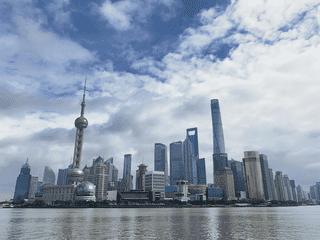

Shanghai
East Asia · China
Did you know?
- The Bund, Yuyuan Gardens, Jing'an Temple, and the French Concession form a varied sightseeing circuit.
- The Huangpu River divides the older Puxi center from high-rise Pudong.
- Roasted sweet potatoes and inexpensive Sichuan or Muslim noodles keep street eating approachable.
See also
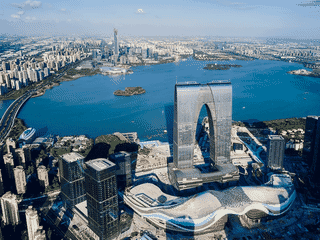

Suzhou
China31.30°N 120.62°E · 5 m
Overview
Shanghai is China's most developed city and a global center for finance and fashion. Historic shikumen and Art Deco buildings sit alongside the Huangpu River's older Puxi and high-rise Pudong.
Languages: Chinese
Why go?
Shanghai is China's most developed city, a global center for finance and fashion, blending East and West with historic shikumen houses and Art Deco buildings. It is split by the Huangpu River into Puxi (older city center) and Pudong (new high-rise development).
Adapted from Wikivoyage contributors · CC BY-SA 4.0
Getting in
Shanghai is one of China's main travel hubs. Main airports: Pudong (PVG) for international flights, Hongqiao (SHA) for domestic and some regional. High-speed trains connect to many cities from three main railway stations: Shanghai Station, Shanghai Hongqiao, and Shanghai South.
Adapted from Wikivoyage contributors · CC BY-SA 4.0
Getting around
Shanghai has an excellent public transport network with one of the world's most extensive metro systems as its backbone. Buses go everywhere, taxis are plentiful and cheap by international standards, and walking is often practical. The metro covers 14+ lines with interchanges at People's Square, Shanghai Railway Station, Zhongshan Park, and Xujiahui.
Adapted from Wikivoyage contributors · CC BY-SA 4.0
When to go
Shanghai has a humid subtropical climate. Summer (Jun-Sep) is hot and humid with temperatures often above 35°C and typhoon risk. Winter (Dec-Feb) is cold and damp, rarely above 10°C. Spring and autumn are mild and pleasant. Avoid Chinese New Year for thieves and crowded transport.
Adapted from Wikivoyage contributors · CC BY-SA 4.0
Where to stay
Accommodation ranges from backpacker hostels (dorms under ¥100) to luxury hotels. Reliable budget chains include Jin Jiang Star and Motel 168. Backpacker options like Captain's Hostel are off the Bund. For luxury, many international chains have hotels in Pudong and central Puxi.
Adapted from Wikivoyage contributors · CC BY-SA 4.0
Food and drink
Street food is cheap and interesting; try roasted sweet potatoes. Hole-in-the-wall Sichuan and Muslim noodle places offer good value. For classier Sichuan, Spicy Joint on Huaihai Road is popular. International cuisine is available, mostly in French Concession. Drinks: coffee or beer ¥10-40; nights out in French Concession and Xintiandi.
Adapted from Wikivoyage contributors · CC BY-SA 4.0
Things to do
Top sights: the Bund with colonial buildings, Yuyuan Gardens in the Old City, Jing'an Temple, and the French Concession with Huaihai Road shopping and Xintiandi nightlife. Also modern skyscrapers in Pudong and Lujiazui. For culture, see Huju (Shanghai Opera) or Pingtan performances.
Adapted from Wikivoyage contributors · CC BY-SA 4.0
Safety
Shanghai is very safe; violent crime extremely rare. Beware of pickpocketing on crowded transport and shopping streets. Watch for tea house and temple scams. Taxi scams exist; use official taxis. Call 110 for scams.
Adapted from Wikivoyage contributors · CC BY-SA 4.0
Connectivity
Area code 21; international code +86. Many cafés and fast-food chains offer free WiFi, including Starbucks, KFC, and Dunkin Donuts. No specific info on SIM cards from this article.
Adapted from Wikivoyage contributors · CC BY-SA 4.0
Budget
Daily backpacker budget: dorm accommodation under ¥100, street food meals ¥10-20, metro rides ¥3-7, attractions often ¥20-60. Total ¥150-300 per day. Mid-range options double that.
Adapted from Wikivoyage contributors · CC BY-SA 4.0
Day trips
Nearby cities reachable as day trips: Suzhou (30 min by high-speed train, famous gardens), Hangzhou (45 min, West Lake), Nanjing (1.5 hrs, historical sites), Wuxi (halfway, Grand Canal and Lake Tai). Also Mount Putuo for a longer trip.
Adapted from Wikivoyage contributors · CC BY-SA 4.0
Go next
From Shanghai, high-speed trains easily reach Suzhou (30 min), Hangzhou (45 min), Nanjing (1.5 hrs), and Wuxi. See East China for more destinations.
Adapted from Wikivoyage contributors · CC BY-SA 4.0
Field guide adapted from Wikivoyage contributors · CC BY-SA 4.0. Text has been adapted and organized for this guide. About our sources.
Places to know
A few starting points from the guide. Check current hours and prices before you go.
- sleep
Captain's Hostel
Popular backpacker hostel just off the Bund with dorms and private rooms.
Recorded price: Dorms from ¥80
Adapted from Wikivoyage contributors
- sleep
Jin Jiang Star
Reliable budget chain with clean rooms in multiple districts.
Recorded price: Rooms from ¥200
Adapted from Wikivoyage contributors
- see
Garden Villas
Garden villas in the former French Concession were high-end residences built mainly in the 1920s–1940s, featuring spacious plans, private gardens and modern domestic facilities. Many of these well-preserved properties are former homes of famous historical figures. Key sites are found on Shanghai/French_Concession#Wukang_Road
Adapted from Wikivoyage contributors
- see
Huju
Shanghai Opera is a national intangible cultural heritage and the most representative local opera of Shanghai. It originated from the folk songs and ditties sung by farmers on both sides of the Huangpu River in the late 19th century, and gradually developed into a formal opera as Shanghai grew into a modern city. Different from grand classical Chinese operas, Huju Opera focuses on the daily lives of ordinary Shanghai people, with plots mostly about family stories, urban life changes and ordinary people’s emotions. Its melodies are soft and close to daily speech, and performers sing and speak in authentic Wu_phrasebook
Adapted from Wikivoyage contributors
- see
Shanghai-style Pingtan
Pingtan is a traditional narrative singing art that spread from Suzhou in the mid-19th century. It is a combination of "Pinghua" (storytelling without singing) and "Tanci" (storytelling with singing). Usually, one or two artists perform on stage, accompanied by traditional Chinese musical instruments: the pipa (a four-stringed lute) and the sanxian (a three-stringed lute). Artists tell classic Chinese folk tales, historical stories and daily life anecdotes in soft Shanghai or Suzhou dialect, with gentle and melodious tunes. The performance atmosphere is quiet and elegant, and many local people like to listen to Pingtan in teahouses while drinking tea. Tourists can find authentic Pingtan performances at Xiangyin Shuyuan (a famous Pingtan performance venue) and cultural teahouses in Shanghai, experiencing the gentle cultural charm of regions south of the Yangtze River.
Adapted from Wikivoyage contributors
- see
Shanghai/Huangpu#The Bund
The International Settlement was built North and West of the Old City, starting in the 1840s. In colonial-period Western books, "Shanghai" means that settlement. The Bund’s waterfront complex gathers early 20th-century buildings in Neoclassical, Art Deco, Gothic and other European styles, which once hosted foreign banks, consulates and trading companies.
Adapted from Wikivoyage contributors
- see
Shikumen Buildings
Shikumen are unique Shanghai lane houses that blend Western terrace structures with traditional Jiangnan courtyard layouts, marked by their distinctive stone-framed gateways. For shikumen buildings, visit:
- Shanghai/French Concession#Xintiandi
Adapted from Wikivoyage contributors
- do
China Odyssey Tours
Tours of the city, for couples and families.
Adapted from Wikivoyage contributors
Before you go
Connectivity
Free WiFi in many cafés and fast-food chains. Area code 21.
Culture
Respect local customs, especially in temples. Tipping is not expected. Learn a few Mandarin phrases; English is less common outside tourist areas.
Health
Do not drink tap water; boil or use bottled. Air pollution can be an issue.
Language
Mandarin and Shanghainese; English limited outside tourist areas.
Local transport
The metro is the fastest way to get around. Taxis are cheap but may face traffic. Bicycles are great for short trips.
Money
Cash is king; credit cards accepted in higher-end establishments. ATMs widely available.
Safety
Very safe but watch for pickpocketing and scams targeting tourists.
Transport
Excellent metro system; taxis cheap and plentiful.
Visa context
Visa rules depend on passport; check current entry rules before booking. Many nationalities can get a 144-hour visa-free transit if holding a confirmed onward ticket.
Weather
Hot humid summers, cold damp winters. Spring and autumn mild.