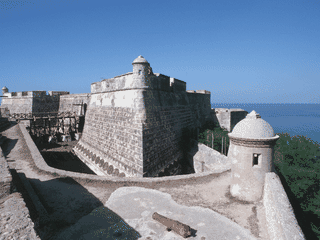

Santiago de Cuba
Mexico, Central America and the Caribbean · Cuba
Did you know?
- Lechón and chichurrones share the menu with fried fish at weekend street fairs.
- Castro announced victory at Parque Céspedes in 1959.
- Casa de la Trova is a music club known for live performances.
See also
.jpg)
Kingston
Jamaica17.97°N 76.79°W · 9 m
Overview
Santiago de Cuba combines historic fortifications with son and salsa music venues. Street fairs and access to the Sierra Maestra mountains add to its cultural appeal.
Languages: Spanish
Why Go
Santiago de Cuba is the second-largest city in the country and the birthplace of the Cuban Revolution. Fidel Castro launched his historic campaign from this southeastern city in the 1950s, and it remains the holiest site for revolutionary tourism. The city combines UNESCO World Heritage-listed fortifications, vibrant son and salsa music venues, weekend street fairs with remarkably cheap eats, and access to the Sierra Maestra mountains. Unlike Havana, Santiago moves at a more manageable pace while offering comparable cultural depth.
Adapted from Wikivoyage contributors · CC BY-SA 4.0
Getting Around
The historical center is compact and best explored on foot—the only reasonable option for tourists. Taxis cluster between Plaza de Marte and Parque Céspedes, where drivers happily offer full-day tours at negotiable rates. Local buses to attractions like Castillo San Pedro de la Roca cost approximately CUP3. Distances beyond the old town require motorized transport.
Adapted from Wikivoyage contributors · CC BY-SA 4.0
When to Go
The winter dry season from November to April offers the most comfortable temperatures for sightseeing. Weekend visits coincide with the lively Avenida Victoria de Garzón street fair, where entire roast pigs (lechón) and chichurrones are sold alongside fried fish and chicken. Summer brings heat, humidity and rain that can obscure views from La Gran Piedra.
Adapted from Wikivoyage contributors · CC BY-SA 4.0
Where to Stay
Casa particulares (private homestays) dominate the accommodation landscape and represent the best value. Rooms typically cost CUC20-30 including breakfast, with options like Casa Elma & David (CUC30) near Parque Céspedes offering air-conditioned doubles with balconies, or Hostal Las Terrazas (CUC30) with rooftop garden views of the harbor. AirBnB listings average around US$35 per night as of 2015. Hotel Casa Granda on the main square provides historic hotel alternatives.
Adapted from Wikivoyage contributors · CC BY-SA 4.0
Food and Drink
Saturday and Sunday street fairs on Avenida Victoria de Garzón offer Santiago's cheapest eats—whole roast pig (lechón), Cuban fried fish, fried chicken, and chichurrones (fried pork rinds) at remarkably low prices in pesos. For restaurant dining, Paladar Salon Tropical on Luis Fernández Marcané is cited as the best in the city. Evening cervecerias line Avenida Jesús Menéndez along the harbor, with the less polished venues offering the most authentic experience. Drinks at Hotel Casa Granda's 6th-floor rooftop bar provide city views but at tourist prices.
Adapted from Wikivoyage contributors · CC BY-SA 4.0
Things to Do
The UNESCO-listed Castillo San Pedro de la Roca dominates the bay entrance and is easily combined with other attractions in a single day (CUC4 entry, local bus approximately CUP3). Parque Céspedes serves as the central gathering point where Castro announced victory in 1959; the adjacent cathedral and museums surround it. La Gran Piedra offers mountain refreshment with a botanical garden nearby, though mist and rain frequently obscure the peak. The Museo Provincial "Emilio Bacardí Moreau" holds regional history, while San Juan Hill provides park space with monument displays from the Spanish-American War. Valle de la Prehistoria displays dinosaur statues in a remote theme park echoing the similar attraction in Viñales.
Adapted from Wikivoyage contributors · CC BY-SA 4.0
Nightlife
Casa de la Trova is the legendary music club with nightly live performances, drawing crowds of day-trippers and elderly tourists. The venue gets very full in evenings. More laid-back cervecerias along Avenida Jesús Menéndez at the harbor offer quieter local atmospheres—the less upscale, the better the authentic experience.
Adapted from Wikivoyage contributors · CC BY-SA 4.0
Safety
Santiago is full of touts (jineteros), particularly aggressive compared to other Cuban cities. They begin solicitation at bus and train stations, constantly calling "¿Quieres un taxí?" Regardless of location, persistent offers will follow you. Arrange airport or bus station transfers to your accommodation in advance when possible. Parque Céspedes attracts street sellers and music in evenings, requiring vigilance with belongings.
Adapted from Wikivoyage contributors · CC BY-SA 4.0
Connectivity
ETECSA at the corner of Hartmann and Tamayo Fleites is the only place in Santiago where tourists can access internet. Prices are CUC2 per hour on terminals that are described as particularly slow—no Wi-Fi is available. The local newspaper is Sierra Maestra.
Adapted from Wikivoyage contributors · CC BY-SA 4.0
Go Next
El Cobre, home to Cuba's holiest virgin statue, makes a worthwhile day trip from Santiago. The usual eastward route continues to Baracoa, Cuba's oldest city. Westbound travelers can head to Bayamo and the attractions of Granma Province. La Gran Piedra and Sierra Maestra mountains offer nature access closer to the city.
Adapted from Wikivoyage contributors · CC BY-SA 4.0
Field guide adapted from Wikivoyage contributors · CC BY-SA 4.0. Text has been adapted and organized for this guide. About our sources.
Places to know
A few starting points from the guide. Check current hours and prices before you go.
- sleep
Casa Colonial 'Maruchi'
A lovely colonial house that feature a large open atrium that is filled with all number of tropical plants. The rooms are small and a bit dark, but quite made up for by the rest of the cada. Maruchi is a wonderful cook and also something of an animal lover, with roughly 5 animals plus a fish tank at any given time.
Adapted from Wikivoyage contributors
- sleep
Casa Elma & David
Centrally located, a few blocks away from Parque Céspedes. Extremely clean and spacious room, with two double beds, air-conditioning and balcony. The host Elma and her son David are honest and well-mannered.
Recorded price: CUC30 including breakfast
Adapted from Wikivoyage contributors
- sleep
Casa Particular
Clean room for 3 people, two beds, air conditioning, independent bathroom, hot and cold water, breakfast, lunch and dinner service, TV, access to the kitchen, laundry service. Also you can write via whatsapp.
Recorded price: US$15
Adapted from Wikivoyage contributors
- sleep
Hostal Las Terrazas Santiago de Cuba
Lovely hostel in the heart of the old city and four blocks away from the central park and the cathedral. The terraces and the roof garden are lovely, with exotic plants and an amazing view of the harbour and Sierra Maestra mountains. The food is delicious and the service is spectacular. They speak four languages: Spanish, French, Italian and excellent English.
Recorded price: CUC30
Adapted from Wikivoyage contributors
- sleep
Hotel Casa Granda
Dating from 1914, this hotel right on the main square was a favorite of Graham Greene, who used it as a setting in his Our Man in Havana
Adapted from Wikivoyage contributors
- sleep
Ing. Ruben Camara Pascual y Lic. Caridad Arafet Arafet
Air conditioned, hot water, private bathroom, excellent food, security, and comfort.
Recorded price: CUC 20
Adapted from Wikivoyage contributors
- sleep
Sra. Vilma de los Milagros Román Jaén
Clean casa, only one room, very friendly hosts, English spoken, air conditioning.
Recorded price: CUC25
Adapted from Wikivoyage contributors
- sleep
Sres. Odalys López Rodrígez Miguel Angel (Chichi)
Casa colonial, clean casa, three room, very friendly hosts, excellent food with best coffee in Cuba, security, comfort, air condition.
Recorded price: CUC 25
Adapted from Wikivoyage contributors
Before you go
Connectivity
ETECSA internet café at Hartmann and Tamayo Fleites charges CUC2 per hour for slow terminal access. No public Wi-Fi exists. The local Sierra Maestra newspaper provides offline news.
Culture
Santiago is the cradle of Cuban son music and the starting point of the 1959 Revolution. The city maintains a more Afro-Cuban character than Havana, reflected in its music, religion and demographics.
Language
Spanish is the only language. English is limited outside tourist-oriented businesses. The Learn section mentions intensive Spanish courses available from one to four weeks at four hours daily.
Money
Cuba operates with two currencies: CUC (Convertible Peso) for tourists and CUP (Cuban Peso) for locals. Casas particulares typically quote in CUC. Weekend street fairs on Avenida Victoria de Garzón sell food in local pesos at remarkably low prices.
Safety
Jineteros (touts) aggressively solicit tourists throughout Santiago, especially near transit stations. Arrange accommodation transfers in advance. Street sellers at Parque Céspedes require attentiveness.
Transport
Antonio Maceo Airport receives daily Cubana flights from Havana and Sunrise Airlines service from Port-au-Prince three times weekly. The Astrobus station and train station serve ground transport. Within the old city, walking is the only practical tourist option.