Saint Petersburg
Eastern Europe and the Balkans · Russia
Did you know?
- Kunstkamera houses Peter the Great's ethnographic collection.
- Pyshki are Russian doughnuts strongly associated with the city.
- The Hermitage occupies the Winter Palace.
See also
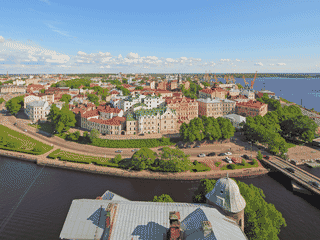

Vyborg
Russia60.71°N 28.74°E · 3 m
Narva
Estonia59.37°N 28.28°E · 25 m
Overview
Saint Petersburg spreads imperial palaces, cathedrals and museums across a river delta. Baroque facades and bridges over the Neva give walks through its historic centre a distinctive setting.
Languages: Russian
Why go?
Saint Petersburg is Russia's cultural crown jewel—a city of imperial grandeur built on a marshy delta, where Peter the Great's impossible vision produced 300 years of palaces, cathedrals, and world-class museums. The historic center and related monuments are UNESCO World Heritage-listed, making it one of the most architecturally coherent large cities in Europe. Locals call it Piter, and its laid-back Northern European feel contrasts sharply with Moscow's intensity: wide boulevards, baroque facades, and bridges over the Neva River create a uniquely romantic urban landscape. The city is home to the Hermitage, one of the world's largest art collections, and serves as the hub for exploring the Silver Ring of Northwest Russia.
Adapted from Wikivoyage contributors · CC BY-SA 4.0
Getting in
Pulkovo Airport (Ul. Startovaya) sits 17km south of the center with unlimited free Wi-Fi. Four major railway stations serve the city: Baltiysky Station (trains to Peterhof, Oranienbaum, Gatchina), Finlyandsky Station (connections to Finland), Ladozhsky Station (newest, to Petrozavodsk and beyond), and Moskovsky Station (major hub to Moscow, 4 hours). Lux Express buses run from Tallinn (€47, 7 hours, 7 daily) and Ecolines from Riga (€60-70, 10-12 hours). Russian visa requirements are complex; see the Russia article for details.
Adapted from Wikivoyage contributors · CC BY-SA 4.0
When to go
Saint Petersburg experiences extreme seasonal variation. Summer (June-August) brings White Nights—permanent twilight that transforms the city into a 24-hour festival, but also peak prices and mosquitoes (especially June). Winters are harsh (-7°C average in December-February) with short daylight hours, but fewer tourists and lower accommodation rates. The shoulder seasons (May, September-October) offer moderate weather and smaller crowds. Average annual precipitation is 46-87mm monthly, with July-August being wettest.
Adapted from Wikivoyage contributors · CC BY-SA 4.0
Getting around
The metro system is extensive and efficient, with the blue line providing best connectivity for tourists staying near Nevsky Prospekt. Transfer to the airport connection is via Moskovskaya station. The city center is walkable, and beautiful canal walks make pedestrian exploration pleasant. Trams and buses supplement the metro, though signage is primarily in Russian.
Adapted from Wikivoyage contributors · CC BY-SA 4.0
Where to stay
The best area for tourists is near the Nevsky Prospekt Metro—walkable to main attractions with abundant restaurants, shops, cafes, and nightlife. Canal-side accommodations off Nevsky offer a fabulous alternative. Avoid northern or eastern suburbs even with metro access, as commutes to the center can easily reach an hour each way including walking to stations. The blue metro line offers the most flexibility for reaching both the airport and tourist attractions.
Adapted from Wikivoyage contributors · CC BY-SA 4.0
Food and drink
Saint Petersburg has excellent street food: shawarma (served everywhere by Azeri vendors, a local phenomenon) and pyshki (Russian doughnuts, strongly associated with the city). Chain options include Teremok, Kroshka Kartoshka, and Dodo Pizza. булочные Ф. Вольчека bakeries offer cake slices or ice cream for under RUB100. For sit-down dining, unique spots include the restaurant at Peter and Paul Fortress grounds. Georgian cuisine is outstanding and prevalent; Uzbek restaurants offer Central Asian flavors. International options including sushi are widely available.
Adapted from Wikivoyage contributors · CC BY-SA 4.0
Things to do
The Hermitage Museum in the Winter Palace is essential—plan multiple visits or prioritize specific collections. The Church on the Spilled Blood (Church of the Savior on Blood) showcases vivid Russian Revival architecture. Kunstkamera houses Peter the Great's ethnographic collection. Saint Michael's Castle was built for Paul I. Vasilievsky Island features the Exchange Building and Rostral Columns. Beyond the city center, day trips include Peterhof (the Russian Versailles with spectacular fountains), Gatchina, Strelna, Pushkin, and Pavlovsk palaces—each offering imperial grandeur with easier crowds than Peterhof.
Adapted from Wikivoyage contributors · CC BY-SA 4.0
Buy
ATMs in Saint Petersburg accept Russian cards only—foreign card acceptance is limited. Ligovka is the best area for currency exchange with rates published online; never exchange on the street due to scam risks. Nevsky Prospekt has upscale shops, Passazh, and Gostiny Dvor mall. For bargains, Apraksin Dvor market (south on Sadovaya from Gostiny Dvor) offers cheap goods especially for Russian speakers. Luxury brands are available at DLT and Staronevsky fashion district.
Adapted from Wikivoyage contributors · CC BY-SA 4.0
Connectivity
Russian SIM cards and mobile data are available; see the Russia article for details. Free WiFi always requires registration with a Russian cell phone number due to local law. CafeMax at Nevsky Prospekt 90-92 is open 24 hours and offers copying, printing, scanning, and faxing services. The emergency service number throughout Russia is 112.
Adapted from Wikivoyage contributors · CC BY-SA 4.0
Safety
Saint Petersburg is generally safe for tourists, though standard urban precautions apply. Pickpocketing occurs on crowded metro and tourist areas. Be wary of street money changers and common scams. Mosquitoes can be problematic in summer, especially June, due to the swampy surroundings—budget accommodations with few countermeasures may see disturbed sleep. They are nuisance rather than health threats.
Adapted from Wikivoyage contributors · CC BY-SA 4.0
Stay healthy
The city's water system suffers from old pipes, introducing heavy metals—locals often boil or filter tap water; bottled water is recommended for drinking. Cold water is cleaner than hot, and brushing teeth with tap water is generally fine. Some lodgings have prolonged hot water outages. Public toilets charge nominal fees and may lack toilet paper. Several private hospitals have English-speaking staff: American Medical Clinic (Moyka Embankment 78, 24 hours), Euromed (Suvorovsky Prospekt 60, 24 hours), and MEDSI (Ulitsa Marata 6, 24 hours). These may arrange direct billing with Western insurance companies.
Adapted from Wikivoyage contributors · CC BY-SA 4.0
Learn
Saint Petersburg State University, founded by Peter the Great in 1724, is one of Russia's oldest and most prestigious. Other major institutions include ITMO University (Information Technologies, Mechanics and Optics), Saint Petersburg Polytechnic University, and the Higher School of Economics campus. Language schools are listed in the Studying in Russia article.
Adapted from Wikivoyage contributors · CC BY-SA 4.0
Go next
Oreshek Fortress sits on the right bank of the Neva River, offering a historic side trip. Peterhof (Petrodvorets) is accessible by train from Baltiysky Station—a 40-minute journey to see the Russian Versailles and its famous fountains. Pushkin and Pavlovsk contain Romanov palaces connected by rail from Vitebsky Station. For international connections, Lux Express and Ecolines buses link Saint Petersburg to Tallinn, Riga, and Tartu. Train routes extend to Moscow (4 hours from Moskovsky Station), Novgorod, Petrozavodsk, and other Russian cities.
Adapted from Wikivoyage contributors · CC BY-SA 4.0
Field guide adapted from Wikivoyage contributors · CC BY-SA 4.0. Text has been adapted and organized for this guide. About our sources.
Places to know
A few starting points from the guide. Check current hours and prices before you go.
- eat
CafeMax
24-hour cafe with copying, printing, scanning, and faxing services on Nevsky Prospekt.
Adapted from Wikivoyage contributors
- eat
Dodo Pizza
Russian pizza chain with international presence.
Adapted from Wikivoyage contributors
- eat
Kroshka Kartoshka
Russian chain specializing in baked potato with various fillings.
Adapted from Wikivoyage contributors
- eat
Teremok
Popular Russian chain serving bliny (thin pancakes) and traditional fare.
Adapted from Wikivoyage contributors
- eat
булочные Ф. Вольчека
Bakery chain with cake slices and ice cream under RUB100.
Recorded price: Under RUB100
Adapted from Wikivoyage contributors
- see
Church on the Spilled Blood
Colorful Russian Revival church built on the site of Alexander II's assassination.
Adapted from Wikivoyage contributors
- see
Kunstkamera
Peter the Great's Museum of Anthropology and Ethnography with his ethnographic collections.
Adapted from Wikivoyage contributors
- see
Peterhof
The Russian Versailles with spectacular fountains, accessible by train from Baltiysky Station.
Adapted from Wikivoyage contributors
Before you go
Connectivity
Free WiFi requires Russian phone registration by law. International SIM cards available. Emergency number is 112.
Health
Multiple private hospitals have English-speaking staff and direct billing with Western insurance. Mosquitoes prevalent June-August.
Money
ATMs accept Russian cards only. Ligovka neighborhood has best currency exchange rates. Small cornerstores are competitive with larger stores. Apraksin Dvor market offers bargains.
Transport
Metro is efficient; blue line connects most tourist areas and airport. Four major railway stations serve different directions. Budget buses to Baltic capitals.
Water
Tap water contains heavy metals due to old pipes. Boil or filter before drinking. Cold water is cleaner than hot. Brushing teeth with tap water is acceptable.
Weather
Extreme seasonal variation: White Nights in summer (June-July), harsh winters averaging -7°C. May and September-October offer mild weather with fewer tourists.