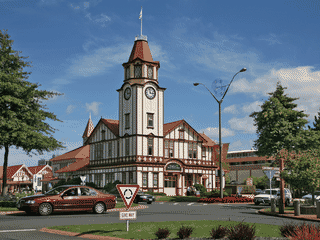
.jpg)
Rotorua
Oceania · New Zealand
See also

Taupō
New Zealand38.69°S 176.07°E · 360 m
Overview
Rotorua is New Zealand's premier geothermal destination, built over a volcanic hot spot in the Taupo Volcanic Zone. The city offers easily accessible hot springs, geysers and mud pools alongside a vibrant Māori culture that is more dominant here than elsewhere in the country.
Languages: English, Māori, New Zealand Sign Language
Why Go
Rotorua is New Zealand's premier geothermal destination, built over a volcanic hot spot in the Taupo Volcanic Zone. The city offers easily accessible hot springs, geysers and mud pools alongside a vibrant Māori culture that is more dominant here than elsewhere in the country. Adventure activities including white-water rafting, mountain biking, ZORB and luge riding complement the natural attractions. The distinctive 'rotten eggs' smell from hydrogen sulfide is ever-present but signals the unique geothermal activity beneath your feet.
Adapted from Wikivoyage contributors · CC BY-SA 4.0
Getting In
Rotorua Regional Airport has regular Air New Zealand flights connecting to Auckland, Wellington and Christchurch. Intercity buses serve Rotorua from major North Island cities. State Highways 5, 30 and 38 converge on Rotorua, making it accessible by car from Taupo (1.5 hours south), Tauranga (1 hour north) and Whakatane (1 hour east).
Adapted from Wikivoyage contributors · CC BY-SA 4.0
Get Around
The central city is compact and walkable. Most geothermal attractions and adventure activities are outside the CBD and require a car or booked transport. Rotorua's i-Site can help arrange tours and transport to trails. Bike hire is available from city shops and Planet Bike often has a truck at Redwoods main car park.
Adapted from Wikivoyage contributors · CC BY-SA 4.0
When To Go
Rotorua is a year-round destination. Summer (December-February) offers warm weather ideal for outdoor adventure and the Kaituna river rafting is most scenic with lush jungle banks. Winter brings cooler temperatures but fewer crowds. The National Kiwi Hatchery at Agrodome operates tours September-March during hatching season. Be aware that some attractions like Wai-O-Tapu may close for renovation.
Adapted from Wikivoyage contributors · CC BY-SA 4.0
Where To Stay
Accommodation ranges from backpacker hostels to luxury lodges. Haka House Rotorua (formerly YHA) offers dorm beds from $37 and private rooms from $105. Crash Palace Backpackers is family-run with a hot tub and great atmosphere. Budget travellers can also use All Seasons Holiday Park which offers cabins, camping and backpacker lodge options. Mid-range choices include Malfroy Motor Lodge ($99-150) with its own geothermal mineral pool.
Adapted from Wikivoyage contributors · CC BY-SA 4.0
Food And Drink
Rotorua's signature dish is the hangi, a traditional Māori feast cooked using geothermal heat from the earth. The Vnam Kitchen serves authentic Vietnamese pho and banh mi from $8-12. Fat Dog Café & Bar and Abracadabra Café are popular local café options with mains $10-35. Eat Street at the end of Tutanekai Street near the lake concentrates many restaurants including Indian Star, Wild Rice and Ambrosia, though options thin after 9PM.
Adapted from Wikivoyage contributors · CC BY-SA 4.0
Things To Do
Te Puia offers guided tours through geothermal valleys, a marae and kiwi conservation centre, with day passes adult $39/child $20. The Buried Village ($25 adults, $10 children) tells the story of the 1886 Mt Tarawera eruption that killed 153 people. Skyline Rotorua's gondola ride (adults from $30) provides panoramic views of the city and lake. Adventure seekers can raft the Kaituna River with its 7m commercially rafted waterfall ($95-109 including CBD pickup). The Polynesian Spa offers hot mineral bathing from $22 for adults.
Adapted from Wikivoyage contributors · CC BY-SA 4.0
Stay Safe
Geothermal hazards are real: hot water and mud can be boiling, superheated steam causes eruptions, and toxic hydrogen sulfide gas can accumulate in confined spaces. Never bathe in untreated geothermal pools and keep your head above water to avoid bacteria causing meningitis. Kuirau Park after dark and Okere Falls are known for car thefts and muggings—keep vehicles locked and valuables hidden. New Zealand has petty theft everywhere; Rotorua reportedly has higher rates than some areas.
Adapted from Wikivoyage contributors · CC BY-SA 4.0
Connectivity
WiFi is widely available in hotels, cafés and tourist attractions. Most backpacker hostels provide free WiFi. Mobile coverage from New Zealand carriers (Spark, Vodafone, 2degrees) is good throughout the city and along main highways.
Adapted from Wikivoyage contributors · CC BY-SA 4.0
Budget Planning
A backpacker budget in Rotorua typically runs $80-150 per day including dorm accommodation ($37-50), self-catering or cheap eats ($20-40), and one paid attraction ($25-65). Adventure activities like rafting ($95-109) or ZORB are extra. Free attractions include Kuirau Park thermal pools, Redwood walks, and viewing geothermal steam around town.
Adapted from Wikivoyage contributors · CC BY-SA 4.0
Day Trips
Mount Ngongotaha Jubilee Track offers an easy-moderate walk showcasing NZ flora. Rainbow Mountain Summit Track provides panoramic views over the Rotorua plains. The Waimangu Volcanic Valley, 20 minutes south, showcases the world's newest geothermal ecosystem formed by the 1886 Mt Tarawera eruption. Kerosene Creek, 30km south on SH5, offers free wild hot spring bathing at around 37°C.
Adapted from Wikivoyage contributors · CC BY-SA 4.0
Etiquette
When visiting Māori cultural experiences and marae, show respect by removing shoes when entering, not sitting on tables, and following the guidance of hosts. At geothermal attractions, obey all safety barriers—they exist for genuine protection. When bathing in hot springs or thermal pools, shower beforehand without swimwear and keep your head above water in untreated natural pools.
Adapted from Wikivoyage contributors · CC BY-SA 4.0
Go Next
South on SH5 leads to Taupo and Tongariro National Park. SH38 branches southeast into Urewera National Park. East on SH30 goes to Whakatane and the remote East Cape. North routes via Te Puke or the inland SH36 (climbing to 610m) reach Tauranga and Mount Maunganui on the Bay of Plenty coast. West lies the Waikato region with Hamilton, Waitomo caves and Raglan.
Adapted from Wikivoyage contributors · CC BY-SA 4.0
Field guide adapted from Wikivoyage contributors · CC BY-SA 4.0. Text has been adapted and organized for this guide. About our sources.
Places to know
A few starting points from the guide. Check current hours and prices before you go.
- sleep
All Seasons Holiday Park
Offers a choice of affordable, self catering accommodation in 3 hectares of peaceful parkland close to Lake Rotorua - motel units, tourist flats, cabins, backpackers lodge, camping & campervan sites
Adapted from Wikivoyage contributors
- sleep
Crash Palace Backpackers
A home away from home. Family run and they really make you feel part of the family. Friendly dog and cat on premises. Hot tub available. Great atmosphere.
Adapted from Wikivoyage contributors
- sleep
Haka House Rotorua
Big hostel whose atmosphere and cleanliness has slightly deteriorated since its change of ownership, but is nevertheless a good choice among the hostels in town. Has an outside deck and a comparatively big carpark ($15/day).
Recorded price: Dorm beds from $37 (early bird promo rate), private rooms from $105 (twin with shared bathrooms)
Adapted from Wikivoyage contributors
- sleep
Hana Lodge
13 room hotel in a 15 acre park. Restaurant and lounge bar. The gardens have sculptures and a bamboo forest. Lodge has an outdoor swimming pool and a tennis court.
Recorded price: from $374
Adapted from Wikivoyage contributors
- sleep
Holiday Inn Rotorua
Four star plus hotel, with suites available. Pohutu Cultural Theatre with nightly Maori cultural show and traditional Maori feast. Free shuttle runs from hotel to i-Site office in town from 8AM-9PM.
Adapted from Wikivoyage contributors
- eat
Abracadabra Café
A favourite with many locals, this hip café, built mainly from wood, is rarely seen empty. One can sit on the terrace, inside with all the tasteful decoration or in the garden in the back. The staff is cheerful, and the menu consists predominantly of Kiwi classics with an American/Mexican touch – quality varies though and is average more often than not.
Recorded price: $10–35 (mains)
Adapted from Wikivoyage contributors
- eat
Atlas Café & Restaurant
Second only to Stratosfare Restaurant, this hotel restaurant has a great, albeit smaller selection of Western and Asian food on its buffet. At almost half the price and with mostly matching quality, it's a good alternative if you feel like splurging on a dinner buffet - just don't expect great views despite the relative proximity to Lake Rotorua.
Recorded price: $49 (all you can eat)
Adapted from Wikivoyage contributors
- eat
Capers Epicuran
A popular café with a big selection of pastries and an attached store selling mostly health/organic food and beverages. Has a relaxed, comfortable atmosphere and good food that comes with hefty price tags.
Adapted from Wikivoyage contributors
Before you go
Connectivity
WiFi widely available at accommodations and attractions. All major NZ mobile carriers (Spark, Vodafone, 2degrees) have good coverage in the city and along main highways.
Culture
Rotorua has a significant Māori population (38%). Cultural experiences at Te Puia, Whakarewarewa Thermal Village and hotel cultural shows offer authentic encounters. Respect marae protocols—remove shoes, follow host guidance.
Food
Hangi (earth oven feast) is the signature Māori dish, cooked using geothermal heat. Vietnamese pho and banh mi at The Vnam Kitchen offer good value ($8-12). Many restaurants close early—after 9PM options are limited.
Health
Geothermal bacteria can cause meningitis—never put your head underwater in untreated hot pools. If you develop flu-like symptoms after geothermal water contact, seek medical attention immediately.
Money
New Zealand Dollar (NZD) is the local currency. ATMs are plentiful in the CBD. Most restaurants and attractions accept credit cards though some small operators may be cash-only.
Safety
Respect geothermal safety barriers—water can be boiling and gases toxic. Avoid bathing in untreated geothermal pools. Kuirau Park and Okere Falls have reported crime after dark; lock cars and hide valuables.
Transport
Central city is walkable. Most attractions require a car or booked tour. Intercity buses connect Rotorua to major North Island cities. Domestic flights via Air New Zealand to Auckland, Wellington, Christchurch.
Weather
Summer (Dec-Feb) offers warm weather ideal for adventure activities. Winter is cooler with fewer crowds. Rain is possible year-round. The geothermal smell (hydrogen sulfide) is constant but harmless.