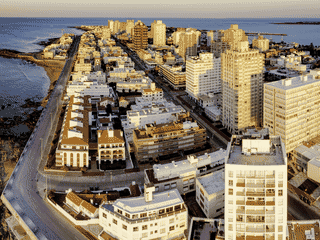

Punta del Este
South America · Uruguay
Did you know?
- Casa Pueblo is an artist-created resort and museum linked to Paez-Vilaró.
- Avenida Gorlero combines shopping with an artisan market.
- Sea lions gather around the port's fish market.
See also
Piriapolis
Uruguay34.90°S 55.28°W · 17 m
Overview
Punta del Este combines beaches, a yacht-filled harbor and upscale casinos. Its sophisticated resort atmosphere makes it a distinctive holiday stop on Uruguay's coast.
Languages: Spanish
Why go?
Punta del Este is Uruguay's premier beach resort, nicknamed the Monaco of South America for its upscale casinos, yacht-filled harbor, and sophisticated atmosphere. The town offers two distinct beach experiences: the calm mansa side for jet skis and banana boat rides, and the windy brava side with surfing spots and famous stretches like La playa de los Dedos with its giant hand sculpture. Argentinian tourists flock across the Rio de la Plata to escape the brown waters of their home river for these pristine Atlantic beaches. The nightlife is legendary but changes venues yearly, with clubs mainly concentrated in La Barra.
Adapted from Wikivoyage contributors · CC BY-SA 4.0
Understand
This unspoiled peninsula offers heavenly beaches, exotic sophistication, beautiful people, and an ardent night scene. Tourist season varies wildly from totally deserted in winter to extremely crowded in summer, unusual for a city of its size. The population was 9,300 in 2011, but the influx of visitors multiplies this significantly during peak season. Urbanization and high-rise construction are beginning to obscure the sun, changing the character of the destination.
Adapted from Wikivoyage contributors · CC BY-SA 4.0
Get in
Capitán de Corbeta Carlos A. Curbelo International Airport (Laguna del Sauce) is located 20 km west of the peninsula. Out of season, there is one daily flight from Buenos Aires and two weekly flights from Brazil catering mainly to casino visitors. In high season, several flights operate from Buenos Aires plus nonstop flights from Rosario and Córdoba. The Terminal de ómnibus bus station on Blvd. Artigas handles frequent arrivals and departures with multiple bus companies; most ticket agents speak only Spanish.
Adapted from Wikivoyage contributors · CC BY-SA 4.0
Get around
The peninsula can easily be traversed on foot. To reach La Barra or José Ignacio, a car is strongly recommended as buses are infrequent and taxis must be called by phone at high relative prices for Uruguay standards. Hitchhiking is common among young people since nightclubs are spread out. Mopeds can be rented for US$10/hour or US$45/day at several locations. Normal precautions should still be taken despite the area's safety reputation.
Adapted from Wikivoyage contributors · CC BY-SA 4.0
When to go
Summer (December through February) is peak season with extreme crowds and highest prices, especially around Christmas, carnival, and weekends in late December and early January. After January 15, prices drop significantly while crowds remain substantial. Winter sees the town become nearly deserted. Whale watching is available at Playa Brava.
Adapted from Wikivoyage contributors · CC BY-SA 4.0
Where to stay
Book well ahead between Christmas and carnival when most beds are taken. Staying on the peninsula is best without a car since buses are infrequent and cabs expensive. Accommodation here ranks among the most costly on the continent. Budget options include Planet Punta Del Este Hostel at US$15 per night (US$22 in high season), or Shelton Hotel at US$35 per room. Luxury options like La Solana Boutique Hotel start at US$290.
Adapted from Wikivoyage contributors · CC BY-SA 4.0
Food and drink
Punta del Este has seafood-based cuisine with dishes like tortugón, chivito (steak sandwiches), and asado (grilled steak). Chivitos and asado are local favorites, though sushi, Italian, French, and Indian cuisine are also available. As a resort destination, food can be expensive; consider bringing your own lunch if on a day trip from Montevideo. The famous Uruguayan drink 'medio y medio' (half sparkling sweet wine and half dry white wine) is widely available.
Adapted from Wikivoyage contributors · CC BY-SA 4.0
Things to do
Punta del Este is an important tourist port where yacht rentals are available. Beach activities include tanning, jet ski rentals, banana boat trips, and surfing (decent on windy days though La Paloma 150km north is better). Sea bike, windsurf, and kitesurfing equipment can be rented. Isla Gorriti offers a 20-minute ferry ride (US$20 round trip) to a protected island with beach, atmosphere, and restaurant. Visit the port at 9-10AM to watch fishermen feed sea lions. The largest sea lion colony in the southern hemisphere offers tours at US$30-60.
Adapted from Wikivoyage contributors · CC BY-SA 4.0
See
Casa Pueblo is a Mediterranean surrealistic resort-museum created by artist Paez-Vilaró, who was father of an Andes plane crash survivor; entrance is US$10. The port features a fish market, lighthouse, and sea lions begging for food. Arboretum Lussich displays exotic species and ranks among the world's most important botanic gardens. Other attractions include Museo del Mar (marine museum with southern hemisphere seabirds), Museo Ralli (contemporary Latin American art), Museo del Indio y Megafauna, Reserva de Fauna Autoctona Pan de Azucar (zoo on Uruguay's highest hill), Castillo Pittamiglio, and Cuartel de Dragones historical site. Sunset views are spectacular from the port, La Barra, or José Ignacio.
Adapted from Wikivoyage contributors · CC BY-SA 4.0
Buy
Avenida Gorlero is the main shopping street with various shops and an artisan market. Parallel 20th Street El Remanso has high-end boutiques. Punta Shopping is the largest shopping mall, though it suffered a massive fire in August 2022 with temporary stores operating in the parking lot.
Adapted from Wikivoyage contributors · CC BY-SA 4.0
Nightlife
Punta del Este is famous for its clubbing scene. Most parties start between midnight and 3AM and continue until dawn. Clubs change names and locations yearly, but marketing is aggressive so finding current venues is easy. Most clubs are in La Barra away from the peninsula. Expect high entry prices in late December and early January weekends. After January 15, prices drop though weekend crowds persist.
Adapted from Wikivoyage contributors · CC BY-SA 4.0
Day trips
Nearby beach towns offer convenient escapes from Punta del Este crowds. Piriapolis is a more laid-back beach resort. Maldonado is the department capital adjacent to Punta del Este. For truly tranquil atmospheres, head to La Paloma, Cabo Polonio, or Punta del Diablo with their bohemian vibes; there are no regular buses from Punta del Este so hitchhike or transfer via Maldonado terminal or San Carlos which has regular buses to these destinations.
Adapted from Wikivoyage contributors · CC BY-SA 4.0
Go next
Onward destinations include Piriapolis (laid-back beach resort), Maldonado (department capital), and the bohemian coastal towns of La Paloma, Cabo Polonio, and Punta del Diablo reachable via Maldonado terminal or San Carlos with regular buses. These destinations offer tranquil alternatives to Punta del Este's sophistication and crowds.
Adapted from Wikivoyage contributors · CC BY-SA 4.0
Field guide adapted from Wikivoyage contributors · CC BY-SA 4.0. Text has been adapted and organized for this guide. About our sources.
Places to know
A few starting points from the guide. Check current hours and prices before you go.
- sleep
Baie des Anges Apart Hotel & Spa
Situated in the "Parada 27" on Mansa beach, this elegant boutique hotel is minutes away from Punta del Este's Downtown, where all the most important restaurants and clubs of the city are located. Sea view, awesome sunsets and friendly people.
Adapted from Wikivoyage contributors
- sleep
Enjoy Punta del Este Resort and Casino
A five-star luxury hotel and a famous casino in Punta del Este
Adapted from Wikivoyage contributors
- sleep
Hotel L'Auberge
More than six decades old, the famous water tower of L'Auberge rises, majestic, amidst the tall pines, and is a silent witness of the evolution of the hotel, the tea room and all the Parque del Golf neighborhood. The Most Excellent Hotel for South America 2010, according to Condé Nast Johansens.
Adapted from Wikivoyage contributors
- sleep
La Solana Boutique Hotel
Surrounded by thriving gardens, historical museums, and art galleries, it's also a few minutes from the famous Punta del Este and these attractions: Arboretum Lussich, Casapueblo, and Lake Club. It offers rooms with breathtaking scenes, all equipped with 26/29-inch LCD television, Wi-Fi Internet access, and an air-conditioner.
Recorded price: Best rates on official website start at US$290
Adapted from Wikivoyage contributors
- sleep
Planet Punta Del Este Hostel
Expensive (but well it is Punta del Este) hostel. Has internet facilities and a basic breakfast. The price is US$15 (US$22 during high season) a night or around the equivalent of US$25 when paying in Uruguayan pesos. Has tiny, cramped rooms but an amazing dining room, with big windows directly to the pavement.
Adapted from Wikivoyage contributors
- sleep
Shelton Hotel
Rooms come with private bath, fan, A/C, cable TV, and wifi. Two blocks from the Brava beach with the giant hand.
Recorded price: US$35 per room(March 2009 they take Visa and US$)
Adapted from Wikivoyage contributors
- eat
Hotel L'Auberge
L'Auberge Hotel & Te House: charming luxury hotel and tea house. Famous for its water tower and its Belgian waffles, served with different sauces. Also, excellent restaurant for lunch or dinner. Only by reservation.
Recorded price: US$14-20
Adapted from Wikivoyage contributors
- eat
Restaurant at YOO
Normal prices. Unforgettable dinner. Awesome.
Adapted from Wikivoyage contributors
Before you go
Accommodation
Accommodation ranks among the most expensive on the continent. Book far ahead for Christmas and carnival periods.
Money
Both Uruguayan pesos and US dollars are widely accepted. Prices quoted in US$ throughout the article; local currency is Uruguayan peso (UYU).
Safety
Despite being very safe, normal precautions should be taken. Hitchhiking is common for young people going between clubs.
Transport
Renting a car is best for exploring beyond the peninsula. Mopeds available for US$10/hour or US$45/day. Taxis require phone booking and are expensive relative to Uruguay standards.
Weather
Summer (December-February) is peak season with extreme crowds. Winter is nearly deserted. After mid-January, prices drop while crowds remain.