Puebla
Mexico, Central America and the Caribbean · Mexico
Did you know?
- Mole poblano is traditionally associated with the city's kitchens.
- The Biblioteca Palafoxiana occupies a former seminary.
- Multicolored Talavera tiles decorate red-brick and cantera-stone buildings.
See also
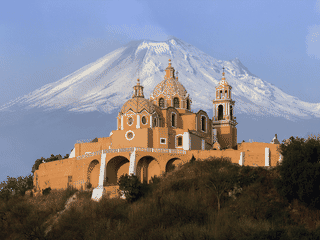
.jpg)
Cholula
Mexico19.06°N 98.31°W · 2,150 m
Overview
Puebla's colonial center brings together Baroque architecture and colorful Talavera tiles. Red brick and gray cantera stone give its buildings a distinctive palette.
Languages: Spanish
Why go?
Puebla is one of Mexico's five most important colonial cities, a UNESCO World Heritage Site celebrated for its Baroque architecture built from gray cantera stone and red brick decorated with multicolored Talavera tiles. Founded in 1531 on open ground rather than atop a conquered settlement, it grew wealthy on the trade route between Veracruz and Mexico City. The city is the birthplace of mole poblano, the spicy thick sauce that defines Mexican cuisine, and hosts Mexico's most significant Cinco de Mayo commemorations at the forts of Loreto and Guadalupe. At 2,160 m elevation with a mild climate, it offers a more relaxed and walkable alternative to Mexico City with significantly lower prices.
Adapted from Wikivoyage contributors · CC BY-SA 4.0
Get in
Puebla Central bus station (CAPU), located at Blvdrd Nte 4222, is a major intercity hub with an ATM of Caja Popular Mexicana on-site. The city can also be reached by air via Puebla Airport (IATA: PBC), which offers domestic routes and a handful of US international flights; due to proximity to Mexico City's Benito Juarez Airport, fares can be cheaper and the smaller terminal is easier to navigate. City buses connect the CAPU bus station to the historic center.
Adapted from Wikivoyage contributors · CC BY-SA 4.0
Get around
The historic center is compact and walkable, with most major attractions within a 2 km radius. City buses to the center are available from the CAPU bus station. For taxis, radio taxis are the safest option, registered and in better condition, though they cost about 10 pesos more than street-hailed cabs; negotiate the fare in advance or ask hotel staff to call one for you. The Teleferico cable car offers a 600-m ride over the city for M$30 one-way or M$50 round-trip.
Adapted from Wikivoyage contributors · CC BY-SA 4.0
When to go
The best time to visit is between November and April during the dry season, when temperatures range from 5°C at night to 28°C during the day. The warmest months are April and May. May is peak festival season: Puebla transforms for a month-long carnival marking Cinco de Mayo (May 5), culminating in the annual celebration at the forts where General Ignacio Zaragoza defeated the French army in 1862. The rainy season runs from June through September. Note that outside Puebla's state, Cinco de Mayo is a minor holiday in Mexico, surpassed by Independence Day.
Adapted from Wikivoyage contributors · CC BY-SA 4.0
Where to stay
The historic center (Centro Histórico) around the Zócalo is the best base for backpackers, within walking distance of major churches, museums, and restaurants. Budget hotels near the Zócalo start at around M$200 per night for a basic single with private toilet and cable TV. The winter months can bring night temperatures down to 5°C, so air conditioning is generally unnecessary; in the warm season temperatures drop to around 13°C at night. Options range from cheap courtyard hotels like Hotel San Agustín (M$280 per night with free basic breakfast) to boutique properties like Puebla de Antaño Hotel Boutique with a sky bar and included breakfast.
Adapted from Wikivoyage contributors · CC BY-SA 4.0
Food and drink
Puebla is one of Mexico's culinary capitals, reputedly the birthplace of mole poblano. Street food is generally safe and offers some of the best cultural experiences: try quesadillas with huitlacoche (corn truffle) or flor de calabaza, memelas topped with salsa and cheese, elote with Parmesan and chili powder, cemitas (special bread with milanesa, avocado, and queso Oaxaca), tacos arabes (pork or lamb in a guajillo chile sauce, influenced by the city's large Arab population), and chiles en nogada (stuffed peppers topped with cream, pomegranate, and parsley). A big cheese quesadilla costs around M$25 at street stalls. Traditional restaurants like Restaurante La Fonda near El Parian offer chiles en nogada and mole poblano for roughly half what the Zócalo charges. Local drinks include agua de jamaica, horchata, cafe de olla (coffee with cinnamon), pulque, and pasitas served in the Los Sapos district. The city has a strong Italian dining scene, including Vittorio's on the Zócalo, which claims the Guinness World Record for the largest pizza.
Adapted from Wikivoyage contributors · CC BY-SA 4.0
Things to do
Start at the UNESCO-listed Zócalo (central plaza) flanked by the Cathedral (1575-1640) with two of Mexico's tallest church towers. Visit the Biblioteca Palafoxiana, an 18th-century library with a unique collection housed in a 17th-century seminary. The Fuertes de Loreto y Guadalupe sit atop Cerro de Guadalupe and are the site of the 1862 Battle of Puebla; the Pasaje Histórico 5 de Mayo tunnels (M$28, Tu-Su 10:00-16:00) connect the city to the forts. Capilla del Rosario in the Templo de Santo Domingo is called one of Mexico's most opulent churches, dripping with gold and Talavera tilework. The world's smallest volcano, Cuexcomate (now extinct), lies in the suburb of La Libertad; entry costs M$14 per adult (Tu-Su 12:00-17:00), with an indoor market beside it. For day activities, take a tour bus to cover major sights with multilingual headphone commentary, or attend a baseball game at Estadio Hermanos Serdán where the Pericos de Puebla play (general admission M$100 for men, free for women, April-September). The National Museum of Mexican Railroads (M$19, Tu-Su 09:00-17:00) occupies a historic train station with locomotives open to enter.
Adapted from Wikivoyage contributors · CC BY-SA 4.0
Safety
Exercise standard urban precautions: drink bottled water rather than tap water, and be careful with valuables in public spaces. Due to the altitude (2,160 m), tours can be physically exhausting; the mild climate may lead to underestimating sun intensity, so wear sunscreen and stay hydrated. At mealtimes, be cautious with salads and unpeeled fruit; peel all fruit as washing alone is insufficient. Wearing shorts marks you clearly as a tourist; jeans are generally acceptable. For taxi transport, use radio taxis when possible, which are registered and in better condition than street cabs, though they cost about 10 pesos more. If you find a trustworthy driver, get their cell number for safe repeat transport.
Adapted from Wikivoyage contributors · CC BY-SA 4.0
Connectivity
WiFi is available in most hotels and cafes throughout the city, including free (though sometimes unreliable) WiFi at Puebla de Antaño Hotel Boutique. For internet access if hotel WiFi fails, there are cheap Internet cafes throughout the historic center. Power outlets use standard Mexican plugs (Types A/B, 127V), compatible with US and some European devices.
Adapted from Wikivoyage contributors · CC BY-SA 4.0
Budget
Puebla is significantly cheaper than Mexico City. Street food meals cost M$25-50; restaurant meals at local fondas around M$80-120. Hostel dorms or budget hotel singles start at M$200-280 per night. City bus rides are very cheap; a radio taxi within the center costs roughly 10 pesos more than a street-hailed cab. Attractions range from free (Zócalo, Cathedral exterior, Los Sapos art district) to M$14-50 for paid sites. A daily backpacker budget of M$400-700 covers accommodation, food, local transport, and one or two paid attractions.
Adapted from Wikivoyage contributors · CC BY-SA 4.0
Etiquette
Puebla is a conservative city; avoid wearing shorts in public, as locals rarely do so. This is especially important in churches and nicer restaurants. When visiting churches like Iglesia de Santa María Tonantzintla, photography is not permitted inside. At markets and street stalls, bargaining is common and expected at El Parian and Los Sapos flea markets. Tip modestly at restaurants if service is good.
Adapted from Wikivoyage contributors · CC BY-SA 4.0
Day trips
Cholula, just a short trip from Puebla, is famous for its antros (clubs) with little to no cover charge and abundant live music; it also has the Universidad de las Américas Puebla campus and the Templo de San Francisco Acatepec with lavishly decorated Baroque facades. Chipilo is a nearby destination noted in the article. Atlixco is listed as a nearby town worth visiting. For nature, the Iztaccíhuatl-Popocatépetl and La Malinche national parks offer hiking near active volcanoes. Africam Safari, 17 km from the city, is a zoo park where African wildlife roam freely.
Adapted from Wikivoyage contributors · CC BY-SA 4.0
Go next
From Puebla's CAPU Central bus station, buses run to Mexico City (approx. 2 hours), Veracruz (port city on the Gulf), and other major Mexican destinations. Puebla Airport serves a handful of domestic routes and US flights. Cholula is the nearest major destination, easily reachable as a day trip or onward stop.
Adapted from Wikivoyage contributors · CC BY-SA 4.0
Learn
The Livit Immersion Center (Nuevo León 18, El Carmen, +52 222 290 6060) offers Spanish language and cultural immersion programs for all levels. The Spanish Institute of Puebla (11 oriente No. 10 Centro Histórico, sipuebla.com) in the Ex-convent of Las Capuchinas provides intensive Spanish courses year-round. The University of the Americas Puebla (UDLAP) in Santa Catarina Mártir, Cholula, offers regular classes, Spanish immersion, and tailor-made programs.
Adapted from Wikivoyage contributors · CC BY-SA 4.0
Field guide adapted from Wikivoyage contributors · CC BY-SA 4.0. Text has been adapted and organized for this guide. About our sources.
Places to know
A few starting points from the guide. Check current hours and prices before you go.
- eat
Bajo El Cielo de Jalisco
Adapted from Wikivoyage contributors
- eat
Café Roma
Adapted from Wikivoyage contributors
- eat
Caramia, pizzería artesanal
Relatively authentic pizzeria with some other Italian food, good portions, seems not to serve alcohol though.
Adapted from Wikivoyage contributors
- eat
El Mural de los Poblanos
Traditional cuisine; fine dining. The best mole poblano; other seasonal dishes, Spanish cuisine. Steps from the Cathedral and Zócalo.
Adapted from Wikivoyage contributors
- eat
El Viejo Rosario
Adapted from Wikivoyage contributors
- eat
Entre Tierras
Adapted from Wikivoyage contributors
- eat
Fonda La Compañía
Adapted from Wikivoyage contributors
- eat
Girofle Tortas
Adapted from Wikivoyage contributors
Before you go
Connectivity
WiFi available at most hotels and cafes. Cheap Internet cafes are throughout the historic center. Standard Mexican power plugs (Types A/B, 127V) are used.
Culture
Puebla is the cradle of Mexican Baroque in architecture and decorative arts. Talavera pottery from Puebla is UNESCO-recognized intangible heritage. The city is conservative; avoid shorts in public and churches. Photography is prohibited inside some churches like Santa María Tonantzintla.
Food
Puebla is the birthplace of mole poblano. Street food is safe and affordable (M$25-50 per item). Must-try dishes include cemitas, tacos arabes, chiles en nogada, and quesadillas with huitlacoche or flor de calabaza.
Health
At 2,160 m elevation, altitude can cause exhaustion during walking tours. Avoid tap water; use bottled water. Be cautious with salads and unpeeled fruit. Sunburn and sunstroke are risks due to altitude.
Language
Spanish is the primary language. English is limited outside of upscale hotels and restaurants. Basic Spanish is helpful for navigating taxis, markets, and local restaurants.
Money
ATMs are available throughout the city, including at the CAPU intercity bus station. Banca Inbursa and BanCoppel ATMs are in the historic center. Cards are accepted at most mid-range and upscale restaurants and shops, but street vendors and markets are cash-only. Prices in listings are in Mexican pesos (M$).
Safety
Use bottled water and guard valuables in public. Radio taxis are safer than street cabs. Avoid salads and unpeeled fruit. Wear sunscreen due to altitude and strong sun. Avoid shorts, which mark you as a tourist.
Transport
The historic center is walkable. City buses connect CAPU bus station to the center. Radio taxis cost about 10 pesos more than street-hailed cabs but are safer and better maintained. Teleferico cable car costs M$30 one-way or M$50 round-trip.
Weather
Dry season from November to April is ideal. May brings peak festival season for Cinco de Mayo. Rainy season June-September. Night temperatures drop to 5°C in winter and 13°C in summer; air conditioning is rarely needed.