Overview
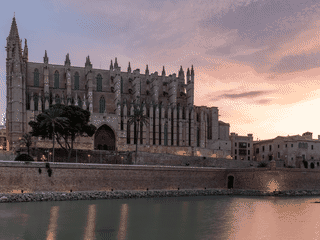
Palma brings beach time close to its cathedral waterfront. Platja de Can Pere Antoni stretches east of Parc de la Mar.
Beach · Architecture · Island · Day Trips
Did you know?
- This city is the capital of the Balearic Islands.
- Can Pere Antoni beach begins 500m east of Parc de la Mar.
- A historic wooden train links the city with Sóller.
Where it is
Palma de Mallorca is 207 km south of Barcelona.
Why go?
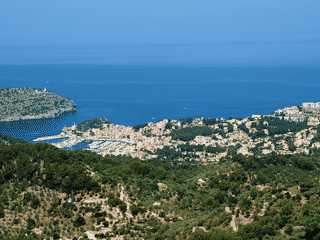
Palma de Mallorca is the capital of the Balearic Islands and home to 423,000 residents, about half the population of Mallorca. While 20 km of boxy hotels line the coast, the city retains a magnificent Old Town centred on its Gothic cathedral and Royal Palace. The island has been settled since 2500 BC, with Roman, Arab, and medieval history layered into its streetscape. Summer brings half of Europe to the beaches, but shoulder seasons offer milder weather with fewer crowds.
Get in
Palma de Mallorca Airport (IATA: PMI) sits 9 km southeast of the city and serves daily flights from European cities, the UK, North Africa, and mainland Spain. The airport shares runways with Son Sant Joan air force base and operates as a single terminal with four modules: Module A for non-Schengen flights, Module B for small planes to Ibiza and Menorca, and Module C for Schengen destinations. Ferries connect to other Balearic islands and the Spanish mainland from the city ferry port.
Get around
EMT buses run frequent services within Palma city and along the beach strip. Bus CC orbits the city centre Monday to Friday every 40 minutes and is free. Standard 2024 fares are €2 within the city, €3 to the sea port, and €5 to the airport, payable on board with no transfers permitted. A prepaid card for ten city trips costs €15, available from green vending machines at city centre stops such as Plaza de España. Buses run by TIB do not permit journeys within city limits. Trains serve Inca and the Metro reaches Son Sardina and UIB in the north suburbs. Inner streets are too narrow for comfortable cycling, but bikes are viable along the beach areas with eight rental shops in the city centre.
When to go
Palma is an all-year destination with peak season from May through September. Summer temperatures rarely exceed 25°C due to sea breezes, though evenings may require a jacket. July to September sees Mallorca mobbed by visitors from Germany, the UK, and Ireland, and many hotels close in winter. Key events include Mallorca Live rock festival in mid-June, Festival de Pollença classical music in August, and Evolution Film Festival in the first week of November.
Where to stay
Accommodation ranges from budget hostels near the marina to luxury hotels along the beachfront. We Hostel Palma offers dorm beds from €33 near the marina. Midrange options include Hotel Palladium (B&B double €150) in the city centre and Hotel Amic Gala (B&B double €120) in Can Pastilla near the beach. Luxury properties include Castillo Hotel Son Vida (B&B double €450) in the hills with golf course and spa, and Palacio Ca Sa Galesa (B&B double €350), a 16th-century palace hotel east of the cathedral.
Food and drink
City centre dining options include La Cuadra del Maño (C del Miracle 8) for wood-fired barbecue steaks, and Es Raconet (C dels Moliners 3) opposite Fundación Juan March for bargain home-cooked food. Vegans should try Ca n'Ela Vegan Restaurant (C de la Mar 16) with changing daily menus, or Es Badulake (C de les Minyones 2) for sandwiches and wraps. Calixto (C del Banc de l'Oli 14) focuses solely on paella. For tapas, Oh Mallork Bar de Tapas serves in a cozy atmosphere. The phrase for "full English breakfast" locally is desayuno London. Nightlife clusters around the Marina with venues including Abaco, Lennox Pub, and Bodega Ca'n Rigo.
Things to do
The Palma Cathedral (La Seu) at Plaça de la Seu charges €10 for adults (€8 concessions) and is open April to November Monday to Friday 10:00-17:15 and Saturday 10:00-14:15. The Royal Palace of La Almudaina on the west side of the cathedral costs €8 for adults (€5 concessions). The Banys Àrabs (C de Can Serra 3), tenth-century Arab baths 200m east of the cathedral, charges €3 for adults. Contemporary art is displayed at Es Baluard Museu d'Art Contemporani (Plaça de la Porta de Santa Catalina 10) for €6 adults. Castell de Bellver is a 14th-century circular castle with museum and city views, reachable by buses 4, 20, or 50, charging €4 for adults.
Beaches
Platja de Can Pere Antoni is the most central beach, starting 500m east of Parc de la Mar beneath the cathedral, with showers and lockers available. Ciudad Jardín is 2 km east with a 450m white sandy strip seldom crowded. Ca'n Pastilla beach stretches 4 km from near the aquarium toward Playa S'Arenal. Cala Major, a suburb 4 km southwest, has a 200m by 80m beach with crystal-clear water suitable for families. Marineland marine zoo lies to the west near Costa d'en Blanes.
Sports and activities
RCD Mallorca plays soccer in La Liga at Estadi de Son Moix (Visit Mallorca Stadium, capacity 23,000), 2 km northwest of the city centre. The bullring at Av Gaspar de Bennazar 32 stages bullfights and concerts. Golf courses at Son Muntaner and Son Vida are 3 km northwest in the hills. Aqualand El Arenal water park on the Palma–Arenal motorway (Exit 13, km 15) is open May to October daily 10:00-17:00, charging €35 for adults and €27 for concessions or children.
Buy
El Corte Inglés department stores have large branches on Av de Jaume III west of the old town (open daily) and at Av d'Alexandre Rosselló southeast of the railway station (Monday to Saturday). Mercadona supermarket at Plaça de l'Olivar, 200m south of the station, is open Monday to Saturday 09:00-21:30.
Connectivity
As of June 2024, Palma has 4G coverage from MasMovil/Yoigo and 5G from Movistar, Orange, and Vodafone.
Stay safe
Take great care of valuables as pickpockets are prevalent in the town centre. Flower girls, street touts, and other "distractors" may be working in cahoots with thieves. Old Town and El Terreno can be sleazy at night with many drug users present; drink-spiking is not uncommon.
Culture note
The people of Mallorca regard themselves as Catalan, not Spanish. Respect this identity; attempts to speak Castilian Spanish will earn more goodwill than insisting on English.
Go next
Sóller is a charming small town reachable on the historic wooden train. Ferries sail to other Balearic islands including Ibiza city within a day trip. Ferries also connect to mainland Spain.
Guide text adapted from Wikivoyage contributors under CC BY-SA 4.0.
Where to start
Sleep
Aubamar Suites
Slick comfy hotel set back from the beach.
Price when recorded: B&B double €250
Sleep
BG Hotel Pamplona
Value-for-money midrange hotel.
Price when recorded: B&B double €100
Sleep
Castillo Hotel Son Vida
Swish spa hotel towering above a golf course in the hills north of town.
Price when recorded: B&B double €450
Sleep
Gran Melia Victoria
Comfy hotel by the marina.
Price when recorded: B&B double €180
Sleep
Hipotels Gran Playa de Palma
Good all-round hotel.
Price when recorded: B&B double €180
Sleep
Hotel Amic Gala
Good value, family-friendly.
Price when recorded: B&B double €120
Eat
A Estribor
Small Chinese cafe bar, fast friendly service.
Eat
A Ma Maison
French Tunisian homemade dishes, a one-man show. Vegan, GF and other diets no problem.
Before you go
Connectivity
4G available from MasMovil/Yoigo; 5G from Movistar, Orange, and Vodafone as of June 2024.
Language
Mallorcans consider themselves Catalan rather than Spanish. Castilian Spanish is understood but Catalan is the local language.
Money
Currency is the Euro (€). Credit cards accepted at most hotels, restaurants, and shops.
Safety
Beware of pickpockets in the town centre and distractors working with thieves. Old Town and El Terreno have drug users and risk of drink-spiking at night.
Transport
EMT city buses cost €2 within Palma, €3 to the port, and €5 to the airport in 2024. A ten-trip prepaid card costs €15. Bus CC city centre loop is free.
Weather
Peak season is May through September with temperatures rarely exceeding 25°C due to sea breezes. Evenings may require a jacket. Many hotels close in winter.