
Ohrid
Eastern Europe and the Balkans · North Macedonia
Did you know?
- Saint John at Kaneo stands on a cliff directly above the lake.
- Saint Sofia preserves frescoes from the 11th century.
- The Bay of Bones Museum reconstructs a prehistoric lake settlement.
See also

Struga
North Macedonia41.18°N 20.68°E · 675 m

Pogradec
Albania40.90°N 20.65°E · 700 m
Overview
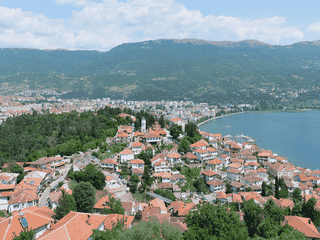
Ohrid pairs ancient churches and monasteries with a scenic lakeside setting. Religious heritage and waterfront scenery shape a visit to the historic town.
Languages: Macedonian
Why Go
Ohrid is North Macedonia's crown jewel, a UNESCO World Heritage site since 1980 nestled between high mountains up to 2,800 m and Lake Ohrid. The town dates back to 353 BCE when it was known as Lychnidos, or "the city of light," and became the capital of Tsar Samuel's kingdom in the 11th century. Today it offers ancient churches, monasteries, and a scenic lakeside setting without the crowds of more popular Balkan destinations.
Adapted from Wikivoyage contributors · CC BY-SA 4.0
Getting In
Ohrid "St. Paul the Apostle" International Airport is about 7 km from the city centre, operating mostly summer flights to European cities including Amsterdam, Basel, Belgrade, Brussels, Eindhoven, London Luton, Sofia, and Zurich. The main bus station is about 2 km outside the centre, with buses to Skopje and other destinations. A taxi to the centre costs 100-150 denar, though drivers may try to charge more.
Adapted from Wikivoyage contributors · CC BY-SA 4.0
Getting Around
Ohrid is a walkable town, with most sights in the compact Old Town area along the lakeshore. Taxis are available but agree on a price before boarding. Buses serve suburban destinations including Sveti Naum and various villages. Boats depart from Ohrid's port to attractions like the Bay of Bones and Saint Naum monastery.
Adapted from Wikivoyage contributors · CC BY-SA 4.0
When to Go
The Ohrid Summer Festival runs from July 12 to August 20, featuring world-class music and drama performances. Summer offers warm weather and lake activities but brings larger crowds. Spring and early autumn provide milder temperatures and fewer tourists. The Ohrid Calling electronic music festival takes place around August 2.
Adapted from Wikivoyage contributors · CC BY-SA 4.0
Where to Stay
Main accommodation types are private houses, apartments, and villas. From €20 per night, excellent private facilities can be found mostly in the Old Town. Budget options include Golden Age Hostel (800-1,000 denar) and Albergo Mimi Ohrid (€10). Mid-range choices like Villa St. Sofija (€25-99) offer 4-star amenities in the old city. Advance reservations are recommended during peak season.
Adapted from Wikivoyage contributors · CC BY-SA 4.0
Food and Drink
Local Macedonian cuisine includes grilled meats, fresh lake fish, and traditional pastries. Vkusno on Goce Delchev offers inexpensive popular food where you seat yourself and pay at the cashier. Dalga on Kosta Abrash has a terrace overlooking the lake in the old part of town. Tomato on Tsar Samoil is a barbecue restaurant. Traditional restaurants like Terasa Utarna in Gorno Konjsko (9 km away) offer local wine and lake views but are open only in summer.
Adapted from Wikivoyage contributors · CC BY-SA 4.0
Things to Do
Ohrid is famous for its ancient churches and monasteries. Tsar Samuel's Fortress (30 denars) sits atop the hill with expansive views. The Church of Saint Sofia (100 denars) dates to the 9th century with 11th century frescoes. Church of Saint John at Kaneo (100 denars) stands dramatically on a cliff above the lake. The Icon Gallery near Saint Mary Perivleptos (100 denars, Tu-Su 09:00-17:00) houses one of the world's most important icon collections. The Bay of Bones Museum near Peštani reconstructs a Neolithic lake settlement.
Adapted from Wikivoyage contributors · CC BY-SA 4.0
Connectivity
Mobile coverage is available through North Macedonian carriers. WiFi is common in hotels, restaurants, and cafes throughout town. Power plugs use European-style Type C and Type F sockets with 230V supply.
Adapted from Wikivoyage contributors · CC BY-SA 4.0
Safety
Ohrid is generally a safe destination for travelers. Exercise normal precautions against petty theft. Be aware that taxi drivers at the bus station may try to overcharge tourists—agree on fares beforehand or walk to catch a regular taxi. When visiting churches, dress modestly covering shoulders and knees.
Adapted from Wikivoyage contributors · CC BY-SA 4.0
Day Trips
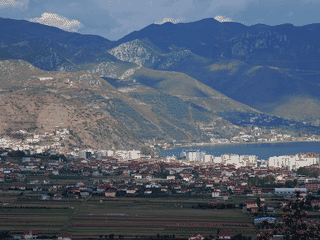
Monastery of Saint Naum at the southeastern end of the lake is a must-visit, accessible by boat, bus, car, ferry, or taxi. The Bay of Bones Museum between Peštani and Trpejca reconstructs a prehistoric lake settlement. Struga (16 km east) is a small lakeside town. Pogradec in Albania (40 km southwest) offers views of the lake from the Albanian side.
Adapted from Wikivoyage contributors · CC BY-SA 4.0
Go Next
Bitola (80 km east) features colourful neo-classical architecture and the ancient Macedon ruins of Heraclea Lyncestis. Kruševo (90 km northeast via Bitola) is a historic mountain town with skiing in winter and paragliding in summer. Struga (16 km east) is a quiet lakeside town. Resen (25 km east) has Saraj Castle built in 1908.
Adapted from Wikivoyage contributors · CC BY-SA 4.0
Field guide adapted from Wikivoyage contributors · CC BY-SA 4.0. Text has been adapted and organized for this guide. About our sources.
Places to know
A few starting points from the guide. Check current hours and prices before you go.
- eat
Dalga
With a terrace over the lake in the old part of town.
Adapted from Wikivoyage contributors
- eat
Terasa Utarna
Traditional food, Local wine, Terrace, Lake and city view, Open only in summer
Adapted from Wikivoyage contributors
- eat
Tomato
Barbecue restaurant.
Adapted from Wikivoyage contributors
- eat
Vkusno
Inexpensive and popular, but the waiters are overly busy. Just follow the Balkan way and seat yourself and afterwards head to the cashier, don't wait for anyone to be served, or it will take ages.
Adapted from Wikivoyage contributors
- see
Ali Pasha Mosque
While Ohrid is known for its churches, it also has mosques, including this one from the Ottoman era. Located on the main pedestrian street of the Old Bazaar, the mosque was built in the 15th century. It has a rather simple design with one large dome and three smaller ones above the porch. It originally had at least one minaret but no longer has one. Reconstruction of the minaret, paid for by the Turkish government, was started in 2018 but drew protest. Nonetheless, it was completed and the renovated mosque now sits fully illuminated at night.
Adapted from Wikivoyage contributors
- see
Ancient Theatre
This is the only Hellenistic theatre remaining in North Macedonia, with the three other ancient theatres being from Roman times. Built in 200 BC, it was discovered by accident in the 1980s. It originally had an upper portion but only the lower portion is preserved. Today, it once again functions as a theatre, frequently used during Ohrid's Summer Festival. The theatre has a great open view of Lake Ohrid.
Adapted from Wikivoyage contributors
- see
Bay of Bones Museum
In a small bay near the Gradište campground and beach, a Neolithic settlement has been reconstructed atop the water along with fortifications and a museum on land. The floating town contains reconstructed prehistoric homes with various objects inside them to help illustrate what life was like at this spot many years ago. Archaeological evidence suggests Lake Ohrid was once rich in these pile-dwelling settlements. Since opening in 2008, it has become one of Ohrid's most popular attractions. The site also features a scuba diving centre. The museum is easily accessed off the highway leading to Saint Naum and boats from Ohrid's port also make stops here.
Adapted from Wikivoyage contributors
- see
Black Drim Springs
Immediately next to the monastery is the source of the Black Drim River. This river begins here, flows through the entire lake, and flows back out in Struga, ultimately flowing into Albania past Debar. The springs contain small two islands, one of which is home to a popular restaurant. Tour boats available for hire take visitors around the springs.
Adapted from Wikivoyage contributors
Before you go
Culture
Ohrid is known for its Orthodox Christian heritage with numerous historic churches and monasteries. Dress modestly when visiting religious sites, covering shoulders and knees.
Money
The local currency is Macedonian denar (MKD). ATMs are available including at Komercijalna banka. Credit cards are accepted at larger hotels and restaurants but cash is preferred at smaller establishments.
Transport
The bus station is 2 km from town with a 30 denar departure fee. Taxis to center cost 100-150 denar. The airport is 7 km from town with limited flights mainly in summer.
Visa
North Macedonia allows visa-free entry for many nationalities. Check current requirements before traveling.
Weather
Summer months (June-August) are warm with temperatures around 25-30°C. Spring and autumn offer milder weather ideal for sightseeing. Lake Ohrid provides a cooling effect in summer.