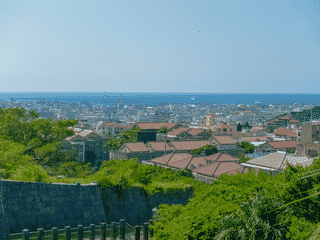

Naha
East Asia · Japan
Did you know?
- A rope-pulling festival stretches 100 meters and mixes parades, karate demonstrations, and royal costumes.
- A royal castle complex is still being rebuilt after a 2019 fire, while its gate and sacred grove remain accessible.
- At a market known as “the kitchen of Okinawa,” buy ingredients downstairs and have them cooked upstairs.
See also
Overview
Naha is Okinawa's cultural gateway, combining a partially reopened royal castle, lively shopping streets, markets, and easy island escapes. Subtropical weather, snorkeling access, and dishes such as goya champuru and Agu pork give the city a distinctly regional feel.
Languages: Japanese
Why go?
Naha serves as the main gateway to Okinawa Island and the Ryukyu Kingdom's cultural heartland. The city offers a mix of reconstructed historical sites like Shuri Castle, the lively Kokusai Street shopping district, and easy access to the Kerama Islands for snorkeling and diving. Budget travelers find relatively cheap accommodation compared to mainland Japan, though the urban landscape is largely post-war concrete with limited atmospheric charm.
Adapted from Wikivoyage contributors · CC BY-SA 4.0
Get in
Naha Airport (OKA) is the largest airport in the Okinawa region, handling both international flights and inter-island connections. The Okinawa Monorail (Yui-rail) connects the airport directly to the city center. By sea, regular ferries depart from Naha harbor to the Kerama Islands. No specific bus or train prices were documented from the article.
Adapted from Wikivoyage contributors · CC BY-SA 4.0
Get around
The Yui-rail Okinawa City Monorail links the airport, city center, and Shuri Castle. Ticket prices range from ¥230-370 depending on distance. Day passes cost ¥800 for 24 hours or ¥1,400 for 48 hours (2024). Numerous buses serve areas beyond the monorail route. Point-to-point bike share is available through Hello Cycling and DOCOMO Cycle apps.
Adapted from Wikivoyage contributors · CC BY-SA 4.0
When to go
The climate chart shows Naha's subtropical pattern: winters are mild (January average 14.9°C low, 19.8°C high) while summers are hot and humid (July averages 27°C low, 31.9°C high). July and August bring the most rainfall (188-240mm monthly). October features the Naha Tug-of-war (Otsunahiki), a dramatic 100-meter rope-pulling event with parades, karate demonstrations, and participants dressed as Ryukyu royalty.
Adapted from Wikivoyage contributors · CC BY-SA 4.0
Where to stay
Naha's budget accommodation is notably cheap but quality varies significantly. Hostel dorms start around ¥1,000-1,800 per night. The Makishi area near Kokusai Street offers convenient access to markets and nightlife. Base Okinawa near Kencho-mae station provides ten dorm rooms with free internet, laundry, and bike rental. Hotel Marine West caters to divers with drying space for scuba gear and free parking.
Adapted from Wikivoyage contributors · CC BY-SA 4.0
Food and drink
Okinawan cuisine differs from mainland Japan with unique dishes like goya champuru (bitter melon stir-fry) and Agu pork. Makishi Market, known as "the kitchen of Okinawa," offers over 400 shops selling local foods including dried sea snake (irabū), distinctive vegetables, colorful fish, and edible seaweed. Restaurants upstairs cook ingredients you purchase downstairs for a small fee. Kokusai Street features basement bars and restaurants; habushu (snake shochu) is a local specialty found in souvenir shops.
Adapted from Wikivoyage contributors · CC BY-SA 4.0
Things to do
Shuri Castle, a UNESCO World Heritage Site and former seat of the Ryukyu Kingdom, has partially reopened after a 2019 fire destroyed most structures. The surrounding Shureimon Gate and Sonohyan-Utaki sacred grove remain accessible. Other heritage sites include the Tamaudun Mausoleum (¥300) where Second Sho Dynasty kings are entombed, Shikinaen Garden (¥400) featuring a central pond with elegant bridges, and the Tsuboya Pottery Museum (¥350) showcasing centuries of local ceramic tradition. Naminoue Beach offers limited swimming area at the southern end of Kokusai Street.
Adapted from Wikivoyage contributors · CC BY-SA 4.0
Connectivity
The Naha City Tourist Information Center on Kokusai Street provides free Wi-Fi and English-speaking staff. Accommodation providers including Chanpuru and Base Okinawa offer free internet for guests. Mobile data providers operate throughout the city with standard Japanese coverage. No specific SIM card prices were documented in the article.
Adapted from Wikivoyage contributors · CC BY-SA 4.0
Safety
Naha is generally safe for travelers with typical Japanese crime rates. Standard urban precautions apply regarding belongings in crowded areas. The main concerns are traffic accidents given the city's congested roads, and rip currents at Naminoue Beach where swimming areas can be very limited seasonally. Some budget accommodations may be dirty but are not typically dangerous.
Adapted from Wikivoyage contributors · CC BY-SA 4.0
Day trips
The Kerama Islands are accessible via regular ferry from Naha harbor, offering a more isolated tropical experience ideal for day trips or multi-day stays. Akajima, the smallest Kerama island, excels for snorkeling. Zamami is famous for whale watching and sea turtle encounters. On the main island, Shuri Castle and Naha's historical sites can be visited in half a day using the monorail.
Adapted from Wikivoyage contributors · CC BY-SA 4.0
Go next
Southern Okinawa features many WWII historical sites. Central Okinawa contains US military bases, pottery villages, and castle ruins. Northern Okinawa offers the wildest and most remote terrain on the island. The Kerama Islands (ferry from Naha harbor) provide tropical island escapes. Itoman, accessible via Route 507, marks the southern terminus of the island's road network.
Adapted from Wikivoyage contributors · CC BY-SA 4.0
Field guide adapted from Wikivoyage contributors · CC BY-SA 4.0. Text has been adapted and organized for this guide. About our sources.
Places to know
A few starting points from the guide. Check current hours and prices before you go.
- sleep
Base Okinawa
Ten dorm rooms and a couple of lounge rooms make this a really nice place to stay when on a budget. There is also free Internet, laundry, bikes, etc. If you want to get there, walk up the street from the Kencho-mae monorail station towards Wakasa. After passing Wakasa-dori, turn left at the first crossing without a traffic light (there's a very small sign there that says "BASE").
Recorded price: ¥1,000
Adapted from Wikivoyage contributors
- sleep
Chanpuru
Women ¥1500, men ¥1800. There's free internet and a 24-hour shop nearby.
Recorded price: ¥1,500-1,800
Adapted from Wikivoyage contributors
- sleep
Hotel Marine West Naha
A business hotel that is suitable for divers. It has drying space for scuba diving gear and free parking. There is free internet. Room prices include Japanese breakfast. Staff are friendly, though they only speak Japanese.
Recorded price: One night plus breakfast ¥3,500; washing machine ¥200; drier ¥200
Adapted from Wikivoyage contributors
- eat
Afro Nest
A reggae themed basement-restaurant with surprisingly good food. Delicious goya champuru and fried chicken. Try the Afro Rice and Jamaican Jerk Chicken, they're excellent. The staff and customers here are fun to talk to and the menu is a laugh.
Adapted from Wikivoyage contributors
- eat
Takuyoshi
What makes this Shabu-Shabu place special is it's selection of local Okinawan produce and Agu pork, which more than justifies the price. No English menu available, but the staff tries to help with translating as best as they can.
Recorded price: Around 5000¥
Adapted from Wikivoyage contributors
- see
Naha City Museum of History
A museum housing artifacts from the city. As the former capital of the Ryukyu Kingdom, it houses artifacts and belongings of former rulers and important documents outlining relations with foreign nations. They also have special exhibits.
Recorded price: ¥350
Adapted from Wikivoyage contributors
- see
Naha Tug-of-war
Naha hosts a rope pulling event. Two 100-metre long ropes are laid down in the street. The ropes represents opposing armies or rival kingdoms in a battle between East and West. It is preceded by a parade, karate demonstrations, drums, and firecrackers. People dress like Ryukyu kings with naginata swords. Each team tries to pull the rope their way for 30 minutes, or until the rope is moved by a defined distance.
Adapted from Wikivoyage contributors
- see
Naminoue Shrine
It once served as the main shrine of the Ryukyuan Kingdom. Sitting on a cliff overlooking the sea, the view of the shrine, cliff and water is quite picturesque.
Adapted from Wikivoyage contributors
Before you go
Accommodation
Budget hostels range ¥1,000-1,800/night. Quality varies; some cheap options are dirty. Makishi area near Kokusai Street offers convenient location. Dive-focused hotels available near harbor.
Language
Japanese is the official language. English signage is limited outside major tourist areas. The Naha City Tourist Information Center has English-speaking staff. Some bar and restaurant staff speak basic English.
Money
Japan uses Japanese Yen (JPY). Credit cards accepted at larger establishments but cash preferred at local markets and smaller restaurants. Convenience stores have ATMs compatible with foreign cards.
Transport
The Okinawa Monorail (Yui-rail) costs ¥230-370 per ride or ¥800/¥1,400 for 24/48-hour passes. Buses serve areas beyond the monorail. Bike share available via Hello Cycling and DOCOMO Cycle apps.
Visa
Japan allows visa-free entry for many nationalities for stays up to 90 days. Check current requirements based on your passport before traveling.
Weather
Subtropical climate with mild winters (14-20°C January) and hot humid summers (27-32°C July-August). Rainy season peaks July-September. Typhoons possible June-October.