Overview
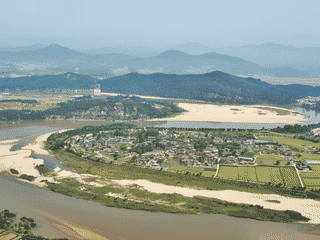
Mungyeong is a compact mountain city in northwestern North Gyeongsang Province that flew under most tourists' radars until recently. It packs genuine heritage into a small footprint: the historic Mungyeong Saejae Pass (once the main Seoul–Yeongnam trade route), a restored coal-mining museum and railbike route, Buddhist temples tucked into forested hills, and a local food scene built on wild mountain vegetables, omija (five-flavor berry) drinks, and crisp highland apples.
Day Trips · Festivals · History · Nature · Trekking
Before you go
Connectivity
Free Wi-Fi is common at accommodations and restaurants. Korean SIM cards/eSIMs from SK Telecom, KT, or LG U+ are sold at convenience stores. South Korea uses Type C/F plugs (220V/60Hz).
Emergency
Dial 112 for police, 119 for fire or medical emergencies. The main post office is at 54 Jeomchon-ro, Jeomchon-dong.
Money
South Korean won (KRW) is the local currency. Cash is widely accepted, and ATMs are available at convenience stores and banks. Credit cards work at hotels, larger restaurants, and supermarkets.
Transport
Mungyeong's main hub is Jeomchon, where trains and the intercity bus terminal are co-located. Local buses (Nos. 61, 70, 71) connect major sights; taxis are the most practical option for scattered attractions.
Weather
Mungyeong has four distinct seasons with hot, humid summers (peak monsoon July–August) and cold, dry winters with light snow. Autumn (September–November) offers the best weather for hiking and sightseeing.