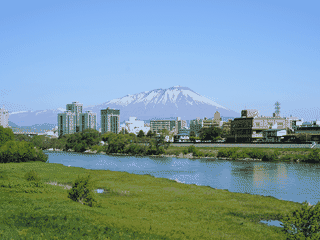

Overview
Morioka is a walkable Tohoku transport hub built around three signature noodle dishes, a castle site, riverside paths, and regional museums. Its cold winters, summer festivals, and easy rail links make it useful for a short cultural stop or countryside base.
Food · Festivals · Transit Hub · History
Did you know?
- The Sansa Odori, held August 1–4, is a taiko festival recognized by Guinness.
- A 30-minute walk from the station reaches a castle site, passing over a steel arch bridge.
- Wanko soba arrives in tiny servings that keep coming until you close the bowl lid.
Why go?
Morioka is the capital of Iwate Prefecture and a major transport hub for the Tohoku region, making it a natural stopover between Tokyo, Akita, and Hokkaido. The city is famous for its "three great noodles" (Morioka reimen, jajamen, and wanko soba), giving food-focused travelers a strong reason to visit. While not a destination most would seek out independently, it offers enough history, museums, and local culture for a rewarding day or two.
Getting in
Morioka is accessible via the Tohoku Shinkansen with direct trains from Tokyo (about 2.5 hours) and Sendai. The Akita Shinkansen also connects through Morioka on routes to/from Akita. JR Tohoku main line provides regional rail access, and the Tohoku Expressway offers bus connections northward. Morioka Station is the main hub for all these services.
Get around
Morioka is small enough to explore on foot. The walk from the station to Morioka Castle takes about 30 minutes, passing through the central business district over a steel arch bridge. The underground tunnels from the station are wheelchair accessible via lifts and lead safely under the main road. Buses are available for the castle site. A pleasant walking trail runs along the Kitakami River with views of Mt Iwate, about five minutes from the station.
When to go
Morioka experiences cold, snowy winters and hot, humid summers. Spring brings cherry blossoms at Morioka Castle, while autumn offers stunning foliage at Oyakuen Garden. Key festivals include Chagu Chagu Umakko (second Saturday of June) featuring 100 decorated horses, and Sansa Odori (August 1-4), the world's largest taiko drum festival recognized by Guinness.
Where to stay
Morioka offers several business hotels near the station. Toyoko Inn Morioka-ekimae overlooks the river and is a 3-minute walk from the station, with winter discounts available at ¥5,600 per night. Route Inn Morioka-ekimae is slightly more expensive at ¥6,000-7,000 with check-in at 13:00 and a large communal bath. Both provide decent Japanese-style breakfasts.
Food and drink
Morioka's "three great noodles" are essential eating: Morioka reimen (spicy cold Korean-style noodles with kimchi and fruit), Morioka jajamen (udon with minced meat and miso, transformable into chitantan soup), and wanko soba (tiny soba servings refilled until you close the bowl lid). Azumaya offers all-you-can-eat wanko soba for ¥4,500 or regular sets from ¥750. Pyonpyonsha serves Morioka reimen at five locations including one at the station. For drinking, Ootaru izakaya offers ¥1,500 for 2.5 hours of all-you-can-drink nomihodai.
Things to do
Morioka Castle site is free to visit and transforms into a cherry blossom spot in spring and a snowy wonderland in winter. The Morioka History and Culture Museum (¥300) has exhibits on the city's castle town history with a free audio tour. Art lovers can visit the Iwate Museum of Art (¥410 for permanent collection) in Matsuhaba. The Chagu Chagu Umakko parade in June and Sansa Odori festival in August are major events.
Safety
Morioka is generally a safe city. Winter walks can be slippery due to snow and ice - caution is advised, especially around Morioka Castle grounds. Summer heat and humidity can be unpleasant for walking. The underground station tunnels provide safe passage under busy roads.
Connectivity
Japan uses Type A and B power plugs (100V). WiFi is available at hotels, convenience stores, and the station area. For SIM cards, major providers like NTT Docomo, SoftBank, and au offer prepaid options at convenience stores and electronics shops.
Budget
A backpacker budget in Morioka can include: budget hotels from ¥5,600/night, convenience store meals for ¥400-600, local noodle meals from ¥750, museum entries ¥200-500, and free attractions like Morioka Castle. Daily budget of ¥4,000-6,000 is feasible for basic comfort.
Day trips
Morioka serves as an excellent base for exploring the Iwate countryside. Kakunodate (about 1 hour by Shinkansen) is a historic samurai town with preserved district and cherry blossoms. Hiraizumi offers UNESCO World Heritage Buddhist temples. Tono is known for its folk traditions. Other destinations include Hachimantai, Hanamaki, Kitakami, and Shizukuishi.
Go next
From Morioka, travelers can head north to Aomori and Hokkaido via the Tohoku Shinkansen, south to Sendai, or explore the Akita Shinkansen line toward Kakunodate and Akita. Regional destinations like Hiraizumi, Tono, and the scenic Hachimantai plateau are accessible by local train or bus.
Guide text adapted from Wikivoyage contributors under CC BY-SA 4.0.
Where to start
Sleep
Route Inn Morioka-ekimae
A slightly more expensive, but better business hotel option compared to the two Toyoko Inns. Check-in at 13:00, rather than 16:00, a decent breakfast and there is a large communal bathing facility, something that should be enjoyed as often as possible while in Japan.
Price when recorded: ¥6000 - 7000
Sleep
Toyoko Inn Morioka-ekimae
A particularly nice Toyoko Inn. Opened in 2009 the odd numbered rooms overlook the river and from a high floor you get a nice sunrise. Toyoko Inns will provide a decent, but basic, Japanese style breakfast. Do not expect English to be spoken, but you will be able to get away with basic functions like checking in and out in English. Perfectly serviceable and clean hotel. The chain has another location near the station (Toyoko Inn Morioka-eki Minamiguchi-ekimae).
Price when recorded: ¥5,600; winter discounts available
Eat
Aeron Standard
This modern izakaya has a diverse food and drinks menu which you can order from using English language touch screens. The staff are friendly, but don't speak much English.
Eat
Azumaya
Likely the most famous wanko-soba shop in town. There are three outlets, one of which is conveniently just outside the east exit of Morioka station. Highly unusually in Japan, they even have a vegan version.
Price when recorded: All-you-can-eat wanko soba ¥4,500; regular sets from ¥750
Eat
Pyonpyonsha
Famous for Morioka Reimen (cold noodles). There are five outlets in Morioka, one of which is at Morioka station next to Azumaya (above) just in case you didn't get your fill of noodles yet.
See
Daijiji
See
Former Nakamura Residence
See
Fukazawa Kōko Nonoha Art Museum
A Morioka native, Fukazawa was a 20th-century painter of European-style art.
Price when recorded: ¥500
Before you go
Accommodation
Business hotels near the station like Toyoko Inn and Route Inn offer clean rooms from ¥5,600-7,000 per night with breakfast.
Food
Morioka is famous for three noodle dishes: reimen (cold), jajamen (hot udon), and wanko soba (all-you-can-eat soba).
Money
Japan uses yen (JPY). Credit cards accepted at hotels and larger stores, but cash preferred at local restaurants and small shops.
Transport
Morioka Station is the main hub with Tohoku Shinkansen connections to Tokyo (2.5 hrs) and Sendai. Akita Shinkansen also stops here.
Weather
Cold snowy winters and hot humid summers. Spring for cherry blossoms, autumn for foliage. Festival season peaks in summer.