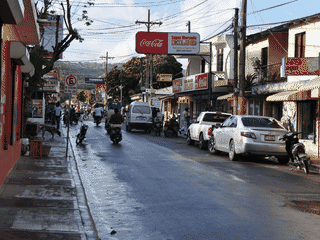

Las Terrenas
Mexico, Central America and the Caribbean · Dominican Republic
Did you know?
- Pescado con coco is whole fish served with coconut milk sauce.
- Playa Escondida is reached by a 5-minute hike from Playa Bonita's northeastern tip.
- Beach-hut bars line the approach to Playa Las Ballenas.
See also

Santo Domingo
Dominican Republic18.47°N 69.89°W · 14 m

Sosúa
Dominican Republic19.75°N 70.52°W · 260 m
Overview
Las Terrenas mixes public beaches with hotels and cottages close to the sand. Local food and town life complement beach time on the Samaná Peninsula.
Languages: Spanish
Why go?
Las Terrenas offers miles of beautiful public beaches on the Samaná Peninsula without the all-inclusive resort vibe of Punta Cana. The town combines mid-range hotels and cottages steps from the sand with genuine Dominican culture and affordable local food. It's a jumping-off point for the popular Limón Waterfall and considered one of the lowest-crime areas in the Dominican Republic.
Adapted from Wikivoyage contributors · CC BY-SA 4.0
Understand
Located on the Samaná Peninsula in the Dominican Republic's far northeast, Las Terrenas remained isolated until the Santo Domingo-Samaná highway completed in 2012, cutting travel time from 6 hours to 2 hours from the capital. Most locals are of Afro-Caribbean descent, speaking fluent Spanish with Haitian Creole also heard. The vibe is relaxed, most vendors aren't out to scam, and tourism serves a mix of international visitors and Dominican domestic tourists. High season runs roughly December to March.
Adapted from Wikivoyage contributors · CC BY-SA 4.0
Getting in
The primary access is via the Santo Domingo-Samaná highway (completed 2012), making the 2-hour drive from Santo Domingo possible. Public transportation options include gua-gua (local minibuses) and car rental from the capital. The nearest major airport is Las Américas International Airport (SDQ) in Santo Domingo.
Adapted from Wikivoyage contributors · CC BY-SA 4.0
When to go
High season runs December to March with the best weather but higher prices and more tourists. The May-October low season offers significantly better accommodation deals - you can often negotiate big discounts from online prices by asking in person. The occasional power and water outages mentioned in accommodations are more frequent during low season.
Adapted from Wikivoyage contributors · CC BY-SA 4.0
Where to stay
Mid-range hotels and apartments near the beach are plentiful, but budget backpackers face challenges. The tourist triangle near the beach has options ranging from 1,000 pesos for a basic double with fan (Las Palmeras, low season) to 1,300 pesos with AC (Hotel Guayacan). The only beach-area hostel is Afreeka Beach Hostel at US$20 for dorm beds. For better deals, visit in person and negotiate, especially during low season. Expect low-end accommodations without AC or hot water, and possible power/water outages even at better hotels.
Adapted from Wikivoyage contributors · CC BY-SA 4.0
Food and drink
Tourist restaurants along the beach charge 300-600 pesos per meal, with specialties including pescado con coco (whole fish with coconut milk sauce). Local spots farther inland offer better value: barbecue stands with food boxes for 200 pesos, chimis/burgers for 100 pesos, and empanadas for just 25 pesos versus 80-100 pesos near the beach. Standard Dominican set lunch (plato del día) runs about 200 pesos at small restaurants off the beach but still in the tourist zone. Tap water is not potable - bring your own bottled water or buy 5-liter bottles at Lindo Supermarket.
Adapted from Wikivoyage contributors · CC BY-SA 4.0
Things to do
Beach-hopping is the main activity: Playa Las Terrenas (central beach in tourist downtown), Playa Bonita (10-minute motoconcho ride away, popular for swimming), Playa Escondida (hidden beach accessible via 5-minute hike from Playa Bonita's northeastern tip), and Playa Las Ballenas (prettiest beach with wide sandy shores and coconut trees). The Dive Academy Las Terrenas offers a test dive for 10 USD and double boat dives for 90 USD. Limón Waterfall is popular for hiking and freshwater swimming.
Adapted from Wikivoyage contributors · CC BY-SA 4.0
Buy
Tourist-oriented shopping extends a few blocks inland from the beach, with clothing, souvenirs, and necessities available. For cheaper goods serving locals, head to non-tourist streets farther inland. Most tourist establishments accept credit cards, but cash is advisable for smaller purchases.
Adapted from Wikivoyage contributors · CC BY-SA 4.0
Drink
Small bar-restaurants line the coastal road, with beach-hut style bars located before Playa Las Ballenas. Expect to pay at least 200 pesos for a cocktail at a bar, likely more. Beer from convenience stores starts around 80 pesos. Freshly-made fruit juice is available at various places in town. Tap water is not potable - bottled water is essential.
Adapted from Wikivoyage contributors · CC BY-SA 4.0
Safety
Las Terrenas is considered one of the safest places in the Dominican Republic with very little petty crime. Locals sometimes leave valuables on the beach while swimming, though this isn't recommended. The main safety concerns are rocky reefs with sea urchins and occasional scorpionfish near shore - stick to sandy areas. Traffic moves slowly thanks to speed bumps, but some coastal roads are narrow and poorly lit at night. Watch for unmuffled motorcycles on main streets.
Adapted from Wikivoyage contributors · CC BY-SA 4.0
Connectivity
Most accommodations and some restaurants offer free WiFi for customers, though speeds aren't always reliable. Cellular phone signal is available throughout town. Power outages occur periodically, so don't rely entirely on electronic devices.
Adapted from Wikivoyage contributors · CC BY-SA 4.0
Budget
Budget travelers can get by on 1,500-2,000 DOP per day including budget accommodation (500-1,000 pesos), street food and local meals (200-600 pesos), and local transportation (motoconcho rides). Mid-range travelers should budget 3,000-5,000 DOP daily for hotel rooms with AC and restaurant meals.
Adapted from Wikivoyage contributors · CC BY-SA 4.0
Day trips
Samaná town (the provincial capital) is a cute harbor town about 30-40 minutes away, offering whale-watching tours during season (typically January-March). Las Galeras is a smaller, more laid-back beach town suitable for low-key travelers seeking even quieter surroundings than Las Terrenas.
Adapted from Wikivoyage contributors · CC BY-SA 4.0
Go next
Head north to Samaná town, the provincial capital with whale-watching tours, or continue to Las Galeras for a quieter beach experience. The Santo Domingo-Samaná highway provides good access to the capital or onward to other Dominican destinations.
Adapted from Wikivoyage contributors · CC BY-SA 4.0
Field guide adapted from Wikivoyage contributors · CC BY-SA 4.0. Text has been adapted and organized for this guide. About our sources.
Places to know
A few starting points from the guide. Check current hours and prices before you go.
- sleep
Afreeka Beach Hostel
Seems to be the only place near the beach with dorm-style hostel accommodations, though still not as cheap as the cheapest hotels. We didn't end up staying here, but open-air hangout area looked pretty nice. Right across the street from the Punta Popy beach, but a bit of a walk from the tourist shopping district.
Recorded price: US$20 for a dorm bed, more for private rooms
Adapted from Wikivoyage contributors
- sleep
Casa Grande Beach Hotel
Simple rooms. Really good food. Pleasant environment.
Adapted from Wikivoyage contributors
- sleep
Dan and Manty's Guesthouse
Recorded price: $19 (American dollars)
Adapted from Wikivoyage contributors
- sleep
El Rincon de Abi
Located about 20m to the beach, in the less touristic part of the town. Rooms are clean, spacious, and functional. The estate is a beautiful oasis of plants and flowers. The staff is nice and helpful. Safes for storage of valuable items are available in the rooms free of cost.
Adapted from Wikivoyage contributors
- sleep
Hotel Casa Robinson
Good quality studio apartment-style rooms (4 to a cottage) within a very pleasant garden. Slightly off the main coastal road but within a 2-minute walk to the beach. Also not far from the tourist center, easily walkable. Our room had a kitchen and hot water. There was no air-conditioning, but we rarely missed it because the room was very breezy (windows with screens on three sides) and had a good ceiling fan. Very chill and helpful staff.
Recorded price: 1,700 pesos for a mini-apartment that sleeps 2-3 people (might be low-season price)
Adapted from Wikivoyage contributors
- sleep
Hotel Guayacan
Another lower-end option along the cemetery-wall strip, but a good value for the money. The second-floor room we stayed in had a slight sea view, was reasonably spacious, and had lots of natural light as well as air-conditioning. Nothing was broken. Very friendly owner.
Recorded price: 1300 pesos for a double room with AC (low season)
Adapted from Wikivoyage contributors
- sleep
Las Palmeras
The cheapest accommodation we found within the tourist zone, separated from the beach by the (beautifully-painted) cemetery wall but just a two-minute walk from the water. Small ground-level rooms in outbuildings tucked into a cute garden behind restaurant. Our room was quite small and a little dark with a hilariously tilted floor, but most things worked, and it got the job done.
Recorded price: 1,000 pesos for a double room with fan (low-season)
Adapted from Wikivoyage contributors
- eat
Cafeteria el Sol
Another place in the real downtown for a cheap snack. Local mini-cafe with freshly-made fruit juice, fruit plates, and decent small sandwiches.
Recorded price: Simple sandwich 50-100 pesos
Adapted from Wikivoyage contributors
Before you go
Accommodation
Budget options limited near beach. Best deals available by visiting in person and negotiating, especially during low season (May-October).
Connectivity
Free WiFi at most accommodations and some restaurants. Cellular signal available throughout town. Power outages occur periodically.
Culture
Most locals of Afro-Caribbean descent, speaking Spanish with some Haitian Creole. Music (bachata, reggaeton, merengue) plays loudly on weekends. Relaxed, welcoming atmosphere.
Food
Local food cheaper inland than beachfront. Empanadas 25 pesos, chimis 100 pesos, plato del día 200 pesos. Tourist restaurants 300-600 pesos.
Health
Tap water not potable - buy bottled water. 5-liter bottles available at Lindo Supermarket. Pharmacies in town for basic medical needs.
Language
Spanish is the main language. Haitian Creole also heard. English less common than in major tourist resorts.
Money
Most tourist establishments accept credit cards, but carry cash for smaller purchases. Scotiabank in Plaza Rosada near Lindo Supermarket is most reliable for foreign cards. ATMs available throughout town.
Noise
Town can be extremely noisy due to unmuffled motorcycles and loud music, especially on weekends. Consider earplugs for central areas.
Safety
One of the lowest-crime areas in the Dominican Republic. Avoid swimming near rocky reefs due to sea urchins and scorpionfish. Some coastal roads poorly lit at night.
Transport
Motoconcho (motorcycle taxi) is the main local transport, about 50-100 pesos per ride. Gua-gua minibuses connect to nearby towns.
Water
Tap water not safe to drink. Bottled water essential. 5-liter jugs sold at Lindo Supermarket.
Weather
High season December-March. Low season May-October brings better accommodation deals but occasional rain. Tropical climate year-round.