
Kuldīga
Eastern Europe and the Balkans · Latvia
Did you know?
- Venta Rapid spans 240 metres across the river.
- The brick bridge over the Venta was built in 1874.
- The Alekšupīte flows beside old-town building walls.
See also

Ventspils
Latvia57.39°N 21.56°E · 0 m

Liepāja
Latvia56.51°N 21.01°E · 14 m
Overview
Kuldīga's wooden old town sits beside the Venta River, with cobbled streets and buildings close to the Alekšupīte. Waterfalls and a historic brick bridge give walks here a riverside focus.
Languages: Latvian
Why go?
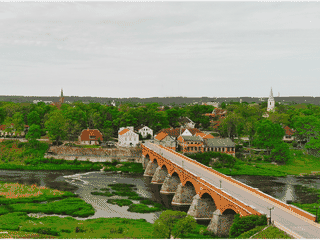
Kuldīga is a picturesque UNESCO-listed town on the Venta River in Latvia's Kurzeme region. Its old town, preserved from the 17th-18th centuries, features charming wooden buildings and narrow cobblestone streets. The town is nicknamed 'The Latvian Venice' because the Alekšupīte River flows alongside the walls of many buildings. Key highlights include Europe's widest waterfall at Venta Rapid, one of Europe's longest brick bridges (built 1874), and the oldest wooden house in Kurzeme (built 1670).
Adapted from Wikivoyage contributors · CC BY-SA 4.0
Getting in
Kuldīga is accessible by bus from Latvia's capital. Several buses run daily from Riga, taking 2-3 hours. There are frequent connections from nearby Ventspils and Talsi. Check 1188.lv for bus schedules and current timings.
Adapted from Wikivoyage contributors · CC BY-SA 4.0
Getting around
Most of Kuldīga's attractions are within walking distance in the compact old town. Cobblestone streets are characteristic of the town. The only exception is the Riežupe Sand Caves, located 4-5 km north of the Venta River bridge. Hitchhiking is possible but locals may be hesitant. Local taxis are usually available near the bus station at 'Maxima' or 'Rimi' supermarkets.
Adapted from Wikivoyage contributors · CC BY-SA 4.0
When to go
Summer (June-August) is ideal for swimming under Venta Rapid's waterfall 'massage' and attending local festivals. The 'naked people run' across the historic bridge occurs at Midsummer night. Spring is best for watching salmon jumping up the waterfall. The annual Cycling Festival takes place at the end of May. Winter offers fewer tourists but limited opening hours at attractions.
Adapted from Wikivoyage contributors · CC BY-SA 4.0
Where to stay
Budget accommodation options include Pilskalnu Hostelis at Kaļķu iela 1 (from €19) and Guesthouse/camping 'Ventas Rumba' near the waterfall (€12-22 per person), ideal for hearing the river sounds and enjoying morning swims. Hotel Metropole Kuldīga on Baznīcas iela 11 offers 14 furnished rooms with cable TV and river views.
Adapted from Wikivoyage contributors · CC BY-SA 4.0
Food and drink
Restaurant Staburadze offers local cuisine in town. For regional specialties, consider day trips to Alsunga (25 km away) for 'sklandrauši' (carrot cakes), a famous Latvian snack with medieval-era recipes, typically sold by street vendors in summer.
Adapted from Wikivoyage contributors · CC BY-SA 4.0
Things to do
Must-see attractions include the Historical Centre with 17th-18th century wooden buildings, the brick bridge across the Venta (164m, longest road bridge of its kind in Europe), and Venta Rapid (240m wide, widest waterfall in Europe). Climb St. Catherine's Church tower (built 1252, rebuilt baroque style) for panoramic views. The Alekšupīte Waterfall at 4.5m is the highest in Latvia. Take a free 'massage' by sitting under Venta Rapid's waterfall. Explore the Riežupe Sand Caves (€6, 460m of 2km tourable), the longest underground cave labyrinth in the Baltics, 16m underground.
Adapted from Wikivoyage contributors · CC BY-SA 4.0
Day trips
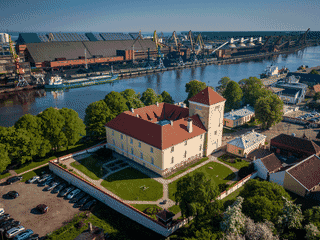
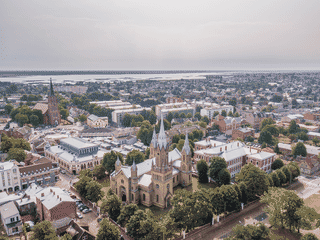
Use Kuldīga as a base to explore Kurzeme: Alsunga (25 km) for unique folklore and 'sklandrauši' carrot cakes; Jūrkalne for white-sand beach and spectacular Baltic sunsets; Ventspils (modern sea resort, tidiest in region); Liepāja ('city of wind', famous for its sandy beach and the world's largest organ); Saldus for active cultural life with local musicians and artists.
Adapted from Wikivoyage contributors · CC BY-SA 4.0
Go next
From Kuldīga, continue exploring Latvia: Liepāja offers music events and Soviet military history at Karosta; Ventspils provides beach recreation and the Baltic states' busiest ice-free port; Tukums (70 km west of Riga) hosts the annual Rose Festival and nearby Cinevilla theme park. Regional buses connect to all these destinations.
Adapted from Wikivoyage contributors · CC BY-SA 4.0
Field guide adapted from Wikivoyage contributors · CC BY-SA 4.0. Text has been adapted and organized for this guide. About our sources.
Places to know
A few starting points from the guide. Check current hours and prices before you go.
- sleep
Guesthouse/camping "Ventas Rumba"
Good place to stay if one wants the sound of the river or to go for a free waterfall massage in the morning.
Recorded price: €12-22/person
Adapted from Wikivoyage contributors
- sleep
Hotel Metropole Kuldīga
Offers 14 furnished rooms. Each room is equipped with cable TV, bathroom with shower or bath and a phone. From the windows, a sight to the busiest pedestrian street of Kuldiga, Liepaja Street, opens, but in case you want more quiet view, hotel has rooms with view of the river Aleksu that cranks though the very heart of Kuldiga.
Adapted from Wikivoyage contributors
- sleep
Pilskalnu Hostelis
Recorded price: From €19
Adapted from Wikivoyage contributors
- eat
Restaurant Staburadze
This used to be a better place. No pelmeni, the herring with cottage cheese and potatoes was nice though.
Adapted from Wikivoyage contributors
- see
Alekšupīte River
This small tributary of the Venta runs through the old town, right alongside the walls of many buildings, which is why Kuldīga has been called the Venice of Latvia. The buildings of the town centre were constructed as a suburb to Kuldīga Castle. In 1701, during the Great Northern War, the Swedish army invaded Kuldīga Castle and in 1709 it became uninhabitable, but in the 19th-century the castle ruins were relocated.
Adapted from Wikivoyage contributors
- see
Alekšupīte Waterfall
Highest waterfall in Latvia, 4.5 m high, the first paper mill in Kurzeme, dam, view over the River Venta. A dam was built here in the 17th century to use the stream to operate the first paper mill in Kurzeme. The waterfall is artificial.
Adapted from Wikivoyage contributors
- see
Brick bridge across the Venta
At 164 m, it is the longest road bridge of this kind in Europe. It was built in 1874 according to 19th-century standards: 500 feet long and 26 feet wide (152 m by 8 m), allowing two carriages to pass each other. It consists of seven spans of brick vaults. Two of the spans were blown up during World War I, and rebuilt in concrete, rather than brick, in 1926.
Adapted from Wikivoyage contributors
- see
Historical Centre of Kuldīga
Kuldīga is a small and attractive town that has always been admired and praised by poets and painters. The city centre, which developed in the 17th and 18th centuries, has still preserved the old wooden buildings which form small and narrow streets.
Adapted from Wikivoyage contributors
Before you go
Accommodation
Budget hostels from €19, guesthouses near waterfall from €12-22/person. Summer camping available at Jūrkalne for beach visits.
Connectivity
Mobile coverage available from Latvian carriers. WiFi likely at hotels and Tourist Information Centre.
Language
Latvian is the official language. Russian is also widely spoken. English is common in tourist areas.
Money
Euro (€) is the local currency. Credit card acceptance is likely at hotels and larger establishments but carry cash for smaller venues and attractions.
Transport
Buses run several times daily from Riga (2-3 hours). Town center is walkable; cobblestone streets throughout. Sand caves require taxi or hitchhiking (4-5 km north).
Weather
Best visited May-September for outdoor activities and swimming. Spring brings salmon jumping at Venta Rapid. Cobblestone streets can be slippery when wet.