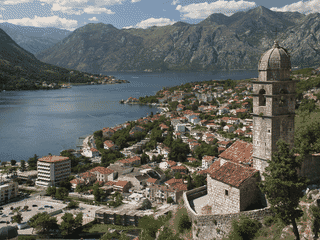

Kotor
Eastern Europe and the Balkans · Montenegro
Did you know?
- The market outside the walls sells smoked ham and cheese from Njeguši village.
- The old town is entirely pedestrian, and a promenade runs north through Dobrota.
- The climb to San Giovanni Fortress winds up 1,350 steps.
See also
.jpg)
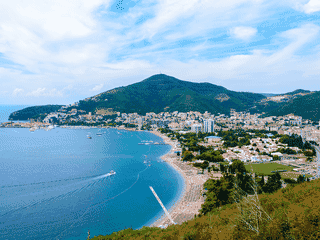
Budva
Montenegro42.28°N 18.84°E · 3 m
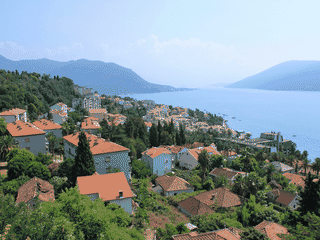

Herceg Novi
Montenegro42.45°N 18.53°E · 40 m
Overview
Kotor's pedestrian old town invites exploration on foot. The bay-side promenade continues north through Dobrota, with local buses serving nearby towns.
Languages: Montenegrin
Why Go
Kotor is a coastal town of 22,000 people tucked into the deepest natural fjord in the Mediterranean. Its UNESCO-listed Stari Grad (old town) features fully intact medieval walls climbing up near-vertical cliffs, while the surrounding Bay of Kotor offers dramatic mountain-backdrop scenery. After Serbian, English is the second language of the town, making it accessible for solo travelers. The town sees heavy cruise-ship traffic in summer, but remains one of the most atmospheric Adriatic destinations at a fraction of Dubrovnik prices.
Adapted from Wikivoyage contributors · CC BY-SA 4.0
Understand
Kotor sits in the secluded Boka Kotorska bay on Montenegro's northern coast. The Stari Grad has no cars and no standard street names—directions reference squares named for their central churches, closest gates, or landmarks like the clock tower inside the main gate. Four gates provide access: the Main Gate along the Bay, North Gate, South Gate, and New Gate. The city walls are separately listed with five other Venetian fortifications along the Adriatic. Kotor and the entire bay have long attracted European and British vacationers and second-home buyers.
Adapted from Wikivoyage contributors · CC BY-SA 4.0
Get In
The bus station (Autobuska stanica) is a 5-minute walk from the old town on the road towards Budva—look for the old tall chimney. Buses run daily 06:00-22:00, with ticket sales, shops, a restaurant, ATM, and taxi service available. Bus times and frequency vary significantly by season, so check the schedule online at autobuskastanicakotor.me before arrival.
Adapted from Wikivoyage contributors · CC BY-SA 4.0
Get Around
The old town is entirely pedestrian. The bay-side promenade stretches north through Dobrota. For destinations beyond walking distance, taxis and local buses serve nearby towns. The geographic coordinates for orientation are approximately 42.43 latitude, 18.77 longitude.
Adapted from Wikivoyage contributors · CC BY-SA 4.0
When To Go
Kotor is a year-round destination, though shoulder seasons (May-June, September-October) offer the best balance of manageable crowds and pleasant weather. July-August brings heavy cruise-ship traffic with thousands of day-trippers; the old city becomes very crowded during these months. Winter (November-March) sees far fewer visitors, with many restaurants and attractions operating reduced hours or closing entirely. Montenegrin festivals include religious holidays and summer cultural events.
Adapted from Wikivoyage contributors · CC BY-SA 4.0
Where To Stay
Accommodation is cheap and plentiful during low season. During high season, the old city becomes very crowded due to cruise ships and day-trippers, making it preferable to stay outside the walled city—either north through Dobrota or south toward Budva. Budget dorm beds in the Stari Grad start around €30; mid-range hotels near the bay range €44-150. The Montenegro Hostel B&B on the western edge costs from €8, while the historic Cattaro Hotel near Trg Od Oružja Square runs €90-150.
Adapted from Wikivoyage contributors · CC BY-SA 4.0
Food And Drink
At the market outside the city walls, try local smoked ham (njeguški pršut) and cheese (njeguški sir) from Njeguši village—two signature Montenegrin products. A large produce market operates outside the old city walls where hamburgers cost €1. Cafes and restaurants line the bay-side promenade. Budget options include Pizzeria Pronto on the path to the Cathedral (€3 per slice), Fish Grill in the residential area (under €10), and Sladoja Mesara butcher shop south of the walls (two grilled skewers for €3). For a sit-down meal, Bastion Restaurant near St. Mary's Church serves fish mains at €6-30, while Cesarica near Hotel Marija offers Dalmatian food from €5-15 including cuttlefish risotto.
Adapted from Wikivoyage contributors · CC BY-SA 4.0
Drink
The old town is the hotspot for relaxed espresso drinking in the shade of medieval walls. Espresso costs €2 or more; soft drinks and juice run €3-4. Sample Montenegrin wines like Vranac, Pro Corde, Krstac, Cabernet, and Chardonnay, plus Nikšićko beer. Montenegrin brandy called rakija is popular for warming up before evening outings—try grape brandy Montenegrin loza, Prvijenac, or Kruna. Litre bottles of wine are available in supermarkets outside the Stari Grad for under €5. Tipping is not expected, though you may round up.
Adapted from Wikivoyage contributors · CC BY-SA 4.0
Things To Do
The crown jewel is climbing the fortifications along San Giovanni Fortress: 1,350 steps through switchbacks over 365 meters of ascent, taking 30 minutes to 1 hour, with panoramic views of Kotor and the bay. Tickets cost €15 and are sold at entrances near the north and south gates; gates close around 20:00 (earlier off-season) and staff are strict about checking tickets. Alternatively, a free trail behind the abandoned power station outside the north gate runs parallel to the fortifications and offers similar views—though it's more strenuous. For water activities, visit Aquarium Boka at Put I Bokeljske brigade 68 (adults €10, children €6), showcasing local marine species. The two islands in the bay—Gospa od Skrpijela and Sveti Djordje—offer boat excursions.
Adapted from Wikivoyage contributors · CC BY-SA 4.0
Buy
The Stari Grad has many boutiques, while an open market just outside the old town sells fresh vegetables, sunglasses, and other goods. Banks and ATMs are abundant throughout the Stari Grad, though banks are closed on Sundays and holidays. Travellers cheques are generally not accepted, even by banks. Note that not all restaurants or shops accept credit cards—carry cash for smaller establishments.
Adapted from Wikivoyage contributors · CC BY-SA 4.0
Safety
Kotor is generally a safe town for travelers. Standard precautions apply: watch for pickpockets in crowded cruise-ship season, secure valuables in hostels, and be cautious on the steep fortress trail—especially if climbing outside official hours without a guide. The mountain trail can be slippery in wet weather.
Adapted from Wikivoyage contributors · CC BY-SA 4.0
Connectivity
As of September 2021, Kotor has 4G coverage from all Montenegro carriers. WiFi is widely available in hotels, cafes, and restaurants. 5G has not yet rolled out in Montenegro. SIM cards from local carriers are available for purchase if needed.
Adapted from Wikivoyage contributors · CC BY-SA 4.0
Go Next
Nearby destinations include Perast (18 km), a baroque gem on the bay; Risan, another bay-side town; and Prčanj, a hamlet 4 km away. Budva is a popular beach destination south of Kotor. Inland, Cetinje was the old capital of Montenegro, and Lovćen National Park offers hiking from Kotor (full-day hike covering 13 km from sea level to 1,700 m elevation). Tivat is home to an elite yacht marina, Bar is Montenegro's biggest port city, and Herceg Novi sits at the bay's entrance. Beach options within a half-hour's drive include Jaz, Trsteno, and Plavi hori.
Adapted from Wikivoyage contributors · CC BY-SA 4.0
Field guide adapted from Wikivoyage contributors · CC BY-SA 4.0. Text has been adapted and organized for this guide. About our sources.
Places to know
A few starting points from the guide. Check current hours and prices before you go.
- sleep
Boutique Hotel Casa del Mare - Amfora
Hotel has 4 stars, with a private beach, sauna and fish restaurant. Open 24 hours and all 365 days a year. The hotel is on the beach in Orahovac. Quiet rooms with seaview overlooking the bay.
Recorded price: €30-99
Adapted from Wikivoyage contributors
- sleep
Cattaro Hotel
A historic hotel and a member of the Historic Hotels of Europe.
Recorded price: €90-150
Adapted from Wikivoyage contributors
- sleep
Forza Mare
A small 5-star hotel in Dobrota.
Recorded price: $166
Adapted from Wikivoyage contributors
- sleep
Hotel Marija
Boutique hotel.
Recorded price: Single €44; double €63
Adapted from Wikivoyage contributors
- sleep
Hotel Vardar
Old Yugoslavian design.
Recorded price: Single €100; double €200
Adapted from Wikivoyage contributors
- sleep
Montenegro Hostel B&B Kotor
Accommodating hostel with communal cooking area and tours of Kotor offered.
Recorded price: From €8
Adapted from Wikivoyage contributors
- sleep
Old Town Kotor Hostel
Once owned by a local noble family, Bisanti, the Old Town Hostel Kotor's careful restoration and design offer historic Kotor's rustic atmosphere.
Recorded price: Dorm bed: €30
Adapted from Wikivoyage contributors
- eat
Babilon restaurant and hotel
Affordable prices, dining on the Boka Kotorska Bay and a first-class seafood menu.
Adapted from Wikivoyage contributors
Before you go
Connectivity
4G coverage is available from all Montenegro carriers. WiFi is widespread in cafes and hotels. 5G has not launched in Montenegro.
Etiquette
Dress modestly when visiting churches. Tipping is not expected but rounding up is appreciated. Be respectful of religious sites during services.
Language
Serbian is the primary language; English is widely spoken, especially among hotel and restaurant staff. Italian is also common due to historical Venetian influence.
Money
The euro (€) is Montenegro's de facto currency. ATMs are abundant in the Stari Grad, but many smaller shops and restaurants are cash-only. Banks are closed Sundays and holidays.
Safety
Kotor is generally safe, but watch for pickpockets during crowded cruise-ship season. The fortress trail is steep—wear proper shoes and bring water.
Transport
The bus station is a 5-minute walk from the old town on the Budva road. Buses run 06:00-22:00 daily with seasonal frequency variations. Taxis and local buses connect to nearby towns.
Weather
Summer (June-August) is hot and crowded; shoulder seasons offer milder weather and fewer crowds. Winter sees reduced hours at many venues.