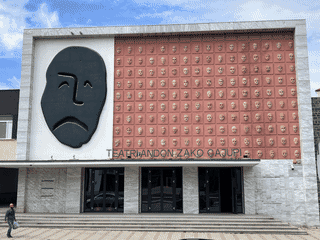

Korçë
Eastern Europe and the Balkans · Albania
Did you know?
- Local craft shops sell traditional woolen rugs and intricate embroidery.
- Lakror is a regional pie in the byrek tradition.
- Medieval icons and frescoes fill the National Museum of Medieval Art.
See also
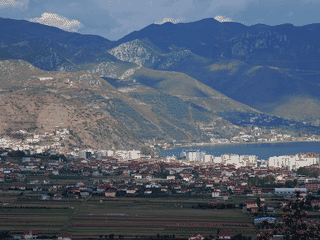

Pogradec
Albania40.90°N 20.65°E · 700 m
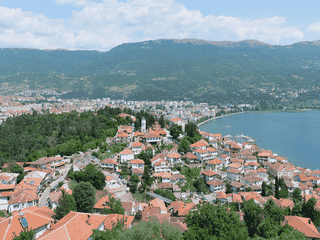

Ohrid
North Macedonia41.12°N 20.80°E · 700 m
Overview
Korçë is a southeastern Albanian city shaped by education, music and Orthodox heritage. Known for its serenades, it offers a culturally focused inland stop.
Languages: Albanian
Why Go?
Korçë (850 m elevation) is southeastern Albania's cultural and intellectual heart—often called the 'city of serenades' and 'Jerusalem of the Balkans' for its role in Albanian education and Orthodox heritage. The 2024 New York Times profile called it 'the most charming city in Albania you're not visiting yet.' Unlike Tirana's chaos or coastal tourist hubs, Korçë delivers old-town cobblestones, a renovated Ottoman bazaar, Albania's oldest brewery (Birra Korça, est. 1928), and access to three national parks without crowds. Summer brings families to Parku Rinia; winter brings ski bums to Dardhë. It works as a 2-night stopover or a 5-night base for mountain villages, cave churches, and gin-clear Prespa and Ohrid lakes.
Adapted from Wikivoyage contributors · CC BY-SA 4.0
Understand
Korçë sits 175 km southeast of Tirana and 40 km from Pogradec on Lake Ohrid. At 850 m above sea level, it experiences a humid continental climate: January averages -3.5°C to 4.3°C with 87.5 mm precipitation; July averages 13.3°C to 26.5°C with only 33 mm rain. Snow is common December–February. The city was historically the center of the Albanian National Revival (Rilindja Kombëtare)—the First Albanian School opened here in 1887, and it was once the second-largest city in the Ottoman Balkans after Constantinople. Today it's a university town and the industrial hub of the region, famous for beer, butter, cheese, and byrek.
Adapted from Wikivoyage contributors · CC BY-SA 4.0
Getting In
No commercial airport exists in Korçë; arrivals come via Tirana (175 km, ~3.5 hours by bus), North Macedonia's Ohrid airport (via the Qafë Thanë border, ~90 minutes), or Greece's Ioannina (via the Kakavija/Greqi border). The central bus depot (listing_uid: 4e81d28f24091e47) handles most intercity departures. Furgons (shared minibuses) run to Tirana (350 ALL), Elbasan, and Pogradec. From Tirana's bus station, the Bus Station to Korçë route takes 3.5–4 hours on roads that improve after the Devoll turnoff. Private car hire from Tirana is approximately €50–70.
Adapted from Wikivoyage contributors · CC BY-SA 4.0
Getting Around
Korçë's compact historic center is best explored on foot—most museums, churches, and the Old Bazaar are within a 1.5 km radius of Shën Gjergji Boulevard. Urban buses serve residential neighborhoods but lack schedules; flag them down. Furgons (shared minibuses) connect to nearby villages. Bicycle rental is possible for exploring Parku Rinia and the surrounding plains. For Voskopoja (21 km), Dardhë (18 km), and Morava Mountain (18 km), a rented car is most practical—roads are winding and public transport infrequent.
Adapted from Wikivoyage contributors · CC BY-SA 4.0
When to Go
Late April through June offers mild temperatures (10–23°C), green landscapes, and two major festivals: Byrek Day in April and the Carnavale of Korçë in June. July–August brings the Korça Beer Festival (early August, hosted by Birra Korça) and peak summer warmth (up to 27°C)—crowds swell but accommodations book fast. September–October is harvest season: rakia tastings, mushroom foraging, and wine. November–March is low season: Dardhë transforms into a snowy ski village with fireplace-cozy guesthouses, but many rural restaurants and guesthouses close. Avoid Easter week when domestic travel peaks.
Adapted from Wikivoyage contributors · CC BY-SA 4.0
Where to Stay
Accommodation clusters near Shën Gjergji Boulevard (city center) and the pedestrian street Bulevardi Republika. Budget hostels include EcoHostel Stars of Sunrise (€11–45 dorm/private/camping, listing_uid: f6492c58196cc22a) with garden and Aurora's breakfast. Mid-range traditional hotels near the cathedral include Guest House Bujtina Leon (€45, listing_uid: d50dfa60961658ff) and Hotel Bujtina e Bardhe (350 m from center, free parking, mountain-view rooms, free WiFi). Upscale options include IN Gallery Hotel & Spa on Republic Boulevard and Hotel Kocibelli on Main Square (free breakfast, free WiFi, English-speaking reception). Off-season (Nov–Mar) discounts reach 30–50%.
Adapted from Wikivoyage contributors · CC BY-SA 4.0
Food and Drink
Korçare cuisine is heartier than coastal Albanian food: tavë kosi (baked lamb with yogurt), qofte Korçare (pan-fried meatballs), fërgesë (pepper and cheese casserole), and lakror (byrek-style pie). Taverna Vasili near the Old Bazaar serves authentic regional dishes; Taverna Pazari i Vjetër in the historic bazaar adds live folk music on weekends. Vila Cofiel occupies a restored villa with a garden, offering slow-cooked veal and local cheeses. For upscale dining, Life Gallery Restaurant inside a boutique hotel features Mediterranean-inspired dishes. Budget travelers eat at the Old Bazaar's daily fruit-and-vegetable market (until 13:00) and look for 100–150 ALL byrek from bakeries. Albania's oldest brewery, Birra Korça (est. 1928), sponsors the August beer festival and operates a beer garden on Fan Noli Boulevard (daily 08:00–00:00). Vog Bar on the pedestrian street offers craft beers and cocktails.
Adapted from Wikivoyage contributors · CC BY-SA 4.0
Things to Do
Start at the National Museum of Medieval Art (Muzeu i Artit Mesjtar Shqiptar) on Bulevardi Fan Noli with its extraordinary collection of medieval icons and frescoes—ring the buzzer if locked during hours. The Archaeological Museum (Rruga Mihal Grameno, daily 09:00–19:00) displays 1,200 prehistoric artifacts. The First Albanian School & Museum of Education (1887 building, Tu–Su 09:00–14:00, 17:00–20:00) traces Albania's national awakening. The Gjon Mili Museum of Photography (Konferenca e Pezës, 200 Lek, Tu–Su 09:00–14:00, 17:00–19:00) showcases 240 works by the 20th-century master born in Korçë. Bratko Museum (57 Fan Noli, 100 Lek) covers Asian art. The pink-blue-and-brown Resurrection of Christ Orthodox Cathedral (Demokracia Boulevard, built 1995) replaced a church destroyed in 1968. Take an evening xhiro (leisurely stroll) on Shën Gjergji Boulevard and Bulevardi Republika to people-watch with locals. Hiking the Morava Mountains offers panoramic views; Fir of Drenovë National Park protects ancient fir trees near town. The GADK (Gallery of Digital Art in Korçë) provides immersive tech-art installations.
Adapted from Wikivoyage contributors · CC BY-SA 4.0
Buy
The renovated Old Bazaar (Pazari i Vjetër) is Korçë's shopping heart: daily fruit-and-vegetable market until 13:00, plus handicraft shops selling wooden and copper items, traditional woolen rugs, and intricate embroidery. Look for antique dealers and a working blacksmith. Rakia (traditional fruit brandy, especially from local pears) and Birra Korça make distinctive souvenirs. The pedestrian street Bulevardi Republika and Shën Gjergji main street offer boutiques, clothing shops, and cafes for a more modern retail experience. Prices are significantly lower than Tirana; haggle at bazaar stalls but not at fixed-price boutiques.
Adapted from Wikivoyage contributors · CC BY-SA 4.0
Safety
Korçë is generally safe for travelers—petty theft is rare and violent crime uncommon. The main risks are mountainous road conditions (unlit curves, loose gravel) and inconsistent winter driving. In summer, mountain hiking trails are unmarked; go with a guide or GPS. The city is conservative; dress modestly near churches and mosques. Avoid large demonstrations, which occasionally occur near government buildings. Medical facilities are limited outside Tirana; serious cases require transfer.
Adapted from Wikivoyage contributors · CC BY-SA 4.0
Connectivity
Major Albanian carriers (Vodafone Albania, Telekom Albania, One Telecommunications) cover Korçë with 4G LTE. SIM cards cost 300–700 ALL with data packages; eSIM options available. Free WiFi is common in hotels, cafes on Shën Gjergji Boulevard, and the Old Bazaar area. Power plugs use Type C and Type F (two-prong European and Schuko), 230 V / 50 Hz—same as most EU countries.
Adapted from Wikivoyage contributors · CC BY-SA 4.0
Budget
Korçë is Albania's best-value destination outside the Riviera. Daily backpacker budget: 1,500–2,500 ALL (€13–22) covering dorm bed (€11), street food meals (100–200 ALL), local buses (100 ALL), and museum entry (100–200 Lek). Mid-range travelers spend 3,500–6,000 ALL (€30–52) on private rooms, restaurant dinners, and car rental for day trips. The Korça Beer Festival in August drives accommodation prices up 20–40%.
Adapted from Wikivoyage contributors · CC BY-SA 4.0
Day Trips
Dardhë (18 km east) is an all-season mountain village: ski slopes and fireplace warmth in winter, green trails in summer, old stone houses year-round—20 minutes by car. Voskopoja/Moscopole (21 km) was the second-largest Ottoman city in the Balkans; today it's a quiet village of frescoed 17th-century Orthodox churches (Shen Pjeter, Shen Gjergji). Boboshticë (cherry village) is best in late spring blossoms or summer fruit season. Vithkuq offers rugged hiking trails and pristine mountain air. Fir of Drenovë National Park protects centuries-old fir trees within easy reach. Lake Ohrid at Pogradec (45 minutes) offers the 'xhiro' sunset lakeside stroll and fresh koran fish. Prespa National Park (via Pustec village) has two lakes straddling Albania, Greece, and North Macedonia, plus medieval cave churches accessible by boat. Ohrid, North Macedonia (1.5 hours via Qafë Thanë border) is a UNESCO World Heritage town with Byzantine churches and Lake Ohrid views.
Adapted from Wikivoyage contributors · CC BY-SA 4.0
Go Next
Korçë's central location makes it a launchpad: Pogradec and Lake Ohrid (45 min) for lakeside relaxation; Prespa National Park (1–1.5 hours) for cave churches and birdwatching; the Qafë Thanë border crossing to Ohrid, North Macedonia (1.5 hours); the Kakavija/Greqi border to Ioannina, Greece (2–2.5 hours); or return to Tirana (3.5–4 hours) via the scenic SH75 through the Devoll valley. The bus depot offers direct connections to all regional destinations. Renting a car opens access to the remote Vithkuq hiking trails and the high-altitude Dardhë ski area.
Adapted from Wikivoyage contributors · CC BY-SA 4.0
Field guide adapted from Wikivoyage contributors · CC BY-SA 4.0. Text has been adapted and organized for this guide. About our sources.
Places to know
A few starting points from the guide. Check current hours and prices before you go.
- sleep
Bujtina Oxhaku
Adapted from Wikivoyage contributors
- sleep
EcoHostel Stars of sunrise
Located in a house with a beautiful garden, it’s a modern and cosy place, between a hostel and B&B, next to Doctor Polena house. Beds in a dorm and a double room are available, or you can camp in the garden or park your campervan. Local products are cooked by Aurora at breakfast. Snacks are also available at the bar. They're also willing to share lots of travel advice for Albania.
Recorded price: €11-45
Adapted from Wikivoyage contributors
- sleep
Guest House Bujtina Leon
Very nice little traditional hotel, ideal for relaxation. Renovated, offers flat screen TV to every room and breakfast in a beautiful room of wood and stone by the fireplace. The only hotel so far that offers online booking.
Recorded price: €45
Adapted from Wikivoyage contributors
- sleep
Hotel Bujtina e Bardhe
Air-conditioned rooms with mountain views, wardrobe, free WiFi; bar and shared lounge.
Adapted from Wikivoyage contributors
- sleep
Hotel Kocibelli
Refurbished, quite clean. Rooms are not as modern as façade, but OK. Free Internet. Breakfast included. English-speaking receptionists.
Adapted from Wikivoyage contributors
- sleep
Hotel Roberto
Hotel near center on Rruga Teli Samsuri.
Adapted from Wikivoyage contributors
- sleep
IN Gallery Hotel & Spa
Adapted from Wikivoyage contributors
- eat
Life Gallery Restaurant
Upscale dining inside a boutique hotel; Mediterranean-inspired cuisine—grilled fish, risottos, pasta.
Adapted from Wikivoyage contributors
Before you go
Culture
Korçë is the intellectual heart of Albania—the First Albanian School opened here in 1887. Locals take pride in education, music (serenades), and regional cuisine. The xhiro tradition of evening strolls is a social ritual, especially on the pedestrian street.
Emergency
General emergency: 112. Police: 129. The Greek Consulate General (Bulevardi Republika 18, emergency +355 69 243 3772) serves Greek nationals and border matters.
Food
Regional specialties include tavë kosi (lamb-yogurt bake), qofte Korçare (pan-fried meatballs), fërgesë (pepper-casserole), lakror (flat pie), and byrek. Birra Korça (est. 1928) is Albania's oldest beer—look for the beer garden on Fan Noli Boulevard.
Money
Albanian Lek (ALL) is the currency; euros are sometimes accepted in tourist-oriented shops. ATMs are plentiful on Shën Gjergji Boulevard and near the central bus depot. Credit cards work in hotels and larger restaurants but not at bazaars or rural guesthouses.
Transport
The city is walkable; nearby villages require a car or organized tour. Urban buses are infrequent; furgons (shared minibuses) are common but depart when full. Korçë's central bus depot is north of the center on Shën Gjergji Boulevard.
Visa
Albania allows 90-day visa-free stays for most EU, US, UK, and Commonwealth passport holders. No vaccination certificates required.
Weather
Summers are warm and dry (15–27°C June–August); winters are cold with snow (0–5°C December–February). Raise 850 m means bring layers even in summer for mountain visits.