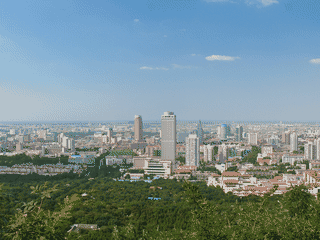

Jinan
East Asia · China
Did you know?
- The short-trip city-center route runs from Daming Lake through Quancheng Square to Qianfo Mountain.
- Artesian springs feed Daming Lake before flowing onward to the Yellow River.
- Shandong cuisine centers soups, seafood, maize, peanuts, and breads.
See also
Overview
Jinan carries the nickname City of Springs. Its artesian wells bubble up within the city limits, flow north to Daming Lake, and continue to the Yellow River.
Languages: Chinese
Why Go
Jinan carries the nickname City of Springs (泉城 quánchéng) because of the many artesian wells that bubble up within the city limits, flowing north to Daming Lake and onwards to the Yellow River. While it doesn't always make the short list for tourists visiting China, there is enough to warrant a couple days' stay with major attractions like Baotu Spring (the number one spring under heaven), Daming Lake Park, and Qianfo Mountain all within the central north-south stretch. Jinan is also a perfect base for exploring Shandong Province, notably Qufu (hometown of Confucius) and Mount Tai (foremost of the Five Great Mountains).
Adapted from Wikivoyage contributors · CC BY-SA 4.0
When to Go
Jinan has four well-defined seasons: spring is dry, summer is hot and wet with temperatures reaching 32°C in July, autumn is crisp and pleasant, and winter is dry and cold with little snow (averaging -4.6°C in January). The shoulder seasons of spring and autumn offer the most comfortable temperatures for sightseeing, though summer brings lush scenery and autumn showcases colorful foliage at spots like Red Leaves Valley.
Adapted from Wikivoyage contributors · CC BY-SA 4.0
Getting In
Jinan is the regional transport hub with high-speed rail running on both north-south and east-west lines. Jinan Station serves the Qingdao-Jinan High-Speed Railway and is most convenient for destinations like Zibo and Qingdao, located in the city center near Quancheng Square. Jinan West Station handles Beijing-Shanghai High-Speed Railway services but is approximately 45 minutes from the city center. Jinan East Station serves trains to Shijiazhuang but is closer to the airport. Jinan Yaoqiang International Airport is a small but modern facility far to the northeast of the city center.
Adapted from Wikivoyage contributors · CC BY-SA 4.0
Getting Around
Jinan is a very large city and traveling by public transport is very difficult for non-Chinese speakers, with the exception of the Jinan Metro. The city center can be explored on foot along the north-south stretch from Daming Lake through Quancheng Square to Qianfo Mountain. Bus services exist but require Mandarin skills to navigate effectively.
Adapted from Wikivoyage contributors · CC BY-SA 4.0
Where to Stay
Plenty of accommodation is available in the ¥200 range, with options spanning budget to luxury. The transport nexus near Jinan Train Station offers convenient access for arrivals but is somewhat removed from the main tourist sites. For tourists, the area around Quancheng Square and Daming Lake offers the best location for walking to major attractions. There is a complex of surprisingly affordable fancy hotels in the southeast of the city at the end of Lishan Lu, offering five-star services and beautiful grounds for approximately US$70-80.
Adapted from Wikivoyage contributors · CC BY-SA 4.0
Food and Drink
The cuisine of Shandong province (LuCai) is one of China's eight great culinary traditions, with local dishes typically featuring soup (a particular focus of Jinan-style cuisine), seafood, maize, peanuts, and breads in place of rice. Many visitors may find these tastes unusual if their previous experience of Chinese food is mainly from Cantonese-style restaurants abroad. For non-Chinese speakers, canteens, food halls, and restaurants within shopping centers are more convenient options. Furong Street is Jinan's famous food street with scores of traditional restaurants, canteens, bakeries and stalls. Vegetarians and vegans face special difficulties as traditional restaurants have few options. Street barbecues and small beer shops with miniature chairs and tables are popular evening gathering spots.
Adapted from Wikivoyage contributors · CC BY-SA 4.0
Things to Do
Travelers on a short trip should focus on the city center, particularly the north-south stretch from Daming Lake through Quancheng Square to Qianfo Mountain. Must-see attractions include Baotu Spring Park (¥40/20 for regular/student tickets) surrounding the 'number one spring under heaven,' Daming Lake Park (free entrance, boat rides around ¥20), and Qianfo Mountain Scenic Spot with its enormous golden Buddha and city views. Many museums are free to visit but identification is required. For day trips, consider Lingyan Temple (one of the most important temples in China during the Tang dynasty) or the Jinan International Garden Expo Park (¥60).
Adapted from Wikivoyage contributors · CC BY-SA 4.0
Safety
Jinan is a very safe city; the people of Shandong are famously known as friendly throughout China. The city center and commercial areas are safe to walk around until late at night, with large numbers of people about until around 22:00 when streets quickly empty. Theft and pickpocketing are the most likely crimes a traveler might encounter, particularly on public transport, in markets, and at transport hubs like Jinan Train Station. Always keep bags and purses in a monitored position and maintain sight of luggage.
Adapted from Wikivoyage contributors · CC BY-SA 4.0
Connectivity
Jinan's area code for landlines is 0531, adding "0531" at the beginning if calling from outside the city. For international calls add +86, China's country code. Internet cafés are fewer than in some other large Chinese cities. Many bars catering to expatriates and chains like Starbucks, KFC, and McDonald's offer free WiFi, as do most hotels. The Great Firewall of China blocks Facebook, Twitter, YouTube, Google, and Yahoo. Partially blocked sites include Wikipedia, BlogSpot, WordPress, and Tumblr. Travelers commonly use VPN services to access blocked websites and secure public WiFi connections.
Adapted from Wikivoyage contributors · CC BY-SA 4.0
Budget
Budget travelers can eat well for under ¥15 at street food stalls and canteens, with meals at traditional restaurants ranging ¥15-40. Museum entrances are often free (ID required) or modest fees like ¥5-40. Accommodation ranges from ¥130-170 for budget hotels like Jinjiang Inn, to ¥200+ for mid-range options. High-speed rail to nearby cities like Tai'an for Mount Tai is economical and efficient. Daily budget of ¥200-350 covers accommodation, meals, transport, and attractions.
Adapted from Wikivoyage contributors · CC BY-SA 4.0
Day Trips
Jinan is a great base for exploring Shandong Province. Mount Tai (Tai'an) is a short train ride away and hosts a UNESCO World Heritage Site. Qufu contains the Confucius Manor, Temple and Graveyard, also a UNESCO World Heritage Site. Qingdao, Shandong's second city, is known for its internationally known Chinese beer brand and former German colonial architecture. Closer options include Pinyi County home to the Guinness World Records approved largest dinosaur museum, the Tianyu Natural Museum. Lingyan Temple in Changqing District is one of the most important temples in China during the Tang dynasty.
Adapted from Wikivoyage contributors · CC BY-SA 4.0
Etiquette
When visiting temples and religious sites like the Hongjialou Catholic Church, men are required to wear full-length trousers. Many museums require identification (passport) for entry, so carry it at all times. As with anywhere in China, removing shoes in certain traditional settings may be expected. Spring water from the famous springs can be collected by locals; observe local practices when visiting Black Tiger Spring and other spring sites.
Adapted from Wikivoyage contributors · CC BY-SA 4.0
Go Next
The Beijing-Shanghai railway makes major cities easily reachable from Jinan: Beijing to the north, Shanghai to the south, Tianjin to the northeast, and Zhengzhou to the west. Destinations in Shandong include Qingdao (east, known for Tsingtao beer and German colonial heritage), Qufu (home of Confucius, UNESCO site), Tai'an (Mount Tai, UNESCO site), Zibo (interesting museums), and Dezhou (famous chicken dish). Pinyi County offers the Tianyu Natural Museum with the Guinness World Records approved largest dinosaur museum.
Adapted from Wikivoyage contributors · CC BY-SA 4.0
Field guide adapted from Wikivoyage contributors · CC BY-SA 4.0. Text has been adapted and organized for this guide. About our sources.
Places to know
A few starting points from the guide. Check current hours and prices before you go.
- eat
Bon Appetit
Authentic Italian food. Pastas, pizzas and entrees from ¥70 served in an elegant atmosphere. Most of the staff speaks English and there's an English menu.
Recorded price: Over ¥40
Adapted from Wikivoyage contributors
- eat
Daguanyuan
A shopping mall with fast food chains on the street, restaurants serving regional Chinese cuisines within an inner courtyard, and alleys of simple food stalls.
Adapted from Wikivoyage contributors
- eat
Furong Street
Jinan's famous food street, a long narrow alley with traditional buildings holding scores of restaurants, canteens, bakeries and stalls. Foods range from traditional dishes and snacks to experimental desserts.
Adapted from Wikivoyage contributors
- eat
Liancheng International Branch
Inside the Liancheng International shopping mall.
Adapted from Wikivoyage contributors
- eat
Liancheng International Shopping Centre
Multi-storey shopping centre with a range of restaurants including a second branch of Tales of a Small Town, plus a food hall in the basement.
Adapted from Wikivoyage contributors
- eat
Lydia restaurant
An Italian restaurant. Favorite place of foreign students and young Chinese. The food is not as good and tasty as in Jenny's, but cheaper.
Recorded price: About ¥40 for a lunch with drinks
Adapted from Wikivoyage contributors
- eat
Meishi Street
Food street with restaurants and a snack center.
Adapted from Wikivoyage contributors
- eat
Muslim Quarter
The authentic Muslim Quarter (Huimin Qu) is set among busy alleys in the city block immediately to the West of Baotu Spring. There are many barbecue restaurants where one may eat lamb and drink beer; many have outdoor seating with tiny chairs and tables. There are a couple of mosques and market stalls with fresh fruits, vegetables, cloth and trinkets.
Adapted from Wikivoyage contributors
Before you go
Connectivity
Area code is 0531. Free WiFi common at cafes and hotels. VPNs needed for Google, Facebook, Twitter, YouTube. SIM cards available from China Mobile, China Unicom, or China Telecom.
Culture
Shandong cuisine (LuCai) is one of China's eight great culinary traditions, featuring soup, seafood, maize, and breads. Many temples and springs to visit. Respect local customs at religious sites.
Entry
China visa required for most nationalities. Jinan Yaoqiang Airport serves domestic and some international flights. High-speed rail connections to Beijing, Shanghai, Tianjin, and across Shandong Province.
Language
Mandarin Chinese is spoken. English is limited outside tourist areas, hotels, and major shopping centers. Learning basic phrases or using translation apps is recommended.
Money
China's currency is the Chinese Yuan (CNY/¥). ATMs are widely available. Most hotels, restaurants, and shops accept mobile payments like Alipay and WeChat Pay which are standard for foreigners with linked bank cards.
Safety
Jinan is very safe with friendly locals. Streets are busy until around 22:00. Watch for pickpockets on public transport and at markets. Keep luggage in sight at train stations.
Transport
Jinan is a large city with high-speed rail hub. Metro exists but other public transport is difficult without Mandarin. Taxis and Didi ride-hailing are useful.
Weather
Four distinct seasons: dry spring, hot wet summer (up to 32°C), crisp autumn, dry cold winter (-4.6°C average in January). Best visiting seasons are spring and autumn.