Irkutsk
Eastern Europe and the Balkans · Russia
Did you know?
- The Angara icebreaker was built in Newcastle in 1900.
- Hand-carved wooden houses preserve the legacy of Decembrist exile.
- Buryat cafés serve large steamed dumplings called pozzy or boozy.
See also

Ulan Ude
Russia51.83°N 107.60°E · 500 m
Overview
Irkutsk is a gateway to Lake Baikal and a major stop on the Trans-Siberian Railway. Ornate wooden houses built by Decembrist exiles add historic character among Soviet-era blocks.
Languages: Russian
Why go?
Irkutsk is the gateway to Lake Baikal and a major stop on the Trans-Siberian Railway. The city preserves ornate 19th-century wooden houses built by Decembrist exiles, standing in contrast to Soviet concrete blocks. Around 1900, Irkutsk was nicknamed the "Paris of Siberia" for its wide streets and continental architecture. Today it remains the cultural center of Eastern Siberia with universities and a branch of the Russian Academy of Sciences.
Adapted from Wikivoyage contributors · CC BY-SA 4.0
Understand
Founded in 1661 as a gold and fur trading settlement, Irkutsk gained prominence after the Decemberist Revolt of 1825 when many Russian nobles were exiled here. By the late 1800s, 30% of the population were exiles, making the city a center of intellectual and social life. The Decembrist wooden houses with hand-carved decorations still survive today. During the Russian Civil War (1917-1922), Irkutsk saw fierce fighting between Whites and Reds; Admiral Kolchak was executed here in 1920.
Adapted from Wikivoyage contributors · CC BY-SA 4.0
Getting in
Irkutsk International Airport (IKT) is 5km east of the city center with direct flights from Moscow, Saint Petersburg, Vladivostok, Novosibirsk, Ulan Ude, and international connections to Ulaanbaatar, Seoul, Bangkok, Beijing, and Tashkent. The Irkutsk-Passenger Railway Station handles Trans-Siberian trains from Novosibirsk (west) and Ulan Ude (east), plus suburban lines to Bajkalsk, Bolshoy Lug, and Slyudyanka. Daily trains take 36 hours to reach Ulaanbaatar in Mongolia.
Adapted from Wikivoyage contributors · CC BY-SA 4.0
Getting around
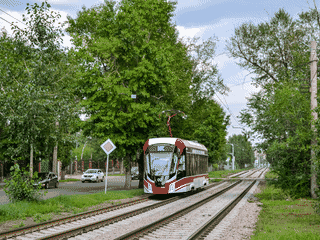
The city has a mapframe for navigation. Local transport includes minibuses (marshrutkas) numbered 6, 16, 20, 72, 77, 80, 80к, 116 and trams lines 1, 2, 4а. Minibuses connect to the train station at Ul. Chelnokova. The historic center is walkable with most wooden buildings and churches in the central district.
Adapted from Wikivoyage contributors · CC BY-SA 4.0
When to go
Irkutsk experiences extreme continental climate: January averages -19°C while July reaches 18°C. Early September offers spectacular fall foliage. Winter (November to March) brings heavy snow and temperatures dropping below -20°C, creating beautiful ice sculptures in Central Park. Summer is warm with occasional rain. The best time for sightseeing is late spring through early fall.
Adapted from Wikivoyage contributors · CC BY-SA 4.0
Where to stay
Irkutsk offers several hostels near the train station and old town: 52°17' Travelcenter & Hostel on Gryaznova 15A, Baikal Hostel on Lermontova 136, Magic Hostel on Timiriazeva St 5th floor, and Nerpa Backpackers Hostel near Sportivniy lane. Budget dorms start around 700 RUB. Airbnb and private rooms are popular alternatives. The Angara Hotel near Kirov Square offers mid-range options, while the Courtyard by Marriott provides international standards.
Adapted from Wikivoyage contributors · CC BY-SA 4.0
Food and drink
Lake Baikal fish are local specialties: Omul, Sig, and Kharius (cold or hot smoked) available in restaurants and markets. Central or New market (Noviy Rinok) sells fish and caviar. Buryat cuisine features big steamed dumplings called pozzy (or boozy) at Amrita cafés—a cheap fast-food chain. Korean and Chinese restaurants like Seul on Dekabrskikh Sobytiy and Mongolian Kochevnik on Gorkogo St offer regional variety. Buryat balsams "Buryatia" and "Amrita" cost about 180 RUB per 0.75L.
Adapted from Wikivoyage contributors · CC BY-SA 4.0
Things to do
Museums include the City History Museum (ul Frank-Kamenetskogo 16А) and Irkutsk Regional Museum (Ul. Karla Marksa 2) with exhibits on indigenous peoples and the 20th century. The Decembrist House-Museum (Per. Volonskoho 10) shows exile life. Sukachev Art Museum houses Siberia's best fine art collection. For religious sites, the 1718-1746 Epiphany Cathedral and 1689 Znamensky Monastery are notable. Ice-breaker "Angara" at Solnechy is the world's oldest steam ice-breaker, built in 1900 in Newcastle.
Adapted from Wikivoyage contributors · CC BY-SA 4.0
Day trips
Lake Baikal is one hour by train or 1.5 hours by bus from Irkutsk—the closest access point is Listvyanka village. The Architectural-Ethnographical Museum "Tal'tsy" (45 minutes by bus toward Listvyanka) displays relocated 17th-19th century wooden buildings. The Circum-Baikal Railway departs from Irkutsk port, with Slyudyanka as the southmost village. Olkhon island offers breathtaking views, while Arshan Resort in Buryatia provides mineral hot springs accessible by marshrutka from the bus station.
Adapted from Wikivoyage contributors · CC BY-SA 4.0
Go next
Listvyanka is the closest village to Lake Baikal—buy bus tickets online or at ulitsa Oktyabrskoy Revolyutsii 11. Irkutsk port serves boats to Ust-Barguzin, Nizhneangarsk, Bolshoye Koty, and port Baikal. The Trans-Siberian Railway continues west to Novosibirsk via Angarsk and east to Ulan Ude via Slyudyanka. Daily trains reach Ulaanbaatar, Mongolia after 36 hours. Charter boats and the Circum-Baikal Railway offer scenic lake routes.
Adapted from Wikivoyage contributors · CC BY-SA 4.0
Buy
Typical Siberian souvenirs include wood carvings, birchwood boxes, and lacquer boxes available at the Regional Museum gift shop (Ul. Karla Marksa 2). Kamusi (fur winter boots) can be purchased at shop "Aikhal" across from the bus station at Ul. Oktyabrskoi Revolyutsii 20B, starting at 3000 RUB. Central market and souvenir stalls at hotels offer additional options.
Adapted from Wikivoyage contributors · CC BY-SA 4.0
Connectivity
Mobile providers include Beeline, MTS, MegaFon, and Tele2 with coverage throughout the city. SIM cards are widely available. WiFi is common in cafes, hostels, and hotels. Russian power sockets use Type F (two-pin, grounded) at 220V/50Hz—European-style adapters needed.
Adapted from Wikivoyage contributors · CC BY-SA 4.0
Field guide adapted from Wikivoyage contributors · CC BY-SA 4.0. Text has been adapted and organized for this guide. About our sources.
Places to know
A few starting points from the guide. Check current hours and prices before you go.
- eat
Amrita
Buryat fast food chain serving big steamed dumplings (pozy) - cheap, tasty, eaten with hands
Adapted from Wikivoyage contributors
- eat
Broadway
European and Russian cuisine with dance floor at nights
Adapted from Wikivoyage contributors
- eat
Figaro
Italian food with great service.
Adapted from Wikivoyage contributors
- eat
Kochevnik
Nice Mongolian restaurant with a relaxing atmosphere.
Adapted from Wikivoyage contributors
- eat
Seul
Korean and Chinese food
Adapted from Wikivoyage contributors
- see
Antipina Estate
Adapted from Wikivoyage contributors
- see
Atafonova Estate
Adapted from Wikivoyage contributors
- see
Babr Sculpture
The coat of arms of Irkutsk.
Adapted from Wikivoyage contributors
Before you go
Language
Russian is the primary language. English is limited outside tourist areas and hotels. Basic Russian phrases help significantly. Some hostel staff speak English.
Money
Russian ruble (RUB) is the local currency. Cards accepted in hotels and larger restaurants; cash preferred in markets and smaller establishments. ATMs available throughout the city center.
Safety
Irkutsk is generally safe for travelers. Standard urban precautions apply in nightlife areas. Winter requires warm clothing and caution on icy streets.
Transport
Marshrutkas (shared minibuses) are common and cheap; trams serve central areas. Train station is central, airport is 5km east. Bus tickets to Listvyanka available online or at Oktyabrskoy Revolyutsii station.
Weather
Extreme continental climate: January averages -19°C (down to -30°C), July around 18°C. Early September has peak fall foliage. Winter brings heavy snow and ice sculptures in Central Park.