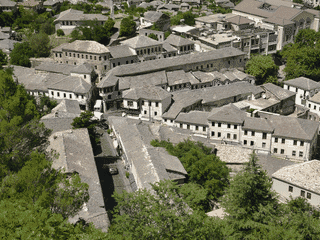

Gjirokastër
Eastern Europe and the Balkans · Albania
Did you know?
- Zekate House showcases Ottoman tower-house architecture.
- The Cold War Museum occupies a bunker beneath the castle.
- Qifqi combines rice, egg and seasoning in a local specialty.
See also
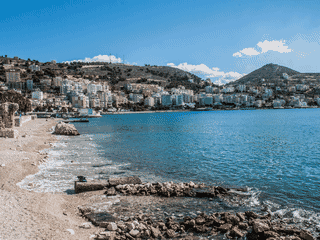

Sarandë
Albania39.88°N 20.01°E · 0 m
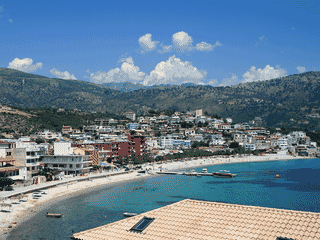

Himarë
Albania40.12°N 19.73°E · 90 m
Overview
Gjirokastër has steep cobbled streets lined with grey-slate tower houses. A living bazaar and fortress bring commerce and history into an atmospheric old-town visit.
Languages: Albanian
Why go?
Gjirokastër is a UNESCO World Heritage Site preserving one of the Balkans' most distinctive Ottoman-era townscapes: steep cobbled streets lined with grey-slate tower houses, a living bazaar, and a fortress that hosts Albania's National Folk Festival every five years. It delivers history, architecture, and local cuisine (qifqi, white cheese) at a fraction of Balkan tourist prices, making it ideal for 1-3 night stays between Berat and Sarandë.
Adapted from Wikivoyage contributors · CC BY-SA 4.0
Getting there
Gjirokastër has no airport; most travelers arrive by bus or furgon (shared minibus) from Tirana (~4 hours), Berat (~3 hours), or Sarandë (~1.5 hours). The Regional Bus & Furgon Station sits at the northwest town entrance where the main boulevard meets the National Road—buses and furgons gather along the shoulder rather than at a formal terminal.
Adapted from Wikivoyage contributors · CC BY-SA 4.0
Getting around
Gjirokastër splits into the old town on a steep hill and the new town in the valley. Able walkers can reach most sites on foot via cobbled lanes; a public bus circuit connects old and new town for about 30 leke. The flat 10-minute walk from the central roundabout to the bus station along the main boulevard is easy. Taxis cost around 200 leke for the same trip.
Adapted from Wikivoyage contributors · CC BY-SA 4.0
When to visit
Spring (April-June) and early autumn (September-October) offer mild weather for walking the hilly old town. The Gjirokaster National Folk Festival, held every five years in the castle, is a major draw—the last took place in June 2023. Raki Mani (mulberry raki) is best sought in June or July. Winter visits are quieter but some sites may have reduced hours.
Adapted from Wikivoyage contributors · CC BY-SA 4.0
Where to stay
Accommodation clusters near the Old Bazaar and the castle approach. Budget options include Hotel Sopoti (1,000 leke/person, shared bathrooms, basic rooms with castle-view balconies) and Stone City Hostel (air-conditioned dorms and private rooms with free WiFi and a roof terrace). Mid-range choices like Kotoni B&B (€30) and Hashorva Guesthouse (€20/night in a 200-year-old Ottoman room) offer more character. Hotel Relax near Sheshi i Çerçizit offers doubles from €25 including breakfast.
Adapted from Wikivoyage contributors · CC BY-SA 4.0
Food and drink
Gjirokastër is known for qifqi (baked rice, egg, and seasoning dish) and dairy products, especially white cheese. Restaurant Tradicional Odaja in the old town serves traditional Albanian fare with baked cheese with honey and sesame. Kujtim's and Fantazia offer local specialties with city views. For budget eating, try the Byrek Shop or Muço's Suflaç for morning omelets. Raki Mani (mulberry raki) is a local specialty most available in June-July.
Adapted from Wikivoyage contributors · CC BY-SA 4.0
Things to do
The Gjirokastër Castle (400 leke entrance) is billed as the second-largest in the Balkans; its Armaments Museum (200 leke extra) displays WWII-era German and Italian field guns. The Ethnographic Museum (200 leke with guided tour) was Enver Hoxha's former house. The Old Bazaar preserves 18th-20th century commerce, while monumental tower houses like Zekate House in the Palorto quarter showcase Ottoman residential architecture. The Cold War Museum in an underground bunker beneath the castle has around 70 rooms.
Adapted from Wikivoyage contributors · CC BY-SA 4.0
Safety
Gjirokastër is a small Albanian town generally considered safe for tourists. Standard urban precautions apply: watch for traffic on steep streets, secure valuables in crowded bazaar areas, and use registered taxis. Albania's road safety standards can be poor on rural routes when venturing to day-trip destinations.
Adapted from Wikivoyage contributors · CC BY-SA 4.0
Connectivity
WiFi availability is limited; one budget accommodation notes that WiFi passwords given to guests connect to a nearby café too far away to work except between 03:00-06:00. Most hostels and hotels offer some connectivity but inquire before booking. Power plugs use two-prong European-style sockets (Type C/F) at 220V.
Adapted from Wikivoyage contributors · CC BY-SA 4.0
Budget planning
A backpacker can manage on 1,500-2,500 leke/day including dorm bed (800-1,200 leke), street food meals (200-500 leke each), local bus fares (30 leke), and one or two museum entrances (200-400 leke each). Mid-range travelers spending €25-40/night on private rooms and eating at sit-down restaurants should budget 3,000-5,000 leke daily.
Adapted from Wikivoyage contributors · CC BY-SA 4.0
Day trips
Several ancient and historic sites lie within 20 km: Sofratike (14 km southeast) has a Roman theater and baths; Kardhiq (20 km northwest) preserves an ancient castle; Paleokaster (12 km north) is an abandoned ancient village. The hike to the Illyrian city of Antigone (3-hour round trip from Asim Zeneli village, 6 km east) requires a local shepherd guide. Libohove village southeast has Myfit Bey Sarajet, Ali Pasha Tepelena's family tombs, and a 400-year-old olive tree.
Adapted from Wikivoyage contributors · CC BY-SA 4.0
Go next
Southwest lies Sarandë (55 km, ~1.5 hours) with its beaches and access to Butrint. Northwest is Përmet (60 km, the "City of Roses" in the Vjosa River Valley, known for wine and raki). North via Këlcyrë leads to Berat (120 km, UNESCO heritage "City of a Thousand Windows" and Osum Canyon). East via the Greek border crossing reaches Ioannina (90 km) in Greece. Korçë (190 km northeast) offers summer parks and Moravia mountain hikes.
Adapted from Wikivoyage contributors · CC BY-SA 4.0
Field guide adapted from Wikivoyage contributors · CC BY-SA 4.0. Text has been adapted and organized for this guide. About our sources.
Places to know
A few starting points from the guide. Check current hours and prices before you go.
- sleep
Hashorva Guesthouse
The Hashorva Family, a well established name in the Lagjia Varosh Neighborhood, offers one very large, faithfully restored traditional Ottoman Era room, with a double bed and sitting area. The house is over 200 years old and is kept in wonderful condition by its original owners. Naturally cool in the summer, the guest bathroom is off the main hallway with 24-hour hot water and modern facilities. It's in the heart of Gjirokastër, an easy 5 to 15 minutes walk from all the major sites of Historic Old Town and 10 minutes walk to the new town and the bus station on the National Road. The large guest room is €20/night - it has a large double bed, a single bed off to the side. (Payment can be made by cash only in Albanian lek, euros or US dollars - Or you can book in advance online using a credit card at http://www.hostelworld.com/)
Adapted from Wikivoyage contributors
- sleep
Hotel Gjirokaster
Modeled after a traditional Ottoman House. Excellent location that is half-way between the castle and the market area. Friendly staff and free breakfast included.
Adapted from Wikivoyage contributors
- sleep
Hotel Relax
9 double rooms and 1 suite, with A/C. This wonderful hotel lies at the foot of the hilly center of beautiful Gjirokaster. It is a small hotel owned by a very sweet family. The father handles business, and is helped by his nice teenage daughter. They are incredible friendly and the hotel is very clean and has everything you need, including a cosy sitting area and balcony, overlooking the square. There is a bar downstairs, also owned by the family, so after visiting Gjirokaster it is perfect to relax and have a drink.
Recorded price: €25 inc. breakfast [Sep 2011]
Adapted from Wikivoyage contributors
- sleep
Hotel Sopoti
A formerly grand hotel, it feels somewhat forgotten; rooms are basic, ask for one with a balcony to get a view of the castle, bathrooms are shared. The manager of the hotel is a refined older gentleman who also runs the bar/kafe downstairs. He knows some English.
Recorded price: 1000 leke/person
Adapted from Wikivoyage contributors
- sleep
Kotoni Bed&Breakfast
The first guest house in Gjirokastra, since 1992, comes up with more traditional rooms and a characteristic restaurant. Each room has coloured satellite TV, bathroom, heating. 200 m from the old bazaar, you can have a great view of the old and new part of the town.
Recorded price: €30
Adapted from Wikivoyage contributors
- sleep
Stone City Hostel
Run by American sweetheart Brenna, crazy Dutchman Walter and a mix of well travelled locals and foreigners. It has a shaded garden with fruit trees, a huge roof terrace and brilliant views of the castle. Inside there's a nicely furnished and big common room with a fully equipped kitchen and nice places to chill out. There are three dorms and one double room, all with air-conditioning and custom made beds with large lockers underneath. Free Wi-Fi, free use of computers, and a bar full of cold drinks.
Adapted from Wikivoyage contributors
- eat
Fantazia
Pizza and salad specialist with good views of the city alongside traditional Albanian fare.
Adapted from Wikivoyage contributors
- eat
Kujtim's
Serves a wide variety of Gjirokastrian specialties in the old town.
Adapted from Wikivoyage contributors
Before you go
Accommodation
Budget dorm beds run 800-1,200 leke; mid-range private rooms in traditional guesthouses €20-30. Hotel Sopoti offers the cheapest verified option at 1,000 leke/person with shared facilities.
Connectivity
WiFi is not reliably available in budget accommodations. Ask specifically before booking. European two-prong plugs (Type C/F) at 220V.
Food
Local specialties: qifqi (rice dish) and white cheese. Traditional restaurants like Odaja serve local fare; bakeries and byrek shops provide cheap eats from ~200 leke.
Money
Albanian lek is the local currency; euros and US dollars are sometimes accepted in tourist-oriented establishments but expect better rates using lek. Cash is preferred; credit card acceptance is limited outside major hotels.
Transport
Taxis around town cost ~200 leke; public buses run old-to-new town for ~30 leke. The bus station is a informal gathering point on the National Road rather than a formal terminal—ask locals where to catch departures.
Weather
Best visited April-June or September-October for comfortable walking weather. Summers are warm but manageable; winters can be cold and some sites have reduced hours.