Zwickau
Western Europe · Germany
Did you know?
- Coal and silver mining shaped the economy long before the industrial revolution.
- Bürgersteak is pork filled with ham, gherkin, onions and mustard.
- The August-Horch-Museum traces Auto Union, Sachsenring and Trabant motoring history.
See also
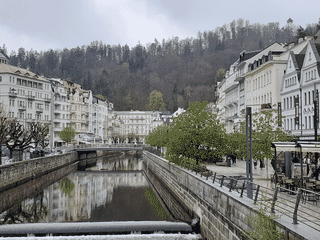

Karlovy Vary
Czechia50.23°N 12.87°E · 447 m
Overview
Zwickau pairs a medieval old town with a history of coal and silver mining. Its small-town feel suits an unhurried look at this corner of Saxony.
Languages: German
Why go?
Zwickau is a historic Saxon city of approximately 90,000 inhabitants, offering a small-town feel in a region of around 500,000. Its economy was historically based on coal and silver mining, predating the industrial revolution by centuries, which is why the city retained a very medieval old town. Unlike modernist Chemnitz, baroque Dresden, or busy Leipzig, Zwickau offers particular charm and architectural heritage that survived the communist era.
Adapted from Wikivoyage contributors · CC BY-SA 4.0
Understand
Zwickau's history dates back almost 900 years, beginning as a Slavic settlement called Šwikawa in Sorbian (referring to the pagan god Svarozič). The city sits beside the river Zwickauer Mulde, a tributary of the larger Mulde which flows into the Elbe. Zwickau was the birthplace of 19th-century composer Robert Schumann and of automotive makes including Horch and its junior brand Audi, as well as the post-war East German Trabant. Volkswagen, now owner of Audi, has built a factory in town.
Adapted from Wikivoyage contributors · CC BY-SA 4.0
Get in
Zwickau Hauptbahnhof serves as the main railway station. The city is accessible via Autobahn and rail connections from major Saxon cities. Nearby destinations include Plauen (approx. 30 min), Chemnitz (approx. 30 min), Dresden (approx. 1 hour by car, 1½ hours by train), and Leipzig (approx. 1½ hours by car, 1 hr 15 min by train).
Adapted from Wikivoyage contributors · CC BY-SA 4.0
Get around
Zwickau has a tram system operating on multiple lines including trams 4 and 7. The city has implemented map shapes for navigation. Bus services supplement the tram network, with routes such as buses 17 and 22 serving various areas including stops near the August-Horch-Museum.
Adapted from Wikivoyage contributors · CC BY-SA 4.0
When to go
Zwickau can be visited year-round. The city features various events and festivals throughout the year. The first Thursday of each month the August-Horch-Museum extends hours until 20:00, offering an opportunity for evening visits.
Adapted from Wikivoyage contributors · CC BY-SA 4.0
Where to stay
Accommodation options in Zwickau range from budget to mid-range. AMEDIA Hotel (€46) is in an industrial district near railway tracks. Hotel Merkur Garni (€44) is family-run, close to Hauptbahnhof, offering breakfast only. Hotel Park Eckersbach (€40) is in the east, a considerable distance from the city centre. ACHAT Comfort Hotel Zwickau (€51) is in the north near the August Horch Museum and Neue Welt concert hall. Holiday Inn Zwickau (€71) is centrally located at Klosterstraße/Kornmarkt.
Adapted from Wikivoyage contributors · CC BY-SA 4.0
Food and drink
The Zwickauer Bürgersteak is a local specialty: a pork back steak filled with ham, gherkin, onions, and mustard, fried in an egg shell. Restaurants include Citylight (Hauptmarkt 17/18), Basilikum (Leipziger Straße 180), Brasserie Philine's (Klosterstraße 1), No.9 (Am Kornmarkt 9), Remarque (Bahnhofstraße 19), Alte Mühle (Gewandhausstraße 7), Gasthaus 1470 (Marienstraße 50), and Schnitzelparadies (Johannisstraße 16). Nightlife options include Barocco Bar, Stardust, ALEX (Hauptmarkt 11/12), and various ice cream parlors like EisKult and Gran Gelato.
Adapted from Wikivoyage contributors · CC BY-SA 4.0
Things to do
The August-Horch-Museum (Audistraße 7) displays over 3,000 m² of automotive history, focusing on the former Auto Union brands (Audi, DKW, Horch, Wanderer), Sachsenring, and Trabant vehicles. Entry costs €5.50 (€3.50 reduced), with audio guides available for €2.50 extra. Volkswagen Sachsen GmbH offers factory tours (Fahrzeugwerk Zwickau) of the assembly plant building Golfs and Passats, available Monday-Friday 09:30-12:00 for groups of 10-25 people (minimum age 14). The city features historic churches including Marienkirche (Zwickauer Dom), St. Katharinenkirche (Gothic, 15th century), Moritzkirche (neogothic, 1890s), and Lutherkirche (Jugendstil/art nouveau, early 1900s).
Adapted from Wikivoyage contributors · CC BY-SA 4.0
Buy
The Zwickau Arcaden shopping gallery fills an entire block in the old town featuring major retail chains. The large parking facility accepts both cash and most cards, useful for travelers arriving by car.
Adapted from Wikivoyage contributors · CC BY-SA 4.0
Go next
Zwickau is in the west of Saxony. Nearby Saxon cities include Plauen (approx. 30 min via Autobahn or train), Chemnitz (approx. 30 min), Dresden (approx. 1 hour by car, 1½ hours by train), and Leipzig (approx. 1½ hours by car, 1 hr 15 min by train). In Thuringia and Bavaria: Gera (40 min by road, 1 hour by train via Gößnitz), Jena (1 hour by road, 1½ hours by train via Gößnitz), and Hof in Franconia (less than 1 hour by car, just over 1 hour by train).
Adapted from Wikivoyage contributors · CC BY-SA 4.0
Safety
Zwickau is generally a safe city for travelers. Standard urban precautions apply regarding personal belongings and awareness in less frequented areas at night.
Adapted from Wikivoyage contributors · CC BY-SA 4.0
Connectivity
Germany uses Type F Schuko power plugs (220V/50Hz). Mobile network coverage is provided by major German carriers with 4G/LTE available in urban areas.
Adapted from Wikivoyage contributors · CC BY-SA 4.0
Field guide adapted from Wikivoyage contributors · CC BY-SA 4.0. Text has been adapted and organized for this guide. About our sources.
Places to know
A few starting points from the guide. Check current hours and prices before you go.
- eat
Alte Mühle
Adapted from Wikivoyage contributors
- eat
Am Kreuzberg
Adapted from Wikivoyage contributors
- eat
An der Reitbahn
Adapted from Wikivoyage contributors
- eat
Basilikum
Adapted from Wikivoyage contributors
- eat
Brasserie Philine's
Adapted from Wikivoyage contributors
- eat
Citylight
Adapted from Wikivoyage contributors
- eat
Gasthaus 1470
Adapted from Wikivoyage contributors
- eat
Gasthof Schneppendorf
Adapted from Wikivoyage contributors
Before you go
Accommodation
Budget accommodation ranges from €40-50 (Hotel Park Eckersbach, Hotel Merkur Garni, AMEDIA Hotel) to mid-range at €51-71 (ACHAT Comfort, Holiday Inn).
Food
Local specialty is the Zwickauer Bürgersteak (pork back steak with ham, gherkin, onions, mustard in egg shell). Restaurant meals typically €10-20.
Language
German is the local language. English is spoken at tourist facilities and younger population. Basic German phrases are appreciated.
Money
Germany uses the Euro (€). ATMs are widely available. Credit cards are accepted at most hotels, larger restaurants, and the Zwickau Arcaden shopping center.
Transport
Zwickau Hauptbahnhof is the main railway hub. The city has a tram network (lines 4, 7) and bus services. Connections to nearby cities via Autobahn and rail.