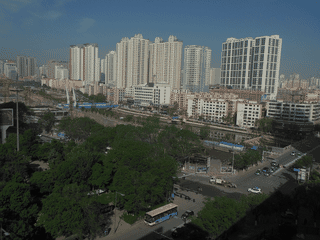

Xining
East Asia · China
Did you know?
- Mojia Market serves bing, liangpi noodles, and yoghurt from early morning.
- A 600-meter thangka is housed at the Qinghai Tibetan Culture Museum.
- Dongguan Mosque and halal street food reveal the city's Hui Muslim culture.
See also
Overview
Xining sits at 2,270 meters on the Yellow River and leads toward the Tibetan Plateau. Hui Muslim culture, halal food, and growing Tibetan influence shape the city and its nearby excursions.
Languages: Chinese
Why Go?
Xining sits at 2,270 m elevation on the Yellow River as the capital of Qinghai Province, serving as one of the main gateways to the Tibetan Plateau. The city blends Hui Muslim culture—evident in the Dongguan Mosque and halal street food—with growing Tibetan influence as you move toward Kumbum Monastery. For backpackers, it's a critical transit hub: the Qinghai-Tibet Railway begins here, connecting to Lhasa via the world's highest rail line, while budget-friendly hotels and ¥3-5 street snacks make it affordable for extended stays.
Adapted from Wikivoyage contributors · CC BY-SA 4.0
Getting In
Xining Caojiabao Airport (15 km south-southeast) handles flights from Beijing, Chengdu, Chongqing, Golmud, Guangzhou, Lhasa, Shanghai, Shenyang, Urumqi, and Xi'an, though international flights require connections. Xining Railway Station on 128 Huzhu Road marks the start of the Qinghai-Tibet Railway, with connections to both high-speed and conventional rail networks; arrive early for ticket purchases as queues are often long. Long-distance buses depart from the station area next to the railway station.
Adapted from Wikivoyage contributors · CC BY-SA 4.0
Getting Around
Xining's public bus system covers the city extensively with routes 1, 5, 7, 9, 11, 16, 20, 27, 28, 31, 40, 103, 104, and 107 serving the railway station area. Major museums and attractions are reachable by bus: routes 12, 18, 22, 24, 29, 35, 38, 41, 102, 106, and T2 serve the museum district on Xiguan Street. Tourist buses connect to outlying attractions like Kanbula Forest Park and Qinghai Lake, with the first tourist bus departing at 8:30AM from the long-distance bus station.
Adapted from Wikivoyage contributors · CC BY-SA 4.0
When to Go
Xining experiences cold winters (January average -14.6°C) and mild summers (July average 25.1°C). Summer months bring the most stable weather for day trips to Qinghai Lake and Chaka Salt Lake, though peak tourist season (July-September) means higher prices and crowds. The train to Chaka Salt Lake only runs during peak season, but year-round bus services are available. Most museums close on Mondays, so plan museum visits accordingly.
Adapted from Wikivoyage contributors · CC BY-SA 4.0
Where to Stay
Budget options include Lete Youth Hostel on the 15th floor of International Village Apartment (singles ¥100, doubles from ¥140) with city views, and Qinghai Shuili Hotel on Kunlun Road (doubles from ¥128-168). Mid-range choices include Home Inn near Ximen Gym (doubles from ¥199) and Mercure Hotel on 7-1 Road (twin rooms from ¥300). Higher-end options include the Yinlong Hotel on Huanghe Road (doubles from ¥1,080-1,480 including breakfast) and Qinghai Hotel (¥500-2,000).
Adapted from Wikivoyage contributors · CC BY-SA 4.0
Food and Drink
Xining's culinary scene reflects its Hui Muslim and Tibetan populations. Near Dongguan Mosque, XiNanGuanJie Market serves halal Hui delicacies including tea, street food, fruits, and bread from 6am. Mojia Market on Mojia Lu offers spicy ground meat bing (¥3), liangpi noodles (¥4.5), and creamy yoghurt (¥3) from 6am. Tibetan food clusters near the train station with momos and noodles on small coaches. Coffee culture thrives at Will's Coffee Shop (¥35, 12:00-19:00, closed Wednesdays) and Cafe Java on Haiyan Road (8:30AM-9:30PM) with expat-friendly menus. For nightlife, Qilin Bay Bar Strip near Kunlun West and Huanghe Road offers riverside bars, while Soho on Nanguan Street is the city's most popular nightclub.
Adapted from Wikivoyage contributors · CC BY-SA 4.0
Things to Do
Museums cluster in Chengxi District: the Qinghai Provincial Museum (free, 09:00-17:00 summer/09:30-16:30 winter, closed Mondays) covers Silk Road history with some English text and ¥20 audio guides. The Qinghai Tibetan Culture Museum charges ¥60 and houses the world's longest thangka at 600m, while the adjacent Tibetan Medicine Museum is free. The Qinghai-Tibet Plateau Natural History Museum (¥60, 09:00-17:00) focuses on the origin of three major rivers. Religious sites include Dongguan Mosque (free, 08:00-18:00, non-Muslims restricted during Friday prayers) and Tsongkha Monastery (free, 08:00-18:00), where the 10th Panchen Lama met Xi Zhongxun in 1951. The Qinghai-Tibet Plateau Wildlife Park (¥30 general, ¥50 aquarium, ¥23 panda house) is open 08:30-18:00.
Adapted from Wikivoyage contributors · CC BY-SA 4.0
Day Trips
Kumbum Monastery (塔尔寺) in Huangzhong village is one of the most important Tibetan Buddhist sites in China, reachable via government tourist bus from the long-distance bus station (around ¥100 plus admission). Chaka Salt Lake offers photography of shallow lake reflections; trains depart Xining at 8am for 4 hours (return 6pm) during peak season, with ¥60 entrance and ¥50 scenic train ride, ¥10 rubber boot rental for walking on the lake. Laoye Mountain in Datong County (¥20, 08:00-17:30 April-October) provides hiking with city views. Dangaer Ancient Town, 55km away, was a key stop on the Tang-Tibet Ancient Road for tea-horse trade.
Adapted from Wikivoyage contributors · CC BY-SA 4.0
Safety
Xining is generally safe for travelers, though altitude sickness is a concern at 2,270m elevation—acclimatize slowly and stay hydrated. The North Mountain Temple complex has closed walkways between man-made caves for safety; visitors should heed closure signs. Non-Muslims may not enter the Dongguan Mosque prayer hall or visit during Friday prayer sessions before 12:30pm. As of August 2024, North Mountain Temple is closed for renovation.
Adapted from Wikivoyage contributors · CC BY-SA 4.0
Connectivity
Xining uses Type I plugs (two parallel flat pins, like US/Japan) at 220V/50Hz. WiFi is widely available in cafes including Cafe Java and Green House Cafe. For mobile data, China has major providers with 4G coverage in urban areas; purchase SIM cards at convenience stores or airport upon arrival.
Adapted from Wikivoyage contributors · CC BY-SA 4.0
Budget
Xining is highly budget-friendly: street food costs ¥3-5, dorm beds or budget hotels run ¥100-200, public transport is cheap, and many museums are free. Day trips to Kumbum Monastery or Chaka Salt Lake cost around ¥100 for transport plus admission fees. A comfortable daily budget for a backpacker is ¥150-250 including accommodation, food, and local transport.
Adapted from Wikivoyage contributors · CC BY-SA 4.0
Go Next
Xining is the northeastern terminus for the Qinghai-Tibet Railway leading to Golmud and Lhasa. By bus, Tongren (Rebkong) offers monasteries famous for Thangka artists. Weiyuanzhen (威远镇) Old Village hosts Tu Minority Village 32km away. Guide (贵德) is a predominantly Tibetan village beyond southern mountains from the west bus stop. The government tourist bus also serves Qinghai Lake and Kanbula Forest Park.
Adapted from Wikivoyage contributors · CC BY-SA 4.0
Field guide adapted from Wikivoyage contributors · CC BY-SA 4.0. Text has been adapted and organized for this guide. About our sources.
Places to know
A few starting points from the guide. Check current hours and prices before you go.
- sleep
Home Inn (Xining Central Square)
Recorded price: Doubles from ¥199
Adapted from Wikivoyage contributors
- sleep
Jianyin Hotel
Adapted from Wikivoyage contributors
- sleep
Lete Youth Hostel
In 2011, the hostel changed management. Its cozy environment sits high on the 15th floor with beautiful views of the city and mountainous backdrop. It's within walking distance to many downtown shopping areas. There is a travel company upstairs that will organise trips in the local province and into the Tibetan Autonomous Region.
Recorded price: Single room: ¥100, Double room: from ¥140
Adapted from Wikivoyage contributors
- sleep
Mercure Hotel
Comfortable rooms, centrally located.
Recorded price: From ¥300 for twin room
Adapted from Wikivoyage contributors
- sleep
Qing Hai Moslem Mansion
Good hotel, near the railway station, heated in winter. Good restaurant, good American breakfast.
Recorded price: ¥360
Adapted from Wikivoyage contributors
- sleep
Qinghai Hotel
Rooms are spacious and clean. Good facilities and restaurants. A cheaper alternative to the Yinlong Hotel.
Recorded price: ¥500-2,000
Adapted from Wikivoyage contributors
- sleep
Qinghai Shuili Hotel
Recorded price: Listed rates for doubles from ¥168, discounted from ¥128, no breakfast
Adapted from Wikivoyage contributors
- sleep
Xining Tower
Adapted from Wikivoyage contributors
Before you go
Accommodation
Budget hostels like Lete Youth Hostel (¥100-140) offer great value. Mid-range hotels (Home Inn, Mercure) charge ¥199-300. Higher-end options (Yinlong Hotel, Qinghai Hotel) range ¥500-2,000. Prices are generally lower than major Chinese cities.
Culture
Xining has a strong Hui Muslim population with halal food widely available. Respect mosque etiquette: non-Muslims cannot enter prayer halls and should avoid visits during Friday prayers before 12:30pm. Tibetan Buddhist sites like Kumbum Monastery require modest dress covering shoulders and knees.
Food
Hui Muslim cuisine dominates: spicy noodles, lamb kebabs, bing flatbread. Tibetan food near the train station features momos and noodles. Street snacks at Mojia Market (¥3-5) include bing, liangpi, and yoghurt. Coffee shops cater to expats and foreign travelers.
Health
Altitude of 2,270m may cause mild symptoms in some travelers. Acclimatize by resting on arrival, drinking plenty of water, and avoiding strenuous activity for the first day. Most hospitals can handle general medical issues.
Money
Xining uses Chinese Yuan (CNY). ATMs are widely available in the city center and near banks on major roads. Mobile payment apps (Alipay, WeChat Pay) are standard; carry some cash for markets and smaller vendors.
Transport
Xining Railway Station connects to high-speed and conventional rail networks; the Qinghai-Tibet Railway to Lhasa begins here. Caojiabao Airport handles domestic flights with connections nationwide. Long-distance buses depart from the station area next to the railway station.
Weather
Xining sits at 2,270m elevation with cold winters (January avg -14.6°C) and mild summers (July avg 25.1°C). Summers are best for day trips; winters are harsh but museums and hotels are less crowded.