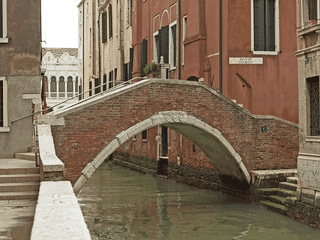

Overview
Venice is a city to explore on foot, with car-free streets and waterside journeys. Vaporetti and water taxis complement walks through the city.
Architecture · Day Trips · Island · Food
Did you know?
- Murano is associated with glassware, while Burano is known for lace and colourful houses.
- Vaporetti are the local water buses.
- Sepe al nero is cuttlefish served with its ink.
Where it is
Venice is 245 km east of Milan.
Why go?
Venice is a sanctuary on a lagoon that is virtually the same as it was 600 years ago, adding to its fascinating character. It has decayed since its heyday and suffers from overtourism, but the romantic charm remains. It is also known as the birthplace of composers Tomaso Albinoni and Antonio Vivaldi, and of the poets and opera librettists Apostolo Zeno and Carlo Goldoni. Venice and its lagoon are a UNESCO World Heritage site.
Getting in
Water plays a crucial role in transportation, as Venice is on a lagoon. Whichever way you arrive, the last part of your journey will be on foot from the nearest waterbus/watertaxi jetty. Day-trippers visiting the city on peak days must pay an Access Fee (€5) online in advance. Overnight guests are exempt but must register.
Getting around
Venice is easily walkable, and the absence of cars makes this a particularly pleasant experience. However, walking and standing all day can be exhausting. There are numerous vaporetti (water buses) and water taxis. GPS navigation services such as Google Maps are notoriously unreliable due to dense stone buildings. Bicycles are banned in the main city.
When to go
Venice has a humid-subtropical climate with hot summers and cool winters. July and August may be the worst time to visit due to heat, humidity, mosquitoes, and large crowds. Mid to late spring and early to mid autumn are probably best, with temperatures of 10-25°C. Between November and January, you may have Venice to yourself, but it can be chilly, windy, and damp. Beware of acqua alta (high water) which floods streets, usually in colder months, lasting a few hours with high tide.
Where to stay
Due to the historic city's constrained area and international popularity, hotels are expensive. Bed and Breakfasts and guesthouses offer better rates. Real budget solutions (like camping and hostels) can be found in Mestre (mainland Venice) and on the island of Lido. Alternative accommodation can also be found on Murano. Staying further from the centre is not a big problem as it takes only 11 minutes from Mestre to Venice by train.
Food and drink
Venice has a rich and distinct regional cuisine. One trademark is Sepe al nero (cuttlefish with ink). Other dishes include Fegato alla veneziana (chopped liver with onions) and Sarde in saor (fried sardines with onions and vinegar). For snacks, try cicchetti (Venetian tapas) often paired with wine at a bacaro. The typical local drink is Spritz, a mix of liquor and Prosecco with sparkling water. Aperol Spritz is most common. The Bellini (white peach juice and Prosecco) was invented at Harry's Bar. Beer in a small pub is about €5 for a pint.
Things to do
Venice is packed full of sights. Must-sees include the Doge's Palace (don't miss the 'Secret Itinerary' guided tour), Saint Mark's Basilica, Bell tower of St. Mark (great views), Clock tower (guided tour of mechanism), Scuola Grande di San Rocco (Tintoretto masterpieces), Jewish Ghetto (five synagogues), and Rialto Bridge. For a romantic ride, take a gondola, though they are more scenic than practical.
Safety
Venice is considered a safe city, but take habitual travelers' precautions. Keep valuable items close due to pickpockets, especially in crowded areas. In case of need, dial 112 (Carabinieri) or 113 (Police) free of charge. In the evening, Campo Bella Vienna and Campo Santa Margherita can be places for violence. Since 2024-2025 there are many pickpockets, so avoid highly crowded areas.
Connectivity
As of Sep 2021, Venice has 4G from Iliad and TIM, and 5G from Vodafone and Wind Tre. The city has a municipal Wi-Fi network covering the Grand Canal area; guest access costs about €5 per day. Internet cafes are expensive at around €6 per hour. Free Wi-Fi is available at most accommodations and some museums. The Telecom Italia Future Centre in Campo San Salvatore offers free browsing for one hour after registration with an ID card.
Etiquette
To preserve the city, observe local rules: walk on the right side of the street, do not bathe or swim in canals (fine up to €350 and 48-hour ban), do not walk bare-chested or in swimwear (fine up to €250), do not sit or lie down on steps, bridges, or monuments (fine €100-200), do not feed birds or litter (fine up to €500). Picnics are banned in public areas.
Day trips
Around the Venetian lagoon are smaller islands worth visiting: Burano (lace and colorful houses), Lido (beach and film festival), Murano (glassware), San Lazzaro (Armenian monastery), Torcello (7th-century basilica). Further afield: Riviera del Brenta (Palladian villas), Lake Garda (an easy day trip by train), Po Delta (marshy area with bike trails), Eraclea (pinewood and lagoon), Jesolo (beach), Padua (Basilica of St. Anthony, Scrovegni Chapel), and Cortina d'Ampezzo (alpine town, site of 1956 Winter Olympics).
Go next
Metropolitan Venice has many interesting destinations far from the crowds. Recommended onward destinations: Burano, Lido, Mestre, Murano, San Lazzaro, Torcello, Riviera del Brenta, Lake Garda, Po Delta, Eraclea, Jesolo, Padua, and Cortina d'Ampezzo.
Stay healthy
Do not touch or swim in the canals as they are extremely polluted with untreated sewage. At night, there is a risk of falling into the water due to poor lighting. For medical emergencies, dial 118 free of charge. Chemists (farmacie) are open 24 hours on a rotational basis; check the list outside for operating hours.
Guide text adapted from Wikivoyage contributors under CC BY-SA 4.0.
Where to start
Sleep
Belle Arti Hotel Venice
Elegant three-star hotel. 67 guestrooms divided in double, triple and quadruple with en suite services, bathroom kit and modern services.
Price when recorded: Double €220. Breakfast included for those who book online
Sleep
Corte 1321
Large spacious rooms with double sink bathrooms ensure a comfortable stay. Lovely courtyard for dining is made memorable with local birds strutting and cooing.
Price when recorded: Double rooms from €100
Sleep
Domus Ciliota
A 5-10 minute walk from San Marco's Square. The hotel has over fifty clean, basic, air-conditioned rooms all with shower and WC. The 24-hr reception is English speaking. There is an area for leaving baggage after you've checked out. Single rooms are €70-85 and doubles are €100-110 including breakfast.
Sleep
Hotel Ala
Eggs and broiled tomatoes with cheese for breakfast. Rooms were a typical size but clean, comfortable and quiet. They have turndown service at night, a pleasant surprise.
Price when recorded: Double rooms from €110
Sleep
Hotel All'Angelo Venice
Run by the same family since 1924 in a 17th-century building close to St Marks Basilica. Comfortable and stylishly decorated rooms with a double somewhere in the region of €150.
Sleep
Hotel Alla Salute
A 16th-century palazzo, a stone's throw from Piazza San Marco. It has been the house of the famous poet Ezra Pound. Pretty comfortable and quiet budget hotel. Garden for breakfast.
Price when recorded: Doubles from €50
Sleep
Hotel Antico Panada
Has rooms decorated in an 18th-century Venetian style.
Price when recorded: Double room from €145 to €310
Sleep
Hotel Basilea Venice
Across the Grand Canal from Santa Lucia Train Station. Located in a quiet Calle.
Price when recorded: Double rooms are usually €100-160 depending on season
Before you go
Accommodation
Hotels in the historic center are expensive. Budget options in Mestre (11 min by train) and Lido.
Connectivity
4G from Iliad and TIM, 5G from Vodafone and Wind Tre. Municipal Wi-Fi available around Grand Canal for €5/day.
Culture
Dress modestly in churches, no swimming in canals, and no sitting on steps or monuments (fines up to €500). Respect quiet hours.
Etiquette
Fines for swimming in canals (up to €350), walking bare-chested (€250), sitting on steps (€100-200), feeding birds (up to €500).
Health
Tap water safe; canal water is polluted. Mosquitoes in summer; pharmacies widely available for minor needs.
Local transport
Vaporettos are the only public water transport; buy passes at ticket booths or online. Validate tickets before boarding.
Money
Euronet ATMs in tourist areas have high fees and poor exchange rates. Use bank ATMs like Credit Agricole, which do not charge fees for most Visa cards.
Safety
Pickpockets are common, especially since 2024-2025. Avoid highly crowded areas. Campo Bella Vienna and Campo Santa Margherita can be violent at night.
Transport
Venice has no cars; walk or take vaporetti (water buses) and water taxis. Bicycles are banned in the main city.
Water
Do not swim or touch the canal water; it contains untreated sewage. Acqua alta (high water) can flood streets in winter.