Overview
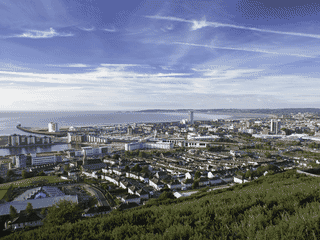
Swansea combines a coastal city break with Dylan Thomas heritage and access to the Gower Peninsula. Beaches, coastal walks and a lively nightlife scene offer contrasting ways to spend a day.
Beach · Cycling · Nature · Museums · Food
Did you know?
- Laverbread is a local speciality made from seaweed.
- The bay promenade provides a walking and cycling route to Mumbles.
- The National Waterfront Museum offers free admission.
Where it is
Swansea is 209 km south of Liverpool.
Why go?
Swansea is the second-largest city in Wales, set on the beautiful Gower Peninsula — the UK's first designated Area of Outstanding Natural Beauty. It offers Blue Flag beaches, stunning coastal walks, a rich literary heritage (Dylan Thomas), and a lively nightlife scene, all within easy reach of rural Gower and the Brecon Beacons.
Getting in
Swansea is well-connected by rail (Swansea railway station) with frequent services from Cardiff (approx 50 min) and London Paddington (approx 3 hr). National Express and Megabus coaches also serve the city. By car, the M4 motorway leads directly into Swansea. For those flying, Cardiff Airport is about 50 min away by car or train.
When to go
Swansea has a wet, mild climate. Summer (June–August) has the most sunshine and is peak tourist season. Autumn (September–October) offers crisp air and fewer crowds for coastal walks. Always pack rain gear as Wales is one of the wettest areas in the UK.
Getting around
Swansea is best explored on foot or by bicycle. National Cycle Routes 4, 43, and 47 pass through the city. Buses and trains connect the city centre with surrounding areas. The promenade along Swansea Bay offers a scenic cycle and walking route to Mumbles.
Where to stay
There is a whole row of B&Bs on the sea-facing Oystermouth Road and many in the spacious suburb of Uplands. Both are near the city centre, though Uplands lodgings tend to be of better quality. Mumbles Road in Mumbles also has a wide selection of B&Bs with sea views.
Food and drink
Swansea's dining scene ranges from budget cafes to fine dining. Wind Street is the main nightlife hub with bars and clubs. For a more laid-back vibe, head to Uplands or Mumbles. Local specialties include laverbread (seaweed dish) and salt-marsh lamb. The indoor Swansea Market is great for local produce.
Things to do
Top attractions include the free National Waterfront Museum, Dylan Thomas Centre, Swansea Museum, Oystermouth Castle, and the Gower Heritage Centre. Outdoor enthusiasts can enjoy Swansea Bay beach, cycling trails, water sports, and the nearby Gower Peninsula. The LC leisure complex offers indoor surfing and a wave pool.
Safety
Swansea has been awarded the Purple Flag for over a decade, recognizing its safe, vibrant, and well-managed evening and night-time economy. Standard urban precautions apply; stick to well-lit areas at night.
Connectivity
As of July 2022, Swansea has 5G from all UK carriers. WiFi is widely available in public places. You can access the internet at public libraries such as the Central Library on Oystermouth Road (ID required for registration).
Etiquette
About 16% of Swansea's population speaks Welsh. English is universally spoken. The local dialect includes unique phrases like 'tidy' (meaning good) and 'butt' (friend). Tipping is customary in restaurants (10-15%) but not mandatory.
Day trips
From Swansea, you can easily visit the Gower Peninsula, Brecon Beacons National Park, Dan-yr-Ogof Caves, National Botanic Garden of Wales, and Carreg Cennen Castle. Cardiff is about 50 minutes by train or car.
Go next
Beyond Swansea, consider heading to Cardiff (50 min), the Pembrokeshire Coast National Park, or the market towns of Llandeilo and Llandovery. The Gower Peninsula is also accessible and offers further exploration.
Guide text adapted from Wikivoyage contributors under CC BY-SA 4.0.
Where to start
Do
Action Bike
Will deliver bike to hotel free of charge.
Do
Albert Hall
Live music venue in grade 2 listed building. Wide range or restaurants, bars, and cafes.
Do
Bay Watersports
Lessons in windsurfing and kayaking on Swansea Bay. May to October, seven days a week.
Do
Brangwyn Hall
The Guildhall complex, Victoria Park. With its stunning British Empire Panels, commissioned for the British House of Lords, this grandiose concert hall is the focus for the annual Swansea Festival of Music and the Arts, the second largest such festival in the UK.
Do
Breakout Swansea
Participants solve puzzles to escape from a room.
Do
Cable Wake Boarding
Do
Cinema.co
Screening of art and indie movies. Discussion after screening.
Price when recorded: Adult £5, student £4
Do
Clyne Golf Club
Mayals. 6323-yard, 18-hole course built on moorland, par 70 sss72
Before you go
Connectivity
5G from all UK carriers since July 2022. Free WiFi at public libraries.
Culture
Welsh is spoken by about 16%; English is universal.
Health
NHS hospitals; tap water safe.
Language
English and Welsh are official. Swansea dialect includes local slang like 'tidy' and 'butt'.
Local transport
Buses and trains connect city and Gower; day bus pass around £4-5.
Money
UK pound sterling. Cards widely accepted, but carry cash for markets and small cafes.
Safety
Purple Flag award for safe nightlife. Standard precautions advised.
Water
Tap water is safe to drink. Blue Flag beaches (e.g., Swansea Bay) are clean for swimming.
Weather
Wet and mild. Summer temperatures 20-27°C, winter 4-6°C. Pack rain gear year-round.